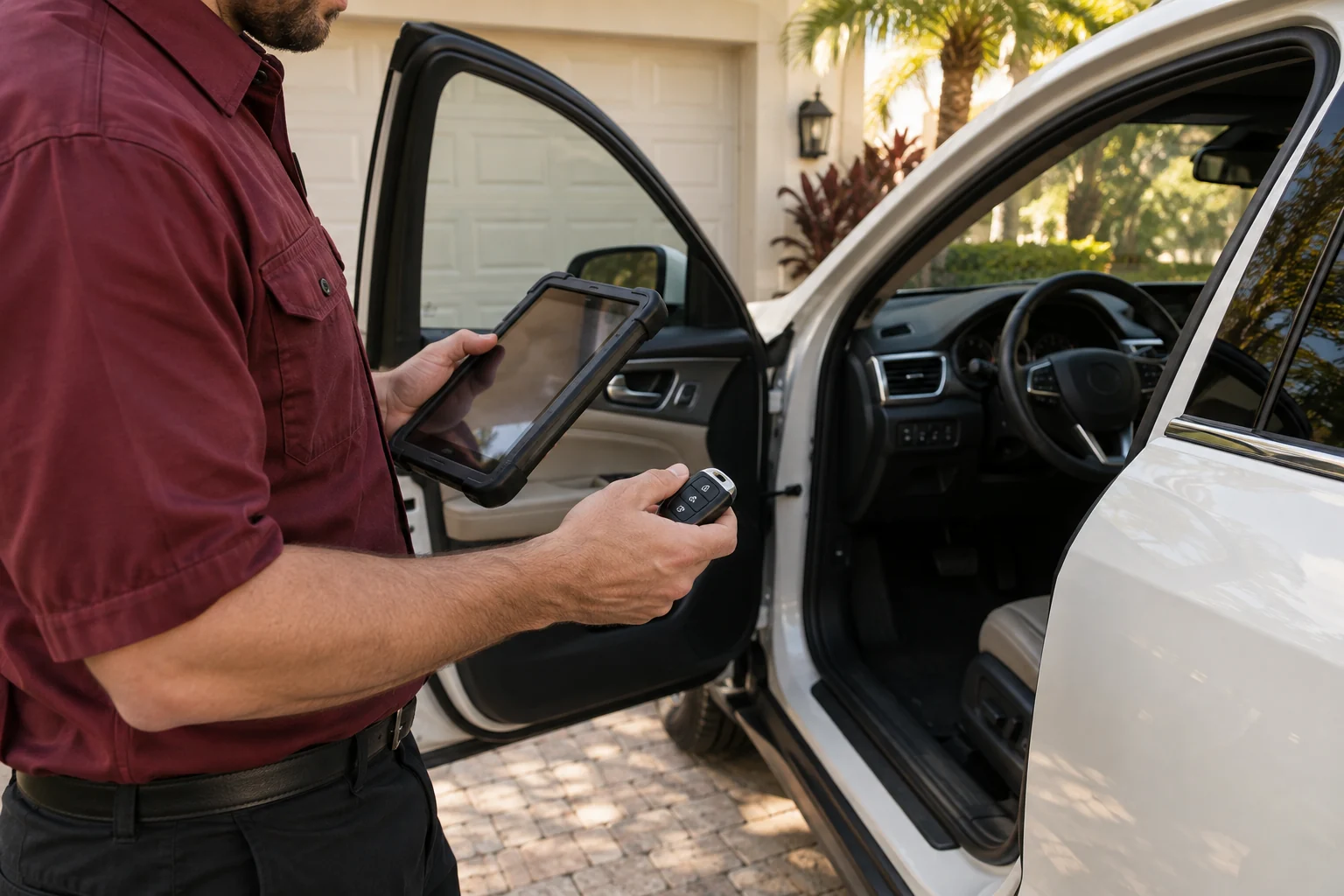
Automotive Locksmith in Coconut Creek
If you drive in Coconut Creek and a car key has gone missing, snapped or stopped working, this page walks through your options in plain language and explains what to expect from an automotive locksmith.
Call (954) 888-8804A note on what this page is
This page is general guidance for drivers in Coconut Creek. It is not a report on the city and does not claim any local knowledge about streets, lots or neighborhoods. Car key work follows the same principles everywhere, so what you read here applies whether you are at home, at work or somewhere in between.
What you will find is a practical explanation of the common car key problems, how they are normally solved, and what to ask when you call. It is written for someone who may be standing beside a vehicle right now, and for someone who is simply planning ahead.
If you want the full overview of car key services, the main car key replacement page covers it in detail. This page focuses on what a Coconut Creek driver is likely to face and how to get ready for the conversation.
The most common car key situations
Most calls to an automotive locksmith fall into a handful of categories. The first is the lost key, where the only key, or every key, has gone missing. The second is the locked in key, where the keys are visible inside the car but the doors are shut. The third is the broken key, where a blade has snapped in a door lock or the ignition.
The fourth is the worn or failing key, which still works some of the time but is clearly on its way out. The fifth is the fob problem, where the buttons no longer respond, the car does not recognize the key, or a push to start system refuses to cooperate. Each has its own route to a solution.
Naming your situation precisely when you call helps a lot. Saying that you lost your only key, that the car is a certain make, model and year, and that it is parked in a particular place gives the locksmith everything needed to begin explaining the plan. Vague descriptions lead to more questions and more delay.
If you can, have the vehicle identification details nearby. The registration or the insurance card usually shows the make, model, year and sometimes a long number that identifies the exact car. Reading these out helps the locksmith confirm the key type and explain what the work involves without guessing.
- Lost key: no working key exists and a new one must be made.
- Locked in key: the key is in the car and the doors will not open.
- Broken key: part of the blade is stuck in a lock or ignition.
- Worn key: it works poorly and may fail without warning.
- Fob problem: buttons or recognition have stopped working.
Lost keys: when nothing is left to copy
A lost car key is the situation most people dread, and it is also very solvable. The locksmith verifies that the vehicle is yours, identifies the type of key it uses, and creates a new one that matches. For vehicles with a chip in the key, the new key must also be programmed so the car will start with it.
Proof of ownership is a normal part of this. Expect to show identification and documents such as registration. This is how a responsible locksmith protects you and everyone else from misuse. If you cannot find your documents, tell the locksmith, who can explain what alternatives might be acceptable.
One decision to discuss is what happens to the lost key. In many vehicles, a locksmith can program the car so that old keys no longer start it. That is a sensible step if you think someone could find the key and recognize the car. Ask whether it is possible for your vehicle, and how it would be done.
It also helps to think about where the key was lost. A key lost at a gym, a restaurant or a beach may eventually be handed in, while a key lost on a trip may be gone for good. If there is a chance it will turn up, say so. The locksmith can explain whether to wait before taking steps that retire the old key, or to do it at once.
Locked out with the keys inside
Keys left on a seat, a console or in the ignition are an everyday problem. The temptation is to try something yourself, using a coat hanger, a wedge or force. Please resist. Modern doors contain wiring, airbags and sensitive mechanisms, and improvised tools scratch paint and tear weather seals.
A locksmith uses professional tools designed to open a vehicle without damage. The method depends on the car, and the locksmith will explain it before beginning. After the door is open, the work is tested with you to confirm that nothing was harmed and that the doors still operate normally.
If a child or pet is inside the vehicle, treat it as an emergency, especially in South Florida's heat. Call emergency services immediately, because a closed car can become dangerously hot in a short time. Nothing about a key is more important. Our guide on locked out with a pet or child inside explains the steps.
For an ordinary lockout, stay calm and think about what else might be unlocked. Check every door, including the trunk or hatch, before calling. Look for a spare key at home or with a family member who could bring it. If nobody can, a locksmith can open the car, and in some cases make a working key while on site.
Broken keys and keys stuck in the ignition
A key that snaps in a lock or ignition is stressful but usually manageable. The most important thing is to stop. Pulling with pliers, pushing with another key or squirting random lubricants can wedge the piece deeper and damage the cylinder, turning a small problem into a larger one.
A locksmith has extraction tools designed for exactly this situation. Keep the broken pieces if you can, because both the head and the fragment help a locksmith identify the key type and the cuts. Place them in a small bag and keep them dry. Once the fragment is out, a new key can be made, and the lock or ignition can be checked for harm. If the cylinder is damaged, repair or replacement may be recommended, and the options will be explained before work begins.
A key that is stuck but not broken deserves the same patience. Make sure the car is in park, turn the steering wheel gently from side to side since a locked wheel can bind the key, and avoid heavy force. If it still will not move, call for help. A stuck key is often a sign that something is worn, and it is better to have it looked at than to keep forcing it.
Transponder keys, fobs and push to start
Most vehicles built in recent decades use a chip in the key that the car must recognize. This is why a copy that merely fits the lock may not start the engine. The chip has to be programmed to the car. A locksmith with the right equipment can do this for many makes and models, and will tell you plainly whether yours is possible.
Fobs add remote functions such as locking, unlocking and opening a trunk. Some fobs are part of the key, and others are separate. Push to start systems use a fob that the car senses nearby, with no key turned at all. Each type has its own replacement process, and our article on why a key fob stops working explains the common causes.
Replacing a push to start fob when none remain can be more involved than replacing a regular key. If you have just lost the only one, read what to do if you lose a push to start key before calling, so you know what to expect and what to ask.
Batteries deserve a mention. A weak fob battery can cause intermittent behavior, such as a car that sometimes recognizes the key and sometimes does not. Replacing the battery is a simple first step, and many drivers solve their problem that way. If a fresh battery makes no difference, the fob or the car may need a closer look.
Ignition trouble that looks like a key problem
Sometimes the key is fine and the ignition is the problem. Signs include a key that turns only when jiggled, a steering wheel that locks hard, dash lights that flicker, and a car that starts one day and not the next. Worn tumblers inside the ignition cylinder are a common reason.
A simple way to tell the difference is to try a second key. If a spare turns smoothly and the first does not, the first key is worn. If neither works well, the cylinder is more likely at fault. This is another small reason a spare key is valuable.
Ignition work is covered on our ignition repair page. A locksmith can often repair or replace a cylinder and match it to your key, which is simpler than replacing a whole ignition assembly. Your technician will explain what applies to your car before beginning.
Do not ignore the early signs. A starter that clicks, a steering wheel that binds or a key that now needs two tries all suggest that wear is building up. Dealing with it while the car still starts gives you more choices and more time than dealing with it after the car refuses to move in a parking space.
Locksmith or dealership
Many Coconut Creek drivers wonder whether to use a dealer or a locksmith. Both can produce keys for many vehicles. A dealer usually requires the car to be brought in, which may not be possible if you have no key or the car cannot be driven. A locksmith often comes to the vehicle, saving you a tow.
Some vehicles and key types are easier through one path than the other. The decision depends on your make, model, year and the type of key. Our comparison of car key replacement by locksmith versus dealership lays out the considerations.
Whichever you choose, ask the same questions: what kind of key will I receive, will it be programmed, what does the price cover, and how will it be tested? Answers should be clear. Pricing factors are explained in our car key replacement cost guide.
Timing is another factor to consider. If the car must be available for work or family duties, think about which route gets you a working key with the least disruption. Being honest about your schedule when you call lets the locksmith suggest an approach that fits, without making promises about times that cannot be known in advance.
Parked at home, work or a shopping lot
Where the car is parked shapes how the work is done. A car in a driveway is straightforward. A car in a garage, a condo lot with gated access, or a busy shopping center may need extra arrangements. Tell the locksmith where the car is, how to reach it, and whether there are any access rules or gates.
If you are away from home and without a key, think about your safety too. Move to a well lit, populated area if you can, keep your belongings with you, and have a way to charge your phone. A calm place to wait makes the whole situation easier.
If the car is in a condo or apartment building, you may need to let a front desk or property manager know that a locksmith is coming. Association rules vary, so ask your building what it requires. Coastal salt air and humidity can also wear keys and fobs down sooner, which is one more reason to keep a spare.
Weather adds its own complications. A heavy rain can make a roadside wait unpleasant, and summer heat makes a closed car uncomfortable in no time. Pick a sheltered place to wait if possible, keep water with you, and tell the locksmith about any conditions that affect safety. Comfort and safety are part of the plan, not an afterthought.
Nearby places and related help
Drivers who live or work near Coconut Creek often move through neighboring cities. The same guidance applies in Coral Springs, Margate and Parkland, where we have similar pages. If you are not sure which page fits, call and describe your location.
Car keys are one part of a broader set of needs. If your lost keys also include house keys, our Coconut Creek lockout service page and the rekey service page explain how to regain control of your doors. Think about the whole ring, not only the car key.
Finally, plan ahead. Make a spare while you still have a working key, and read why a spare car key is worth it for a longer explanation. The calm version of this job is always easier than the emergency one.
How the call and the work go
Call Half Off Locksmith and describe your situation: your location, the make, model and year of the car, the kind of key you know of, and what has happened. You will hear how the work would go and what it would cost before anything starts. You can ask questions and decide with the facts in front of you.
When the work is finished, the key is tested with you. You see it open the doors, start the car and operate any remote functions. You leave knowing what was made, how to care for it, and whether anything else needs attention. If something seems wrong, say so before the locksmith leaves.
After that, keep the new key safe and consider a spare. A little care now means that the next car key story you tell will be a boring one, which is exactly what you want.
If you are reading this because it is happening right now, put the phone to use. Call, give the plain facts, and ask for the plan and the price to be explained before the work begins. You do not have to decide anything until it makes sense to you, and a locksmith worth calling will understand that completely.
Common questions
Can I get a car key made if I have lost every key?
In many cases, yes. The locksmith confirms you own the vehicle, identifies the key type, makes a matching key and programs it to the car. Some vehicles involve extra steps. Describe your make, model and year when you call, and you will hear what applies before any work starts.
Do I need to show proof that the car is mine?
Yes, expect to. Responsible locksmiths ask for identification and documents such as registration or title, because a key is access to a valuable vehicle. Have them ready when you call. If something is missing, tell the locksmith and ask what alternatives may be acceptable.
Will the new key start my car?
If the key is the right type and has been programmed to your vehicle, yes. A key that is only cut to shape may open doors but fail to start the engine on modern cars. The finished key should be tested with you, including starting the car and checking any remote buttons.
What should I do if my key breaks in the ignition?
Stop and avoid forcing anything. Pulling with pliers or pushing with another key can make things worse. Call a locksmith who can remove the broken piece safely, check the ignition and make a new key. If the cylinder is damaged, repair or replacement options will be explained first.
Can you help if my car is locked in a garage or condo lot?
Tell the locksmith where the car is and how to reach it, including any gates, entry rules or people who need to be notified. Access arrangements vary by building, so ask your association or manager what they require. Clear information helps the visit go smoothly.
Is this page specific to Coconut Creek rules?
No. It is general guidance for drivers in Coconut Creek and does not describe local rules. Requirements for parking areas, associations and vehicles vary, so ask your building manager, association or the relevant local office about anything that depends on where you are.
Talk through the job before work begins
Start by describing the situation, the lock or key involved and who must have access. You hear the price and the plan before anything is done.
Call (954) 888-8804