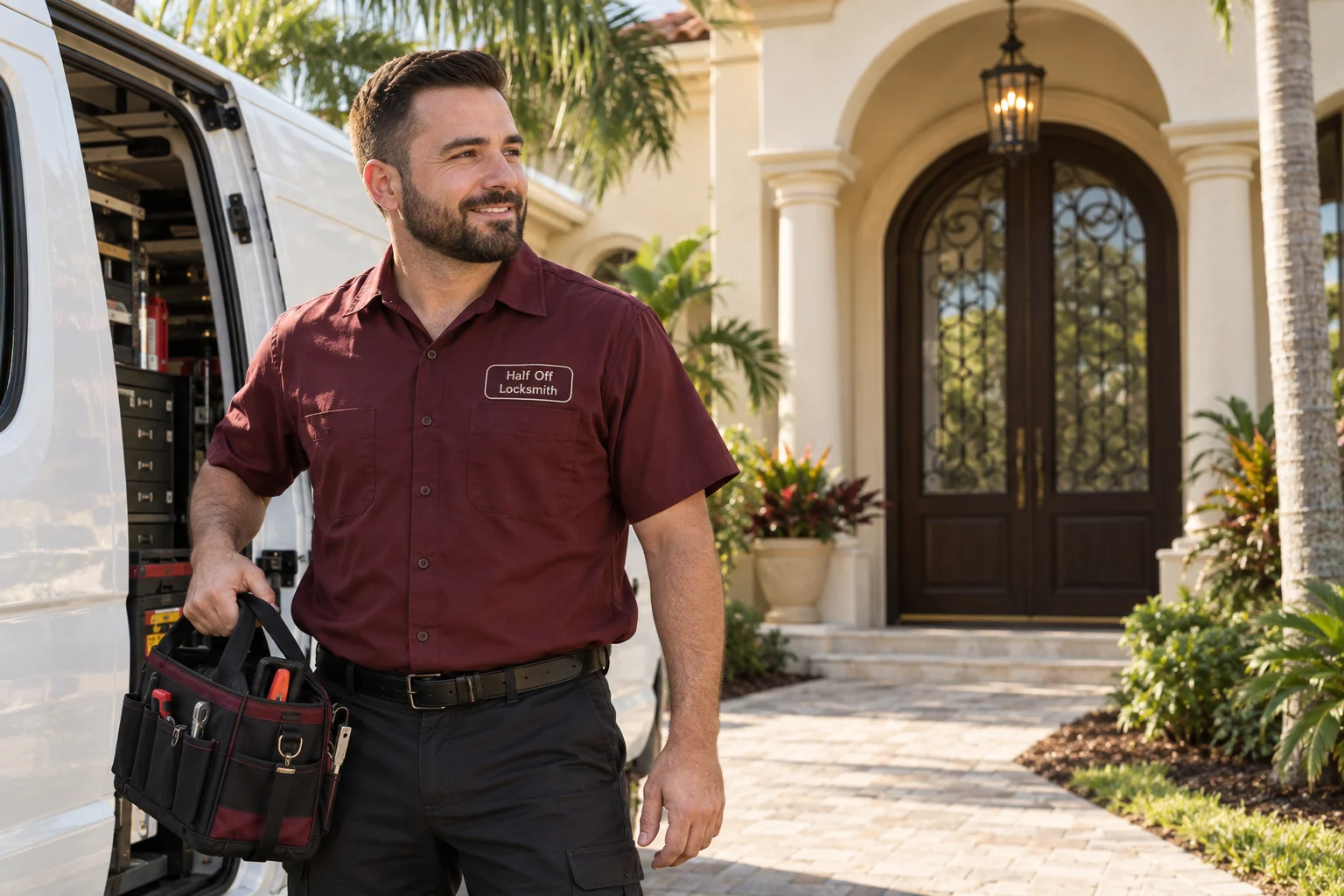
Half Off Locksmith technician and service van

Pet or Child Locked Inside? Deciding When It Is an Emergency

Pet or Child Locked Inside? Deciding When It Is an Emergency

The lock is not the first problem

It is easy to fixate on the door, the keys and the thing that went wrong. When a living being is on the other side, though, the question that matters is whether that person or animal is safe right now. Everything else comes second.

That means your first job is to look and listen. Can you see them? Are they calm, crying, asleep, or unresponsive? Are they in a room with something hazardous, such as a stove, a pool door, medication or cleaning products? What you notice in that first moment tells you which kind of help to ask for.

Keep your voice level and your movements steady. A frightened child reads your tone, and an anxious animal does too. Speaking calmly through a door or window often settles them enough to give you a clearer picture of what is going on.

It also helps to remember that your own reaction is part of the safety picture. A caregiver who is breathing steadily, thinking clearly and speaking in short plain sentences can do far more than one who is rattled. Take one slow breath before each decision, and say your next step out loud if that keeps you focused.

How to judge whether it is an emergency

No two situations are alike, so think in terms of signals instead of rules. A toddler who is safe in a childproofed living room with toys and no hazards is a different case from a baby in a hot parked car. A dog sleeping on a couch inside an air conditioned home is not the same as a dog panting in a closed vehicle on a sunny lot.

The general principle is simple. If there is any sign of distress, any hazard within reach, any danger from heat, water, fire or a medical problem, or if you simply cannot tell, treat it as an emergency. You can always cancel a call that turned out to be unnecessary, but you cannot undo a delay.

Some signs should never be second guessed. Crying that is getting weaker, unusual silence, vomiting, difficulty breathing, a child who does not respond to your voice, or an animal that is lethargic or collapsing all call for emergency services immediately.

Age and size matter in these judgments. An infant cannot move away from a hazard or call for help, and a small dog or a short nosed breed handles heat poorly. An older child who can answer questions and follow directions gives you more information and more options. When a person or animal cannot tell you how they feel, lean toward treating the situation as urgent.

  • Contact emergency services at once if the person or animal looks unwell, is not responding, or is in a hot or hazardous space.
  • Contact emergency services if you smell smoke or gas, or see water, fire or sparks.
  • Contact emergency services if you are unsure; they would rather hear from you early.
  • Use a locksmith when everyone is stable and the remaining problem is the lock.

Who to call first and why

For a real danger, the right first call is the emergency number for your area. Dispatchers are trained to ask the right questions, and they can send responders who have the equipment and authority to enter a home or vehicle when someone is in danger. Tell them exactly where you are and what you can see.

A locksmith is a valuable second call, or a first call when the situation is calm and clearly not dangerous. Describe the circumstances honestly, including the age of the child or the type of animal, where they are in the building, and any hazards you know about. The person on the phone can help you decide whether to keep emergency services on the line.

Do not wait to call a locksmith before you call emergency services if you have any doubt. Sequence matters more than speed when a life may be at risk. If you are unsure which call to make, the safe choice is always the emergency number first.

Be ready to stay on the line if the dispatcher asks you to. They may ask you to describe sounds, to confirm whether the door is a deadbolt or a knob lock, or to stay clear of the entry. Following their instructions keeps responders safe and speeds nothing up by guesswork, so answer in plain facts and avoid speculating.

A child inside a house or apartment

Young children lock doors in surprising ways. A toddler can twist a thumb turn, a latch on a bathroom door can slip, and a child old enough to explore can trap themselves in a room. If the front door has shut with a child behind it and you are outside, check every other entry you have a right to use, such as a back door or a window you know is open, before you do anything else.

Talk through the door. Ask the child to stay where they are, to move away from the stove or bathtub, and not to touch anything. If the child is old enough, you may be able to explain how to turn a thumb latch from the inside. If they are too young to follow directions, focus on staying calm and keeping them in sight if you can.

If you cannot reach them or you see anything alarming, call emergency services. If the child seems fine but you cannot open the door, call a locksmith while staying at the door so the child can hear you. Honest, plain information helps the person arriving prepare.

Think about the rooms that matter most. Bathrooms with a tub, kitchens with a stove, rooms with open windows on an upper floor and garages with tools or vehicles all raise the stakes. Tell the dispatcher or locksmith which of those rooms the child can reach, because it changes how they plan the entry and how urgently they treat the call.

A child or pet in a parked car

This is the version of the problem that people most often underestimate. In South Florida, a closed vehicle that sits in the sun becomes dangerously hot, and humidity makes it worse. A cracked window does not fix this. A child or an animal left in a locked car is an emergency from the first moment you notice.

Call emergency services first. If you are in a store lot, you can also ask a manager or security staff to page the owner of the car. Stay with the vehicle, keep an eye on the occupant, and give the dispatcher your location, the make and color of the car, and what you can see.

Laws and obligations around entering a vehicle in an emergency vary, so do not assume what you are allowed to do. Responders know what the rules are in your area. If you are the owner and you simply locked your keys inside, say so clearly on the call. Our guide to car lockout solutions explains the ordinary route once the immediate danger has passed.

A pet shut inside a home

Pets are family, and their needs change with the weather and the room. A cat in a quiet bedroom with water is in a different spot from a dog in a laundry room with no ventilation. If your animal is shut inside and you are locked out, look and listen for signs of distress such as frantic barking, scratching at the door, heavy panting or sudden silence.

If you can see the animal and it looks comfortable, you have a little more room to be methodical. Check for another entry you may legitimately use, ask a neighbor with a spare key, and call a locksmith who can open the door without damaging it. Describing the animal and its behavior helps the technician plan.

If the animal looks unwell, or if the home is hot because the air conditioning has failed, call emergency services or a local animal rescue line and explain what you see. A lock can be rekeyed or repaired later, but an animal in heat stress cannot wait.

Cats and small animals can slip into spaces you would not expect, such as behind appliances or into closets that then close. If your pet is quiet and you cannot find it through a window, say so on the call. Not seeing an animal is not the same as knowing it is safe, and a calm description helps a responder decide what to do.

What to do while you wait for help

Staying put matters. Stay near the door or window where the child or animal can see or hear you, because your presence can calm them more than any other action. Speak gently and keep your voice steady, and avoid shouting, which can frighten a young child or an agitated pet.

Gather information for the people who are coming. Note the address, the layout, which doors and windows are on which side, the ages of any children, the type and size of the animal, and anything in the space that could cause harm. If someone else is with you, have them meet the responders at the curb and point out the entry.

Keep other people and vehicles away from the door and driveway so responders have room. If you have a key to a neighbor's home, a relative's place or a property manager, call them now. A spare held by someone nearby can end the problem without a service call at all.

What not to do

Panic leads people to do things they regret. Do not throw your shoulder into a door, kick at a latch or smash a window unless a responder tells you to, because you may injure yourself or the person inside. Broken glass is a particular danger to a barefoot child or a curious pet.

Do not try to climb to an upper window or balcony. Falls are common and serious. Do not use tools on the lock or the hinges in a panic, and never attempt anything with a garage door spring, cable or opener, which stores high tension and needs a trained technician.

Finally, do not leave the scene to look for help if there is any chance the child or animal is in danger. Use your phone, ask a neighbor to make the call, and stay where you can see or hear them. If you must go, make sure someone else remains.

When a locksmith is the right call

Once the situation is stable, or when it was calm to begin with, a locksmith can open the door without causing damage. Call and describe the situation and the place. The work and the price are explained before it begins, and the finished work is tested with you so the lock and door still operate as they should.

Be specific about what kind of door and lock you have. A front door with a deadbolt, a sliding glass door, a bathroom privacy latch and a car door all call for different approaches. Mentioning that a child or pet is inside helps the person on the phone plan how to proceed, and a trained technician will treat that with care.

If you are in a condo, a rental or a gated community, mention that when you call as well. Access rules and ownership of the lock vary, and some situations require the property manager's involvement. Our overview of what to do when you are locked out of your house and our guide for renters locked out of an apartment cover the extra questions that come up.

Preventing a repeat

Once everyone is safe, take a few minutes to figure out why it happened. Maybe a door closes and locks itself behind you, maybe your keys live in a spot you can reach too easily when your hands are full, or maybe the children have learned to work a latch. Each of these has a practical fix.

For doors that lock behind you, consider a keypad or smart lock so you never depend on carrying a key. Our comparison of keypad and smart locks explains what each does well, and the guide to smarter ways to hide a spare key covers ways to leave a backup within reach of a trusted person.

If you lose a set of keys altogether, a rekey may be the right move so old keys stop working. Read about lost house keys and whether to rekey or replace. For anything involving a vehicle, the car key replacement page explains the options, and if the weather made this harder, see how to stay safe when locked out in bad weather.

Property managers and building staff can also help with prevention. If you live in a building where doors lock automatically, ask whether a door stop, a keypad or a managed spare key system is allowed. Rules and permissions vary by property, so ask the person responsible for the building before you change hardware that may belong to them.

A short family plan for next time

A calm, practical plan for your household is worth far more than a panicked decision in the moment. Write down the emergency number, the number of a trusted neighbor with a spare key, and the number of a locksmith you have already chosen. Put the list on the refrigerator and in each adult's phone.

Teach older children what to do if they are shut in or out. A child who knows to stay calm, stay near the door and speak to a grown up can turn a frightening moment into a manageable one. For very young children, childproof latches, door stops and bathroom privacy locks that open from the outside add a layer of safety.

Pets benefit from routines as well. Keep fresh water in a place they can reach, keep the home at a comfortable temperature when no one is there, and consider telling a neighbor who has a key. These small steps cannot promise a problem will never happen, but they shorten and soften the unexpected.

Frequently Asked Questions

Should I call emergency services or a locksmith first?

If a child or animal looks unwell, is in a hot or hazardous space, or you cannot tell how they are doing, call emergency services first. A locksmith is the right call once everyone is stable and the remaining problem is the lock. When in doubt, the safe choice is the emergency number, and you can cancel if things turn out fine.

Is a closed car with a child or pet inside really that dangerous in Broward County?

Yes. Strong sun and humidity heat a closed vehicle cabin to levels that are dangerous for children and animals, and a cracked window does not solve it. Treat it as an emergency from the first moment, call emergency services, stay with the car and give the dispatcher your exact location and what you see.

Can I break a window if I see a child or pet in trouble?

Do not decide this alone. Call emergency services and follow what the dispatcher tells you, since rules about entering a vehicle or home vary and responders know them. Breaking glass can hurt you or the person inside. If the situation is calm, a locksmith can open the door without causing damage.

What can I do while I wait for help to arrive?

Stay near the door or window so the child or animal can hear and see you, and keep your voice calm and steady. Gather the address, ages, animal type and any hazards you know about. Have someone meet responders at the curb. Keep driveways clear and avoid forcing anything yourself.

Will a locksmith damage my door if a child or pet is inside?

A trained locksmith works to open the door without damaging it, and the finished work is tested with you. Tell the person on the phone what kind of door and lock you have and that someone is inside. The work and the price are explained before it begins, so you can ask questions and agree first.

How do I prevent this from happening again?

Look at why it happened. If a door locks behind you, a keypad or smart lock removes the need to carry a key. If keys go missing, consider a rekey. Leave a spare with a trusted neighbor, teach older children what to do, and keep emergency numbers where every adult can find them.

Locked out or need a lock changed today?

Describe the problem by phone, and we go over the job and the price with you first.

First, decide whether this is a lockout or an emergency

Not every lockout with a person or animal inside is the same. A toddler napping in a crib in a locked apartment is a different situation from a baby strapped into a car seat in a parked, closed vehicle. One is a problem to solve soon. The other can become dangerous with little warning, especially under the strong sun and heat of South Florida.

Ask yourself three plain questions. Is the person or animal in a place that heats up, such as a car? Can they move, respond and be seen? Is there any sign of distress such as crying that changes, unusual quiet, heavy breathing or no response at all? Any worrying answer means you should treat the event as an emergency and contact emergency services first.

Do not let embarrassment slow you down. Dispatchers deal with locked in situations often, and they would much rather receive a call that turns out to be minor than miss one that is serious. Give your location clearly, say who is inside and describe what you can see. Then follow their instructions while you arrange any locksmith help in parallel.

When a child or pet is inside a car

A closed car is the highest risk case. The interior of a parked vehicle can become far hotter than the air outside, and children and animals cannot manage that heat the way adults do. A day that feels merely warm to you can be dangerous in a sealed cabin, and a cracked window does not solve the problem.

If someone is inside and you cannot open a door, call emergency services right away and stay beside the vehicle. Look through the windows to check on the person or animal and keep talking so they hear a familiar voice. If they are not responding, tell the dispatcher so, because that changes how they respond and what they ask you to do.

Do not wait for a locksmith to arrive if the person or animal appears to be in distress. Emergency responders are trained and equipped for this situation and can decide on the safest way to get in. A locksmith is a good option for the calmer cases, or as a parallel call, but it is not a replacement for emergency help when a life may be at risk.

When someone is behind a locked house or apartment door

Inside a building the picture usually looks different. A child in a locked home can usually move around, reach water and stay in a temperature controlled space. That gives you a little more room to think, though not to delay. A very young child, an infant, a person with medical needs or anyone who cannot be reached by voice raises the level of concern.

Start by trying to establish contact. Talk through the door, ask the child to stay where they are and avoid anything dangerous like the stove. If they are old enough, they may be able to turn a thumb latch or a lock knob from the inside and let you in. Keep your instructions simple and kind, since a frightened child follows tone as much as words.

If the child cannot unlock the door or you cannot get a response, call emergency services. If they are calm and safe, a locksmith can often open a residential door without damage. Our guide on what to do when you are locked out of your house and the one on lockouts for apartment renters cover the everyday steps.

Keeping calm and keeping them calm

Panic spreads. A child on the other side of a door will hear your voice and feel your fear, and a frightened child may hide, cry harder or try risky things. Slow your own breathing, lower your voice and say the same simple sentences repeatedly: I am right here, stay where you are, help is coming.

Animals read tone too. A dog in a closed room or a cat behind a door may bark, scratch or dig at the frame, which can damage the door and hurt the animal. Speak quietly and stay near the door. Do not rattle the handle or shout, since that can make the animal more anxious and more likely to injure itself.

Afterward, give everyone time to settle. A child who was locked in may need a hug and a simple explanation, and a pet may need water and a quiet corner. Resist the urge to scold, since a frightened child will remember the fear more than the lesson. Once calm returns, talk through what happened and what the family will do differently.

Give your mind a job. Write down the address, the make and model if it is a car, your exact location, and the names and ages of anyone inside. Having these details ready makes every phone call clearer and keeps you steady. If another adult is with you, one person can talk to the occupant while the other makes calls.

What not to do

Under stress, people try things they would never do on a normal day. Do not break a car window or a glass door unless emergency responders tell you to or the danger is so immediate that you must act. Broken glass can injure the person inside, and it changes what has to be repaired. If you have to act, shield the person and clear the area first.

Do not try to climb through upper windows, balconies or ledges. Falls from height are a serious risk, and a locked door is not worth a trip to the hospital. Do not force a door by kicking or shouldering it, which can injure you, damage the frame and make the lock harder to repair.

Never leave someone alone near a hazard while you hunt for a fix. If you need to leave the doorway to make a call or ask a neighbor for help, tell the child clearly where you are going. Stay within hearing distance whenever you can, and ask another person to wait at the door if possible.

Avoid advice found online that suggests improvised tools or tricks on locks and car doors. They often fail, they can damage the mechanism, and they waste moments that matter. Trained responders and locksmiths have methods that suit each lock and vehicle, and they work in a way that limits harm. Let them choose the approach, and focus your energy on staying close to the person or animal inside.

How a locksmith helps in the calmer cases

When the situation is not an emergency but is still urgent for you, a locksmith can help. On a house or apartment door, the technician looks at the lock, decides on a careful approach that causes as little damage as possible and opens the door. The work and the price are explained before it begins, and the lock is tested afterward.

When you call, say plainly who is inside and what you can see or hear. That information helps the person who answers decide how to respond and whether to suggest calling emergency services as well. Being honest about the situation is more useful than trying to sound calm, since the right advice depends on the facts.

For vehicles, a locksmith can handle many lockouts, but if the person or animal is in danger, emergency services come first. Our overview of car lockout solutions explains the typical process, and the piece on lockouts late at night may help if the problem happens in the dark hours.

Lockouts that involve smaller children specifically

Small children create a special kind of lockout because they sometimes cause it. A toddler can press a lock button, close a door, or pull a car door shut with the keys inside. It happens in minutes, often while a parent is carrying groceries or loading a bag, and the parent comes back to a closed door and a baby on the other side.

One practical safeguard is to keep keys on your person, not in the cup holder or on the seat. Another is to avoid putting children in the car before the keys are in hand. A third is to teach older children how to unlock a door from the inside, in a calm moment, long before they need to.

If a lockout like this has happened once, take a few minutes afterward to think about why. Was a spare key available? Did the lock button respond too easily? Would a different lock or a door handle help? A locksmith can talk through household changes, including house lockout and rekey service, so you feel more in control next time.

Older children, teenagers and people who need assistance

Not every person on the other side of a locked door is a small child. A teenager home alone, an older relative with limited mobility or an adult with a medical condition may also be unable to open a door for you. In those cases the question is whether they are safe and responsive, and whether they can reach the lock.

Start with a phone call if you can. Call the person inside, talk them through the lock, and ask whether they can see or reach a spare key. If they do not answer, or sound confused, weak or unwell, do not delay. Contact emergency services and tell them you believe the person may need help, then follow what they ask you to do.

For someone who is safe but simply cannot reach the lock, a locksmith can open the door gently. Explain the person's situation so the technician knows to work calmly and to let you in as soon as the door is open. Afterward, consider whether a spare key arrangement, a lockbox approved by the building or a different lock would make the next occasion easier.

Pets, heat and the South Florida factor

Pets are family, and a locked in dog or cat deserves the same urgency when the setting is dangerous. In South Florida, sun and humidity can turn a parked car into a hazard in a short time, and the shade of a tree or an open window does not fix that. If an animal is distressed in a closed car, treat it as an emergency.

Indoors, the risks are different. An animal alone in a locked room may panic, chew or scratch the door and hurt itself, or go without water for longer than you intend. During hurricane season or a power outage, a closed room without air movement can also become uncomfortable. Try to keep water and ventilation in mind whenever you plan how long to wait.

Contact your local animal services or emergency line if an animal is in clear distress and you cannot reach it. They know the rules in your area, which vary from place to place, and they can tell you what is allowed. Do not assume that a particular action is legal; ask the people responsible for enforcing the rules in your city.

What to tell the people you call

Clear information shortens everyone's work. When you call emergency services, begin with where you are, because that is the one thing they cannot do without. Give the street, the nearest cross street, the building name or number, and the floor if it matters. Then say who is inside, how old they are, and whether they are awake, responding or moving.

If it is a vehicle, add the color, make and approximate model, and where it is parked. Mention if the engine is off and whether any window is open. For a home, say which door you are at and whether there is another way in that the person inside might use. Short, factual sentences work better than long explanations when you are shaken.

When you call a locksmith, repeat the essentials and add anything about the lock itself: a deadbolt, a handle set, a smart lock, a sliding door. Say whether you have identification and proof that you live there or own the car. The technician will ask these questions anyway, and having the answers ready keeps the whole process steady.

Expect the technician to ask for proof that you live in the home or own the car, such as photo identification with a matching address, a piece of mail, a lease or a vehicle registration. This is not suspicion aimed at you. It protects the people who actually live there, and it is a sign of a responsible service. Our notes on choosing a locksmith you can trust and on locksmith scam red flags explain why.

Preventing the next lockout

Prevention is mostly about habits and spares. Keep a spare house key with someone you trust, not hidden near the door. Keep a spare car key in a safe place. If you rent, tell the property manager that you want a plan for lockouts. These small steps remove the pressure that makes people take risks in the moment.

Consider hardware that suits your household. A keypad or smart lock can reduce the number of keys that can be lost, and a deadbolt that works smoothly makes it easier for a child inside to unlock the door. Our comparison of keypad and smart locks and the guide on keeping a spare key safely are good starting points.

Finally, teach the people around you. Make sure older children know how to unlock and open a door from the inside, and that they know whom to call if they cannot. Rehearse it once. A plan that exists before the emergency is worth more than any improvised fix during one, and it makes the whole household feel safer.

Think about the door itself, too. Doors that stick, locks that need a hard turn and latches that catch by accident all raise the chance of someone being shut in or out. A professional look at alignment and hardware can remove those surprises, and the guide on doors that will not latch properly explains the common causes. A smooth door is a safer door for every member of the household, including the smallest.

Common questions

Who should I call first if a child is locked in a car?

Call your local emergency number first, then stay beside the vehicle and keep talking to the child. A closed car can heat up and become dangerous, so do not wait for a locksmith to arrive. Responders can decide the safest way to reach the child.

Is a pet locked in a car an emergency?

Yes, if the animal is in a closed vehicle, especially in warm weather. Heat builds up inside and pets cannot cope with it as people do. Call emergency services or local animal services, give your exact location and stay near the car until help arrives.

Can a locksmith open a house door when a child is inside?

In a calm situation, yes. A locksmith can look at the lock and open a residential door with care to avoid damage. If the child is not responding, is very young or seems to be in danger, call emergency services first.

Should I break a window to reach them?

Only if emergency responders tell you to or the danger is so immediate that you cannot wait. Broken glass can hurt the person inside and adds repair work. Shield them if you must act, and tell the dispatcher what you did.

How do I keep a child calm through a locked door?

Use a low, steady voice and short, simple sentences. Tell them where you are, ask them to stay put and avoid anything dangerous, and promise help is coming. Stay near the door so they can hear you, and have another adult make calls.

How can I stop this from happening again?

Keep keys on your person, hold a spare with someone you trust, and teach older children how to unlock a door from the inside. Consider hardware that makes keys less likely to be lost. A locksmith can talk through options for your home.

Call Now