Pause before you do anything else
The moment the door clicks shut behind you, your pulse jumps and your mind starts offering shortcuts. Almost every one of those shortcuts makes the situation worse. A cracked window frame, a bent screen, a damaged latch plate or a twisted lever can turn a simple lockout into a repair job on top of the lockout itself.
So give yourself a short pause. Set down your bags, put your phone where you can reach it, and take a slow look at the situation. Ask yourself whether anyone is inside, whether anything on the stove or in the oven is running, and whether you are somewhere safe to wait. Those three answers decide how urgent this really is.
If a child, a pet or a person who needs help is inside, the situation changes completely and the steps are different. The guide on locked out with a pet or child inside covers that case. Everything below assumes the house is empty and nobody is in danger, which is the situation most people are in.
Work out what kind of lockout this is
Not all lockouts are the same, and the type tells you which path makes sense. Maybe you left your keys on the kitchen counter. Maybe the keys are in your hand but the key will not turn. Maybe the key turns but the door still will not open. Maybe you lost the keys somewhere between work and home. Each of these leads to a different next step.
A key that is in your hand but will not turn, or one that turns with a grinding feel, points to a lock problem rather than a lockout. In that case leave the key alone and read about a key that will not turn before you force anything. Pushing harder can snap a key inside the cylinder, and a broken key is a bigger problem than a locked door.
If the keys are gone entirely, you have two problems at once. You need to get in tonight, and you need to think about whether whoever finds those keys could use them. We come back to that near the end, because it changes whether you should simply open the door or also change how the lock works.
- Keys left inside the house point to a simple entry problem.
- Keys lost somewhere outside also raise a security question.
- A key that will not turn points to a lock fault, not just a lockout.
- A door that turns but stays shut may involve the latch or strike plate.
Check the harmless explanations first
Before you call anyone, spend a minute on the easy answers. Is there another person in the household with a key who could meet you at the door? Does a trusted neighbor, relative or friend hold a spare that you left with them months ago? Does your landlord, property manager or condo association keep a key on file for exactly this situation?
Look at the door itself without touching anything unusual. Is it actually locked, or is it only latched and stuck because of a swollen frame? South Florida humidity makes wooden doors and frames swell, and a door that normally opens with a firm tug can feel locked when it is only tight. A gentle push and pull on the handle while holding the knob turned is a fair test, and nothing more forceful than that.
Take stock of the building as a whole, too. Some condos and apartment buildings have a front desk, a doorman, a leasing office or a maintenance person who can confirm who you are and tell you what the building expects when a resident is locked out. A short call to the office can save you a long wait outside, and it gives you the right contact for any follow up.
Also check whether you left a smart lock code, a keypad code or a phone app as a second way in. Some households set these up and forget them. If your door has one, a minute with your phone may solve the whole problem, and it is worth remembering that for the next time you walk out without your keys.
Why forcing your way in usually backfires
People try all kinds of things when they are locked out: sliding a card, climbing a fence to reach a back door, prying at a window, even shoving a shoulder into the frame. None of that is a good idea, and some of it can hurt you. Falling from a fence or cutting a hand on window glass is a poor way to end an already frustrating day.
There is also the damage to consider. A door frame that has been pushed or pried can lose the wood around the strike plate, and then even a perfectly good lock no longer holds the door shut. Window tracks bend, screens tear, and sliding door latches get bent out of shape. Repairing those parts can take longer than the lockout ever would have.
A trained technician opens a lock without harming it, because the goal is to leave the door working exactly as it did before. That is the real difference between professional entry and improvised force. We will not describe methods here, and you do not need them. What you need is a clear head and a way to reach the right person.
Deciding who to call
The right call depends on where you live. If you rent, your landlord or property manager may have a key and may prefer that you contact them first, since changes to a rental door often need their approval. Our guide on getting back into a rented apartment explains how to handle that conversation.
If you own a house, a condo or a townhome, you are the person who decides, although a condo association or community manager may keep a master key or have rules about who may work on entry doors. Requirements vary from one building and community to the next, so ask your association or manager before you assume anything.
If nobody holds a key, or the key is lost, call a locksmith. Choose one the way you would choose any trade you let near your front door, and have a look at how to choose a locksmith you can trust if you are unsure. A reputable company explains who is coming, what the work involves and how the price will be set before any work starts.
What to say when you call a locksmith
The phone call is also the moment to be honest about your surroundings. Tell the dispatcher if you are standing in the rain, if it is dark, or if you feel unsafe where you are waiting. That information helps them understand your situation, and it is a reminder for you to move somewhere well lit and public while you wait for help. A good phone call saves everyone time. Start with where you are, in plain terms: the city, the type of building and which door is locked. Say whether it is a house, a condo or an apartment, and whether the door has a single lock or a lock plus a deadbolt. Mention if the door is a standard door, a glass door, or a gate.
Then describe what happened. Keys inside, keys lost, key broken, key that will not turn, or a door that seems jammed all point the technician toward different tools and different parts. If you can see the lock, describe the brand if it is printed on the hardware, and say whether the lock is a regular key lock, a keypad or a smart lock.
Finally, ask how the price will be explained. You are entitled to hear what factors shape the quote before the work begins. The page on what shapes a locksmith quote lists the things that matter and the questions worth asking, so you know what a clear answer sounds like.
- Say the city and the type of building.
- Name the door that is locked and what kind of lock it has.
- Describe exactly how you came to be locked out.
- Ask how the work and the price will be explained before it begins.
Be ready to show that you live there
A responsible locksmith will want to be sure the person asking for entry has a right to be there. This is a normal part of the job and it protects you as much as anyone. Expect to be asked for something that connects you to the address, such as an identification card with the address on it, a piece of mail, or a lease.
If your identification is inside the house with your keys, do not worry. Think of other ways to connect yourself to the property. A neighbor who knows you, a property manager who can confirm your name, or a document on your phone can all help. Technicians would rather ask a few extra questions than open a door for the wrong person.
If you are asked to prove who you are and you feel awkward about it, remember that the same careful habit is what keeps strangers from talking their way into somebody else's home. It is a good sign when a company asks, and a poor sign when it does not.
What the visit should look like
When the technician arrives, you should know who they are and who they work for. Before anything is touched, they should look at the door, confirm what is happening, and tell you what they plan to do and what it will involve. The explanation should include the price, in terms that make sense to you, before work begins.
The work itself should leave the door intact. After the door is open, a decent technician checks that the lock still operates smoothly, that the latch and strike line up, and that the key you have works. If a part is worn out, they should show you what they found and let you decide whether to repair it now or later.
Keep an eye on any extra suggestions. Sometimes a technician finds a worn strike plate, a loose hinge or a lock that is clearly at the end of its life, and recommending a repair is reasonable. What should never happen is pressure. You should be given the facts, the options and the price for each one, and then be left to choose in your own time.
Before you finish, have the work tested with you. Open and close the door, turn the key from both sides, and make sure the deadbolt throws freely. This takes a minute and gives you confidence that you can walk away without a second problem waiting for the next time you come home.
Fix the reason it happened
A lockout is information. Something in your routine allowed a locked door and a missing key to coexist, and fixing that is wiser than repeating the experience. Start with a spare plan. Keep a copy with someone you trust, and if you want to leave one outside, read about smarter ways to hide a spare key before you tuck it under a flower pot where everyone expects it.
If you do not have a spare at all, getting one made is a small task that pays off. The guide to where and how to copy keys explains your options, including why a copy of a copy can be less reliable than a copy made from the original.
Think about the places you actually get locked out. Many people find it happens at one particular moment, such as carrying groceries, taking out the trash, walking the dog or leaving in a hurry. Once you see the pattern, you can put a spare, a keypad or a reminder right where the mistake tends to happen.
Consider technology too. A keypad or smart lock removes the need to carry a key on certain trips, and the overview of keypad and smart lock choices can help you decide whether that suits your household. Whatever you pick, a mechanical key backup is a sensible feature.
When the keys are lost, think about the lock too
If your keys vanished somewhere outside the house, opening the door gets you inside but does not answer the bigger question. Anyone who finds those keys could, in principle, use them, especially if they have your address on a tag, a rental agreement in the same bag, or a familiar parking spot to match. Most people never suffer any consequence, but the risk is the reason people change locks.
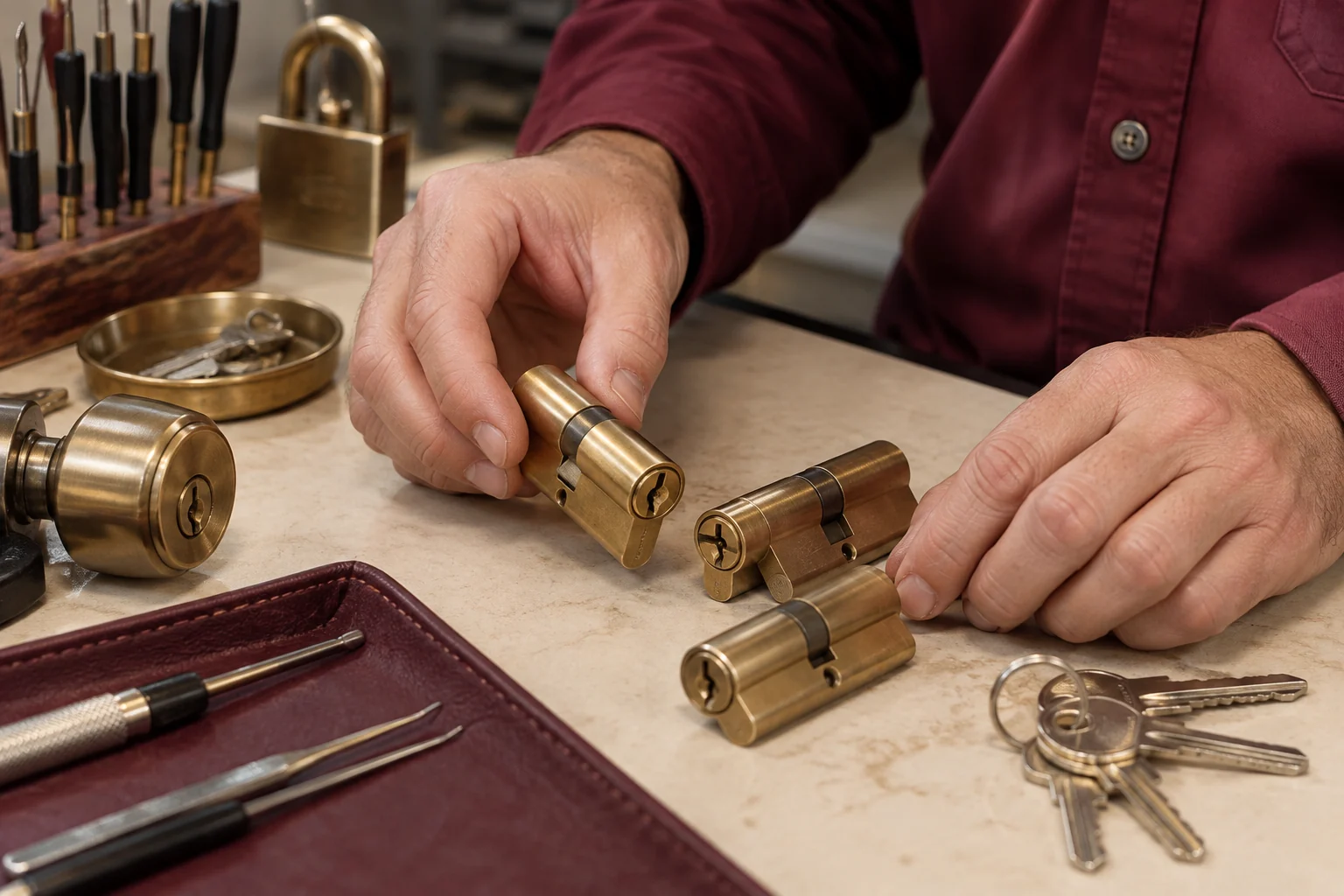
Rekeying changes the inside of the lock so that the old keys no longer work and new ones do. It keeps the same hardware, which makes it a sensible response to lost keys. Read why rekeying beats replacing after lost keys and how rekeying a lock works for the details, then talk with the technician about whether it makes sense while they are already there.
The same service is on the page for house lockouts and rekeying, and if you live in the area, the page for lockout help in Hollywood offers general guidance for that city. Treat these as starting points and ask your own questions on the phone.
Weather, salt air and seasonal habits
Broward County adds a few local wrinkles to the lockout story. Salt air and humidity wear on locks, hinges and latches, so a door that has stuck a few times this summer may be telling you something. If your lock feels gritty or your key needs a jiggle, deal with it before it fails at the worst moment.
Hurricane season brings its own pattern. Shutters, storm preparations and last minute errands change who has which key and where it lives. Before a storm, make sure every adult in the household knows where the spare is and that the spare actually works. A key copy that has never been tested is only a hope.
Finally, build a small habit: pat your pocket for keys before the door closes behind you. It sounds too simple to matter, but it is the simplest lock security there is. Combine it with a spare plan and a working lock, and the next time a door shuts behind you, the evening will go very differently.