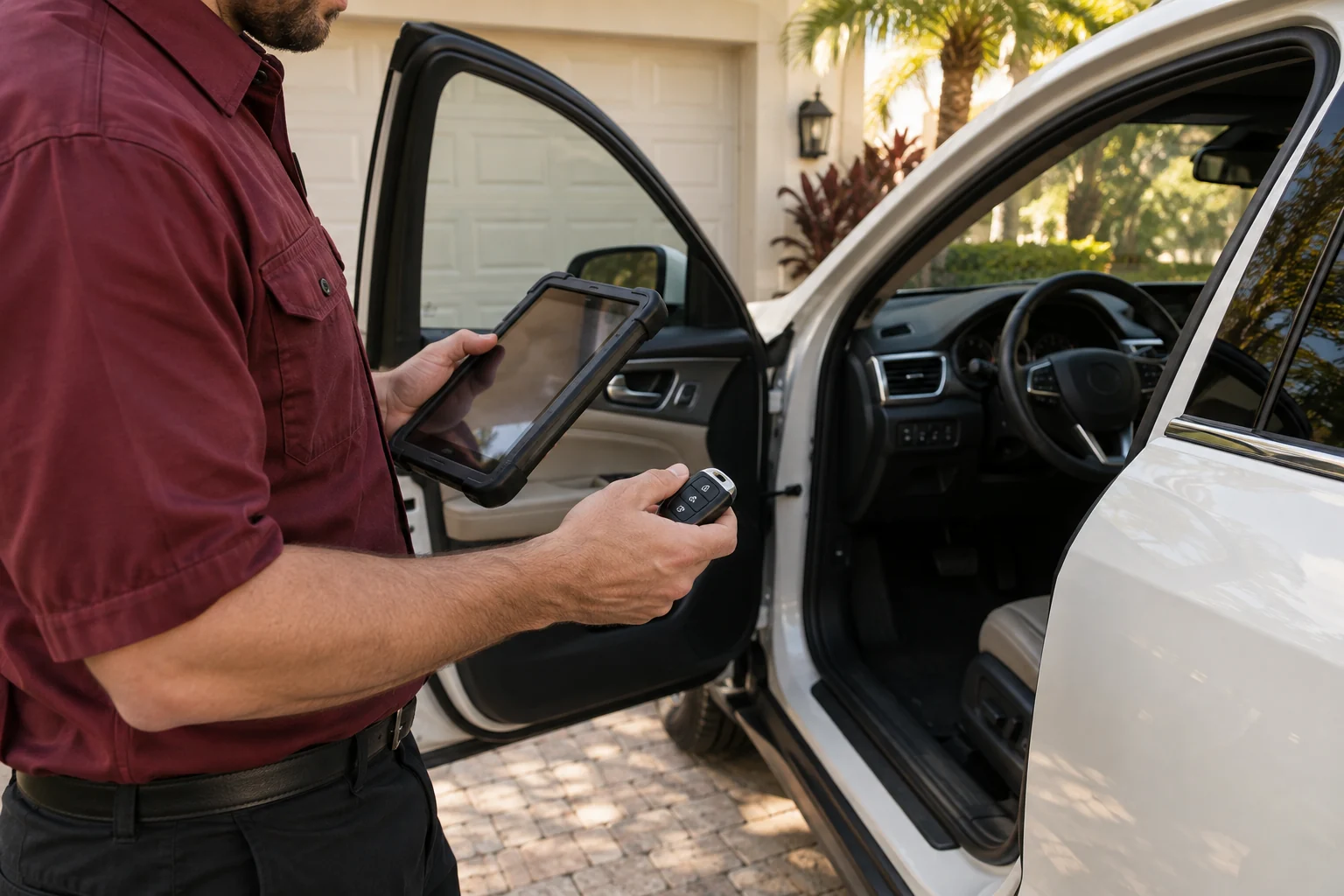
Two problems that often arrive together
People usually call a locksmith about their house for one of two reasons. Either the door is shut and nobody can get in, or the door opens fine but the keys that fit it are in hands that should not have them. The first is a lockout, and it feels urgent the moment it happens. The second is a rekey, and it tends to sit on the to do list until something prompts it.
Half Off Locksmith handles both for houses across Broward County, and the two jobs overlap more than most homeowners expect. A lockout often reveals that a key is missing, and a missing key is the most common reason to change what a lock responds to. Thinking about them together saves you from solving the same door twice.
This page is written for homeowners, long term renters who have permission to change their locks, and family members helping someone else. It explains what each service is, how a call usually unfolds, and how to decide what the door actually needs. It is general guidance, and your own situation, lease or association rules may add steps.
What a house lockout really is
A lockout means you cannot get through a door you are entitled to use. The key might be inside, lost, bent, snapped off in the lock, or simply not turning. Sometimes the cause is the door rather than the key: a latch that has swollen in humid weather, a deadbolt thrown halfway, or a strike plate that has drifted out of line over the seasons.
The details matter because they decide what kind of help you need. A locked door with a working lock needs a careful opening that leaves the hardware usable. A lock that has failed from wear needs repair or replacement once the door is open. A door that sticks may not be a lock problem at all, and our guide on doors that will not latch and strike plate alignment explains how to tell the difference.
Whatever the cause, the goal of a good lockout visit is the same. You get back inside, the door and lock are left in sound condition, and you leave knowing whether the lock should stay as it is. A careless visit that damages the cylinder simply turns one problem into two.
It also helps to know what kind of door you are dealing with. Many Broward homes have a keyed knob or lever plus a separate deadbolt, and either one can be the reason the door stays shut. Some doors from the garage into the house have a single lock that is rarely used and therefore rarely noticed until it fails. Sliding glass doors have their own latches and bars, which behave very differently from a hinged door, and a patio lockout is a different problem from a front door lockout.
What to do in the first few minutes
Start by staying calm and checking the obvious. Walk around the home and look at other doors and windows you normally keep locked, because a family member or housemate may have left one open. Ask whether anyone inside the house can unlock the door for you. Check pockets, bags and the car before concluding the key is truly gone.
Then think about safety. If a child, a pet or someone who needs care is alone inside, say so as soon as you call, because that changes how the situation is handled. If you are outdoors in heavy rain, strong heat or after dark, find a safe place to wait. Our guide to what to do when you are locked out of your house goes through this sequence in more detail.
Resist the urge to force anything yourself. Prying at a door, striking a lock or climbing through a window can cause damage that is more disruptive than the original lockout, and it can injure you. The calmer and more accurate your description when you call, the easier the next step becomes.
What to tell the locksmith on the phone
Contact with Half Off Locksmith is by phone, so the call is where the job begins. Describe where you are, what kind of home it is, and which door you are locked out of. Mention whether the door is a front door, a side door, a sliding door or a door from the garage into the house, because each has different hardware.
Explain what you can see and hear. Does the key go in but not turn? Is there a keypad or smart lock, and is its battery low? Is the deadbolt engaged, or only the knob? Is there a second lock above or below the main one? These small facts help the person on the line understand the hardware before anyone arrives.
The work and the price are explained before it begins, so use the call to ask what the visit will involve. If you also suspect that someone else has a key, or that yours was lost rather than locked inside, say that too. It lets the locksmith plan for rekeying in the same visit if you decide to go ahead. Our short list of questions to ask a locksmith on the phone can help you prepare.
How the visit goes once someone arrives
Expect to be asked to show that you belong at the property. A reputable locksmith will want some sign that you live there or have the right to enter, such as identification that matches the address, mail, or a lease. This is not an insult. It protects you, because it is exactly the check you would want applied if a stranger tried the same thing at your door.
Once that is settled, the locksmith looks at the lock and the door, explains the plan, and tells you the price before starting. You should hear what is going to be done, whether the lock is expected to survive the opening, and what the other options would be. If something about the plan does not make sense to you, ask. The point of explaining first is that you decide, not the technician.
When the door is open, the work is not finished. The lock is operated with you, the key is tested, and any problem found along the way is pointed out. If the opening revealed worn hardware, a cylinder that is loose in the door, or a latch that barely catches, you will hear about it now rather than discovering it the next time you are in a hurry.
Why a lockout is a good moment to think about your keys
Many homeowners treat a lockout as a one time embarrassment and move on. It is also a useful prompt. If you were locked out because a key went missing rather than because it was left inside, you now have a key somewhere that still opens your door. That could be down a storm drain, or it could be in the pocket of a stranger who also found your wallet.
The same applies after other life events. Moving into a home, ending a tenancy, separating from a partner, dismissing a cleaner or contractor, or recovering from a break in all leave open questions about who holds a copy. Our checklist on what to do after a break in covers the practical steps that follow that kind of event.
You do not need proof that a key was misused to justify changing a lock. Uncertainty is reason enough. The time to decide is while the locksmith is already standing at your door, because the extra work is small compared with arranging a second visit.
What rekeying actually changes
A lock cylinder contains a row of small pins that sit at different heights. The cut of your key lifts each pin to exactly the right level so the cylinder can turn. Rekeying means the locksmith replaces those internal pieces so a different key cut works and the old key cut no longer does. The lock body, the handle and the deadbolt on the door stay as they are.
The result is that the keys you carry today stop working, and a new set takes their place. It does not make the door stronger or weaker. It simply changes who can use it. Our article on how rekeying a lock works explains the idea with simple diagrams in words, and it is a good read before you decide.
Rekeying suits situations where the hardware is sound and the real concern is key control. It is often the sensible choice after you move in, after a lost key, after a tenant leaves, or when you want every exterior door on the house to open with one key instead of a ring of five.
Rekey or replace, and how to choose
Rekeying is not always the right answer. If a lock is worn, loose, corroded, damaged or simply a poor match for how you live, changing the key will not fix the underlying weakness. A deadbolt that spins in the door, a knob that sticks in humid weather, or a cylinder that is difficult to turn even with the right key is telling you something about the hardware itself.
Replacement also makes sense when you want a feature that your current lock does not have, such as a higher grade deadbolt, a keypad, or a smart lock that lets you issue and cancel access codes. Our guide on rekeying versus replacing locks sets out the questions that tip the decision, and smart lock options are worth a look if you are leaning toward changing the hardware.
A practical way to decide is to ask three things. Is the lock mechanically healthy? Is it the right level of security for this door? Do you only need new keys? If you answer yes, yes and yes, rekey. If any answer is no, discuss replacement with the locksmith, and ask them to explain the difference in plain words.
One key for the whole house
A house often grows a collection of mismatched keys over the years. The front door has one, the back door another, the side gate and the garage entry have their own, and nobody remembers which is which. A rekey is a natural time to fix that by having the exterior locks set to the same key, usually called keying alike.
The convenience is obvious, but think it through first. A single key means a single point of loss, so it makes sense to pair it with a clear habit for spares. It also helps to know which doors should stay separate. A shed, a detached office or a rented room inside a shared house may deserve a different key so access can be handled on its own terms.
If you rent out part of your property, or if tenants change often, our notes on rekeying rental properties explain how to keep tidy control. For a single family home, a good routine is to label the spare key's hiding place in your head and nowhere else, and see where and how to make duplicate keys before you hand copies to anyone.
South Florida conditions that affect locks
Locks in Broward County work in an unusual environment. Coastal humidity and salt air gradually attack metal, and exterior hardware can stiffen or corrode long before it looks worn. Doors swell in wet months and shrink in dry ones, which shifts the alignment between latch and strike plate. A key that once turned smoothly may begin to drag, and that is often the first warning sign.
Hurricane season adds its own pattern. Homeowners shutter windows, move vehicles, and sometimes leave in a hurry, which is when keys get misplaced and doors get locked with the key still inside. After a storm, swollen frames and shifted doors can make a lock behave strangely even when nothing is broken. Older homes may carry original hardware that has outlived its parts, while newer homes may have builder grade locks chosen to fit a budget rather than a lifestyle.
None of this means you should worry, only that a lockout or a rekey is a fair moment to ask the locksmith to look at the whole door. A few minutes of attention to the latch, the strike plate and the cylinder now often prevents the next lockout. Our guide on deadbolt grades helps if you are comparing replacements.
Condos and rental homes bring another layer. Turnover between residents is common in South Florida, and with every move comes a set of keys that may still be out there. Buildings often have rules about which locks may be changed and who must be given a copy, and those rules differ from one association or landlord to the next. Check with your property manager, board or lease before changing anything on a door you do not fully control, because requirements vary and the right person to ask is the one who sets them.
After the work: testing and good habits
The last step of either service is testing, and it should happen with you present. Turn each new key in the lock several times, from outside and inside. Check that the old key no longer works if you were rekeying. Open and close the door fully, listen for the latch, and make sure the deadbolt throws all the way into the frame. If anything feels unusual, say so while the locksmith is still there.
Then build a few small habits. Keep a spare key with someone you trust rather than under a flowerpot, since obvious hiding places are the first ones anyone checks. Label nothing with your address. Replace the batteries in any keypad or smart lock on a schedule, not after they die. If you live in a condo, confirm who in the association needs to be told about the change.
If you live in a city we cover, you may also like the local pages for Hollywood lockouts and Fort Lauderdale rekeying, which give general guidance for those places. For a wider look at everything we do, visit the services overview.