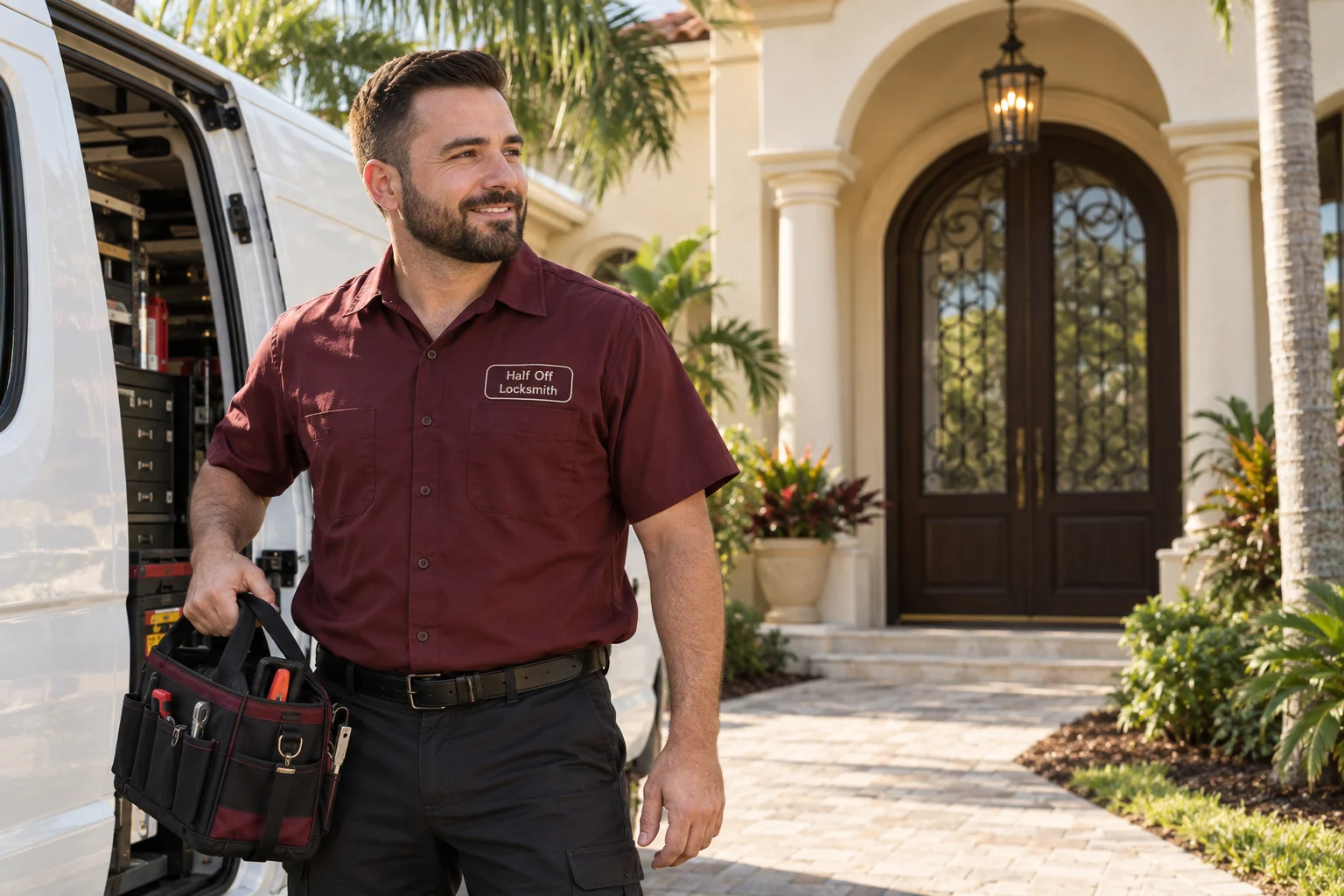
Locksmith Services in Weston
Locks touch almost every part of daily life, from the front door to the car to the office. This page is a general guide for Weston residents on the kinds of locksmith help available and how to decide what you need.
Call (954) 888-8804The many jobs a locksmith actually does
Most people picture a locksmith opening a locked door, and that is certainly part of the work. In practice the trade is much broader. It covers cutting and programming keys, changing what a lock responds to, fitting new hardware, repairing worn mechanisms, opening safes, working on vehicles and helping businesses control who can enter which rooms. Each of these jobs asks for slightly different tools and knowledge.
Because the range is wide, it helps to describe your situation clearly when you call. Say whether it concerns a house, a vehicle, a safe or a business. Say what has happened and what you want to end up with. A locksmith can then explain what the work involves, what needs to be decided and what the visit will look like. You do not have to know the correct term for the part that has failed.
This page offers general guidance for people in Weston. It does not describe local rules, because those vary and change, and it does not claim anything about particular streets or buildings. What it does offer is a map of the common situations, along with links to pages that go deeper into each one. Treat it as a starting point for deciding what to ask.
Houses, condos and townhomes
Residential work is the heart of most locksmith calls. A family might be locked out, might want every door on a single key, or might have moved into a house with a mystery collection of keys. Our page on house lockout and rekey service sets out how those jobs work, from opening a stuck door to changing which key fits a lock.
Weston has a mix of housing types, and each has its own wrinkles. Condos and townhomes often involve an association with its own expectations about entry doors and common areas. Single family homes may have several exterior doors, a garage entry and sliding patio doors, each with its own lock. Older homes may have mismatched hardware accumulated over many owners, while newer ones may share builder keys with neighbors.
Whatever the home, think of the exterior doors as a system. A strong front lock does not help if the side door is flimsy or the garage entry sticks open. Walk the perimeter and note each door, each lock and each place where a key is kept. That list becomes the basis for a sensible plan, whether you are rekeying, replacing or simply repairing what is already there.
Lockouts and what to do in the moment
A lockout feels like an emergency even when it is not. Before you do anything else, check whether anyone or anything inside is at risk. If a child or a pet is shut in, or something is cooking, say so at the very beginning of your call. Where a person is in danger, contact emergency services first, because a locksmith is not a replacement for them.
If the situation is calm, check your pockets, your bag and your car, and think about who else holds a key. Avoid forcing doors, climbing or removing parts, because the damage is often more expensive than the lockout itself. Our guide to lockouts in Weston goes into the details of what to say and what to expect when someone arrives.
Afterward, use the experience as a prompt. Why did it happen? A worn key, a sticking latch, an automatic lock or a missing spare can each be fixed. Taking ten minutes to deal with the cause is far less trouble than the next lockout. If the cause was a lost key, consider having the lock rekeyed so the missing key stops working.
Families with several drivers and several house keys can reduce risk with a small routine. Hang keys on the same hook every time you come in. Keep a spare with someone you trust rather than under a doormat. Teach children and visitors how the lock behaves, especially if it has a quirk such as a door that needs a firm pull before the bolt turns. Habits of this kind prevent far more lockouts than any gadget can.
New locks, smart locks and upgrades
Sometimes the right answer is simply a better lock. Maybe the existing one is worn, corroded by humid air, or never suited to the door in the first place. Installation involves more than swapping parts, since the door, the frame and the strike plate all affect how well the new hardware will work. Our guidance on lock installation in Weston covers that side of the work.
Smart locks add a further set of choices. Keypads, phone connected models and retrofit units each suit different households. They are convenient for sharing access with relatives or guests, and they remove the need to hand out keys. They also depend on batteries, and a sensible plan includes a physical key backup. Our smart locks page outlines the services around them.
Upgrades do not have to be dramatic. A longer strike plate screw, a sturdier deadbolt on the garage entry, or a better latch on a patio door can all improve things at modest effort. The sensible approach is to start with the weakest point and work outward. Asking what the weakest point is, and why, is one of the most useful questions you can put to a locksmith.
Cars, keys and ignition trouble
Vehicles bring their own set of problems. Car keys today are far more complicated than a simple cut piece of metal. Many contain a small electronic chip that must be matched to the car, and others are push button fobs that talk to the vehicle wirelessly. Losing one can be a bigger problem than it first appears, and replacing it is not always as simple as visiting a hardware store.
If you have a spare key, you are in a much stronger position than if you have lost the only one. Even so, an old key can wear out, and the ignition cylinder it turns can wear as well. Our pages on car key replacement and ignition repair explain the main situations, from a lost key to a key that will not turn.
For Weston drivers in particular, the page on automotive locksmith help in Weston offers more general guidance. Cars parked outdoors in the heat and humidity of South Florida face extra wear on locks, fobs and batteries. Keep a spare somewhere safe, away from the car, and think about replacing a failing fob before it fails completely.
Safes and secure storage
Many households keep a small safe for documents, jewelry or cash. Safes fail in ordinary ways: the combination is forgotten, the battery in an electronic keypad dies, or the key is lost. The urge to force the door is understandable, but it can destroy the contents or the safe. A locksmith trained in safe work can often open one without damage.
Choosing a safe is its own decision. Size, fire resistance, how it is anchored and where it lives all matter. A safe that can be carried away is only a box that thieves take somewhere more convenient, so anchoring counts. Our page about safe opening explains the services, and our home safe buying guide helps with the earlier question of what to buy.
Keep track of safe combinations and keys the way you would other important records. Write the combination down and store it somewhere separate from the safe, or tell someone you trust. A safe you cannot open is worth very little to you. Check electronic models regularly and replace the batteries on a schedule instead of waiting for the keypad to go dark.
Offices, shops and commercial doors
Businesses use locks differently from households. A storefront door is opened many times a day. An office may need different keys for different employees. A storage room might need tighter control than a reception area. When staff change, access has to change with them. Commercial hardware is built with this heavier use in mind.
The details can get technical, with grades of hardware, exit devices on emergency doors, and systems where one key opens many doors while others open only a few. Our commercial locksmith page sets out the services in plain terms, and the page on commercial locksmith help in Weston offers general guidance for local businesses.
Rules for commercial doors, especially exits, are serious. Requirements vary, and they depend on the type of building and its use. Ask your landlord, your insurer or the relevant local authority what applies to you. A locksmith can explain how hardware works and help you carry out the work, but the responsibility for meeting rules rests with the owner or operator of the building.
Keys, copies and who holds them
Every household accumulates keys without noticing. There is the one on your ring, the one with a neighbor, the one a relative keeps, and the one that is probably in a kitchen drawer. Each copy is a door that opens for someone, and over time the list drifts out of date. A simple written list of who holds what is surprisingly rare and surprisingly useful.
When a copy is made, it should match the original closely, and the cutting should be clean. A poorly cut duplicate wears the lock and sticks, and eventually it breaks off inside. If a key is already worn, copying from it passes the wear along to the new key. Ask for a copy made from a fresh original where you can, and test it in the lock before you leave.
Think too about restricted or hard to copy keys. Some are designed so that copies need authorization, which keeps the number of keys under control. For most households this is unnecessary, but for landlords, family businesses or anyone worried about stray copies it can make sense. Our guide to high security and restricted keys explains what the term means and where it is useful.
How a typical visit works
The process is the same for most jobs. You call and describe the situation and the place. The work and the price are explained before anything begins, so you can say yes or no with the full picture. If you agree, the work goes ahead, and when it is finished the result is tested with you so you can see that it behaves as it should.
Good communication keeps the visit smooth. Be ready to say who you are in relation to the property, since a responsible locksmith will want reasonable confirmation. Have identification, a lease or another record available if you can. If you are not the owner, involve the owner or manager early so no one is surprised by changes to the locks.
After the work, ask any questions you still have. How many keys did you receive? How should the lock be maintained? What should you do if something feels different next week? Honest answers to these questions make a difference. It is also sensible to keep a note of what was done, in case you need to describe it later.
If you are comparing options before committing, it is fair to ask what the visit will involve and how long you should set aside, even though no one can promise an exact time before seeing the door. Plan to be available to test the work. Keep pets and children clear of the work area, and clear a path to the door so the tools and parts can be set down safely.
South Florida conditions and your hardware
Hot, humid, salty air is hard on locks. Metal parts corrode, finishes fade and pits form, especially on doors that face the weather. Keys that were once smooth begin to stick, and a lock that feels stiff invites force. If a lock in your home is rough today, treat that as a warning instead of a quirk.
Hurricane season adds a particular pattern. Before a storm, people think about shutters and supplies; after one, they discover swollen doors, jammed latches and flooded cars with confused electronics. Having a plan for where spare keys are kept, who can reach them, and what you would do if a door will not open is a modest bit of preparation that pays off.
Vehicles parked outdoors suffer in the same way. Heat shortens the life of key fob batteries and can damage plastic parts. Salt and moisture creep into locks and ignitions. Little routines help: replace fob batteries before they fail, keep a spare key in a safe place, and avoid hanging a heavy bundle of keys from the ignition.
If a key starts to feel rough in the ignition or the door lock, do not wait for it to fail. A worn key can leave metal debris inside the lock, and a worn lock can eat a new key in no time. Early attention is almost always simpler than dealing with a broken key or a car that will not start in the middle of a busy day. Talk it through on the phone and decide what makes sense.
Choosing the right service for your situation
If you are not sure what you need, a short list helps. Locked out of a home, you need entry. Lost a house key, you probably need a rekey. Want better security, you want an assessment and perhaps new hardware. Lost a car key, you need a replacement and possibly programming. Have a stuck safe, you need opening. Running a business, you need controlled access. Our services overview collects these in one place.
Compare places too. Weston neighbors other Broward communities, and the guidance for nearby areas is similar. If you want to explore related pages, you might read about locksmith services in Davie or locksmith services in Miramar. The principles do not change, and each page gives its own examples and angles.
Whatever you choose, take your time with the decision unless it is an emergency. Ask clear questions, expect clear answers, and make sure the work and the price are explained before anything begins. A good locksmith welcomes that. If something seems unclear or pressured, slow down and ask again. Your home and your vehicle are worth a little patience.
Common questions
What kinds of problems can a locksmith help with?
A locksmith helps with lockouts, lost or damaged keys, rekeying, new lock installation, smart lock setup, vehicle keys and ignitions, safe opening and commercial access control. If you are unsure which category your problem falls into, describe it plainly on the call and the right approach can be explained before any work begins.
How do I know whether I need a rekey or a new lock?
If the lock is in good shape and you simply want old keys to stop working, a rekey is usually enough. If the lock is worn, corroded or poorly suited to the door, replacement makes more sense. A locksmith can look at it and give you an honest assessment of which option fits.
Can a locksmith make a key for my car if I lost them all?
In many cases yes, though the process depends on the vehicle and key type. Modern keys often carry chips or use wireless fobs that must be matched to the car. Describe the make, model and year when you call, and be ready to show that the vehicle belongs to you.
Do I need to be home for the work?
For most jobs, yes, or someone authorized needs to be present. The work is explained before it begins and tested with you at the end. If you are a tenant or manage property for others, involve the owner so access and permission are clear before changes are made.
Are there rules about changing locks in my building?
There can be. Condo associations, landlords, leases and commercial properties may all have requirements about locks, keys and exit hardware. These vary, so ask your association, landlord or the relevant local authority. A locksmith can explain how the hardware works, but you are responsible for confirming what is permitted.
What should I have ready when I call?
Know where you are, what type of door, vehicle or safe is involved, and what has happened. Have identification or proof of connection to the property ready. If you can, note the brand of the lock and any symptoms such as stiffness or a broken key. These details help the conversation go smoothly.
Talk through the job before work begins
Say what went wrong and what you need to work when we leave. Scope and price are settled with you ahead of the work.
Call (954) 888-8804Locksmith services in Weston
Each service has its own page for Weston, so you can read what it covers before you call.