Home | Cities | Pembroke Pines
Locksmith Services in Pembroke Pines
This page is general guidance for people in Pembroke Pines who need a locksmith for a home, a vehicle or a business. It explains the common situations, what to have ready when you call, and how to judge the work.
Call (954) 888-8804How to use this page
Pembroke Pines is a large residential city in Broward County, and people here call a locksmith for the same ordinary reasons people do anywhere else in South Florida. A door will not open, a key has gone missing, a car key stopped working, or a business wants its doors handled properly. This page is general guidance. It does not describe particular streets, communities or buildings, because the right answer always depends on your own door, your own lock and your own situation.
What it can do is help you think clearly before you pick up the phone. Most stressful locksmith calls get easier when you already know which kind of problem you have, what information the technician will need, and what a sensible job looks like from start to finish. Read the section that matches your situation and skip the rest.
If you are standing outside a locked door right now, the short version is simple. Move somewhere safe and comfortable, check that nobody inside needs urgent help, and call. Describe the door or vehicle, tell the person on the phone where you are, and ask them to explain the work and the price before anything begins. Everything below expands on that.
The kinds of calls a locksmith handles
Locksmith work falls into a handful of families. Some jobs are about getting you back inside, some are about changing who can get in, and some are about adding better hardware. Knowing which family your problem belongs to saves time on the phone and keeps you from paying for work you did not need.
A person locked out of a house needs entry without damage. A person who lost a set of keys usually needs the locks changed so the missing keys stop working. A person with a car key that no longer starts the engine may need a new key made and matched to the vehicle. A business owner who wants fewer keys floating around may need a controlled system. Each of these has its own page on this site, and the list below shows how they line up.
- Getting back into a home, apartment or townhome when the key is lost, locked inside or broken off.
- Changing the inner parts of existing locks so old keys stop working, which is called rekeying.
- Making and programming a replacement key for a car, truck or motorcycle.
- Repairing or replacing a worn ignition or door cylinder on a vehicle.
- Installing new deadbolts, handles, smart locks and keypad locks.
- Opening a safe when the combination or key has been lost.
- Handling doors, exit hardware and key control for shops and offices.
Houses, townhomes and the doors they rely on
Many homes in a suburban city like this one have a front door, a back or patio door, a door from the garage into the house, and often a sliding glass door. Each of these can fail in its own way. Front doors suffer from a worn latch or a loose strike plate. Garage entry doors are often forgotten until the day the key will not turn. Sliding doors depend on a small latch that can wear out long before the glass does.
If your lock is simply tired, a repair or a fresh cylinder may be enough. If you have lost keys, the safer step is usually to have the locks rekeyed so those keys no longer open anything. If the hardware itself is loose, bent or sticking, replacing it is often cleaner than adjusting it one more time.
It is worth walking around your own home once and writing down every lockable opening. Count them, note which ones share a key, and check whether any lock turns hard. That small list makes a future phone call much shorter and helps the locksmith bring the right parts the first time.
Condos, rentals and homes that change hands
South Florida has a lot of condos, townhomes and rental properties, and these bring their own patterns. Keys multiply. A previous tenant may still have a copy, a relative may hold another, and a contractor may have been given a third. Whenever someone new moves in, the cleanest habit is to treat the lock as unknown until it has been reset.
Rekeying is the usual answer here. The locks stay on the door, but their inner pins are rearranged so the old keys stop working and a new key takes over. You can read how the process works in the guide on how rekeying a lock works, or look at the page for rekey service in Pembroke Pines if that is your situation.
Associations and landlords sometimes have their own rules about which locks may be changed and who must hold a copy of the key. Those rules vary from building to building. Ask your association, property manager or landlord before work begins, and tell the locksmith what you learned so the job fits the building.
For landlords with several units, a consistent approach saves effort. Decide whether each unit gets its own key or whether a master arrangement makes more sense, keep a written log of every key issued, and reset locks at each turnover. The guide on rekeying between tenants walks through the reasoning in more detail, and tenants who want to understand their own position can read the renter's lockout guide.
Cars parked outdoors
Most vehicles in South Florida sit outside, in driveways, parking lots and open garages. Sun, heat and moisture are hard on everything a car key touches. Rubber seals dry out, key fob buttons wear through, and batteries inside fobs lose strength. Many car key problems that look serious turn out to be a weak battery or a worn shell, so it helps to check that first.
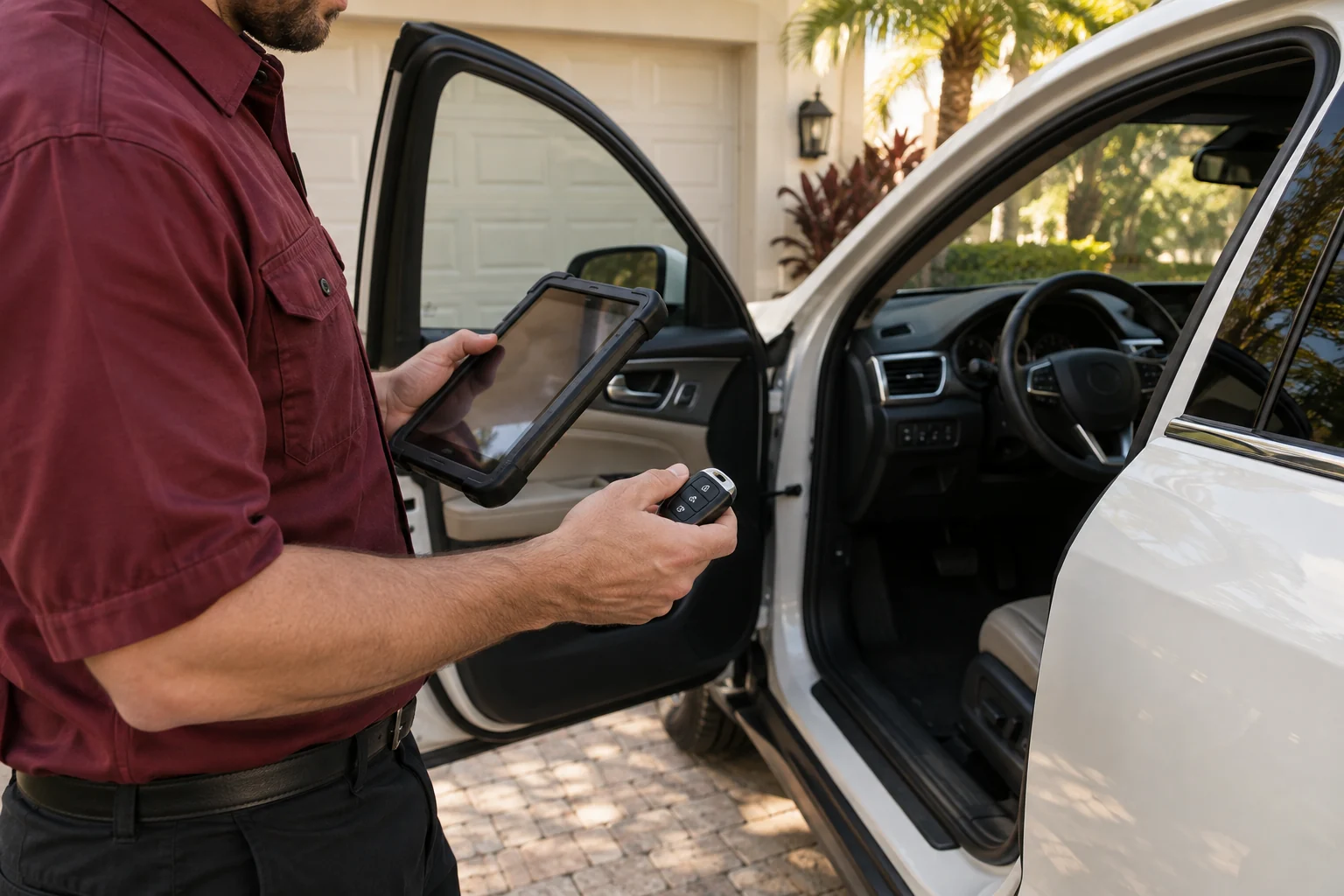
When a key is truly lost or broken, modern vehicles usually need more than a cut piece of metal. Most carry a small chip that must be matched to the car, and some use push button start systems with their own programming. If you want the background, the pages on car key replacement and transponder key programming explain what is involved.
If you have only one key to a vehicle, treat that as a warning rather than a comfort. Making a spare while you still have a working key is usually simpler than starting over after the last one disappears. Keep the spare somewhere other than your own pocket or bag.
Shops, offices and small commercial spaces
Businesses use doors differently from homes. A shop door opens and closes hundreds of times, a back door may be used for deliveries, and an office may have several people who each need some doors but not all of them. Locks wear out sooner, keys get copied more casually, and when an employee leaves the question of who still holds a key becomes a real one.
Good commercial hardware is built for that traffic. Heavier closers, stronger strikes and exit devices that let people leave freely and safely in an emergency all belong to this world. Fire safety and accessibility expectations also shape what a business door may and may not do, and those expectations vary, so ask the local building or fire authority when you are unsure. If you manage a space, the overview of commercial locksmith work and the page for commercial locksmith help in Pembroke Pines are good places to begin.
Whatever the size of the business, it helps to keep a short written record of which doors exist, what hardware each one has, and who holds keys. That record turns every future change into a ten minute conversation rather than a guessing game.
Humidity, salt air and storm season
Coastal humidity and salt in the air shorten the life of exposed metal. Even this far from the water, moisture finds its way into keyways, hinges and latches, and a lock that never gets touched can corrode inside. If a key has started to feel gritty or sticky, that is often the early sign, and it is worth dealing with before the lock fails on a bad day.
Hurricane season adds its own habits. Doors swell and shrink, shutters get hung and removed, and families pack up and leave. Before a storm, check that every exterior door latches fully and that the deadbolt throws all the way into the frame. After a storm, check again, because shifted frames can leave a door that closes but does not truly lock.
Do not spray random household oils into a lock thinking it will help. Oils attract dust and can make a mechanism gum up over time. If a lock feels rough, it is better to ask a locksmith what suits that particular brand, or to have it inspected.
Keys deserve the same attention as locks. A key that has been copied from a copy slowly drifts away from the original cuts, and a worn key wears the pins inside the lock in turn. If a spare works only when you jiggle it, replace it from the original rather than carrying on. Wiping a key clean now and then, and keeping it away from wet pockets and salty bags, costs nothing and helps both the key and the lock last longer through the humid months.
What happens when you call
A good call is a plain conversation. You describe the situation and the place, the locksmith asks a few questions about the door or vehicle, and the work and price are explained before anything begins. You are welcome to ask questions and to say no. Nobody should be pressuring you in the first minute.
Be ready to say what kind of lock or vehicle you are dealing with, whether anyone or any pet is inside, and whether the door is damaged. If you can describe the make and model of a car, or the style of the lock, say so. Small details help the technician bring the right tools.
When the work is finished, you should be shown that it is finished. Keys are tested in the lock, doors are opened and closed from both sides, and a car key is tried in the door, the ignition and any remote functions. If something does not work the way you expect, say so before the technician leaves. That is the moment to fix it.
Keep any old keys, broken pieces or removed hardware if you want to see them, and ask for the new keys to be handed to you directly. If the job involved rekeying, ask how many keys came with it and whether extra copies can be made on the spot. Small habits like these turn a one time repair into something you can rely on, and they make the next call simpler because you know exactly what is on the door.
Questions worth asking before you agree
A few simple questions protect you every time. Ask what exactly will be done, what the total will include, and whether anything could change the price once work begins. Ask whether the lock will be repaired, rekeyed or replaced, and why. If you hear a vague answer, ask again, politely and plainly.
If you want a deeper checklist, the guides on questions to ask a locksmith on the phone and on locksmith scam warning signs are worth a few minutes. They explain the patterns that make people uneasy, such as a price that changes at the door or a technician who insists on drilling a lock that could have been opened gently.
It also helps to remember that you are entitled to understand the work. A locksmith who explains clearly is usually a locksmith who knows the job. Half Off Locksmith works on that basis, and you should expect the same from anyone you call.
Telling a repair from a replacement
One of the most useful things a locksmith does is tell you honestly whether a lock needs a small repair or a full replacement. A latch that sticks may only need adjusting. A cylinder that turns stiffly may be worn, dirty or corroded. A handle that wobbles may only need its mounting tightened. Yet if the body of the lock is cracked, bent or rusted through, adjusting it again simply delays the next failure.
Age matters too. Older hardware in older homes may no longer have parts that match, and newer hardware in newer homes may have been chosen for looks rather than strength. A sensible technician will look at how the door is built, how it is used and what is already installed before suggesting anything. If one choice costs less now and another costs less over time, you should hear both.
Think about how the door is used day to day. A front door opened a dozen times a day wears differently from a storage room door that is locked once a month. A patio door near a pool sees wet hands and salt. A garage entry door often takes a beating from bags and boxes. Tell the locksmith these habits, because they change which hardware will actually hold up and which only looks good on the shelf.
Doing a little planning now
The easiest locksmith visit is the one you planned. Have a spare key made for each lock that matters and keep one with someone you trust. Replace worn keys before they snap. Write down which keys belong to which doors. If you drive an older vehicle with a single key, make a second one now rather than later.
Consider whether any lock in your home or business is overdue for an upgrade. A deadbolt with a loose strike, a handle that sags, or a back door that has never had decent hardware are all worth attention. You do not need to replace everything. Start with the doors people use most and the doors that face away from the street.
If you are weighing a keypad or app based lock, the guide on smart locks explains the trade offs honestly, including batteries, backup keys and what happens when the power goes out. And if you are not sure where to begin, the overview of all locksmith services shows how the pieces fit together.
Common questions
Is this page specific to certain parts of Pembroke Pines?
No. It is general guidance for anyone in the city. It does not describe particular streets, communities or buildings, because the right answer depends on your own lock, door or vehicle. When you call, explain your situation and the place, and the technician can tell you what is realistic for that job.
What should I have ready before I call a locksmith?
Know where you are, what kind of door or vehicle is involved, whether anyone or any pet is trapped inside, and whether anything is damaged. If you can name the make and model of a car or the style of a lock, mention it. Also be ready to prove that the home or vehicle is yours.
Should I rekey or replace my locks after losing keys?
Rekeying is often enough when the locks are in good shape, because it makes the missing keys useless without changing the hardware. Replacement makes more sense when a lock is worn, damaged, loose or out of style. A locksmith can look at the door and explain which choice fits.
Do condos and rentals follow different rules for changing locks?
They can. Associations, landlords and lease agreements often have their own requirements about who may change locks and who must hold a copy. Those rules vary, so ask your association, property manager or landlord before work starts, and tell the locksmith what you learned so the job fits.
Why do my keys feel rough or sticky in humid weather?
Moisture and salt in the air can corrode the inside of a keyway and leave grit behind. A key may also be worn. Have the lock inspected rather than spraying household oil into it, since oil can attract dust. A locksmith can clean or replace the cylinder if needed.
How will I know the work was done properly?
The finished work should be tested with you present. Keys should turn smoothly, doors should close and latch from both sides, and a car key should work in the door, the ignition and any remote functions. If anything feels wrong, say so before the technician leaves so it can be corrected on the spot.
Talk through the job before work begins
Explain the problem, what has to work again and who needs access afterward. We talk through the scope and the price first, and work begins after you agree.
Call (954) 888-8804Locksmith services in Pembroke Pines
Each service has its own page for Pembroke Pines, so you can read what it covers before you call.