Home | Cities | Fort Lauderdale
Rekey Service in Fort Lauderdale
This page is general guidance for people in Fort Lauderdale wondering whether to rekey. It explains what rekeying does, when it makes sense, and how it differs from buying new locks.
Call (954) 888-8804What rekeying actually changes
Rekeying is one of the most useful and least understood jobs a locksmith does. Inside a typical house lock, a row of small pins sits at different heights. A key with the right cuts lifts every pin to exactly the correct level, which lets the cylinder turn. Rekeying changes those pins to a new combination, so a different key fits and the old key becomes useless. The lock itself stays on the door, and the outward look does not change.
That is the whole idea, and it explains why rekeying appeals to so many people. You keep hardware you already like, whether that is a handle set, a deadbolt or a decorative knob, and you gain a fresh key that nobody else holds. You do not have to repaint around a new faceplate, match finishes or worry about whether a new model will fit the bore in the door. Everything stays familiar except the key.
This page is general guidance for residents and property owners in Fort Lauderdale. It is not a claim about particular streets, buildings or local requirements. Condo associations, landlords and homeowner groups sometimes have their own rules about who may change locks, so check with whoever manages your property before the work is arranged.
Situations where rekeying is the sensible move
The most common trigger is a move. When you take possession of a home or apartment, you cannot know how many copies of the previous keys exist. The former owner, a real estate agent, a contractor, a cleaner or a neighbor may have had one. None of them necessarily means harm, but you have no way to count. Rekeying resets the situation at once, and it is a sensible way to get peace of mind compared with the unknowns.
Lost keys are the second trigger. If a key goes missing and it carries any hint of your address, or if you lost a whole ring in a public place, the safest choice is to rekey. The same applies after a break in, a stolen bag or a wallet that held a key. A key found by the wrong person is more than an inconvenience. Read our article on lost house keys for the decision steps.
Life changes also create reasons. A relationship ends and a former partner still has a key. A roommate leaves. A house cleaner or dog walker stops working for you. A contractor finishes a long project. In each case, the polite and practical step is to rekey so that nobody has to remember who still holds a key. Our guide on rekeying after moving covers this thinking in more detail.
- You moved into a home and want to cancel keys given out before you arrived.
- A key was lost or stolen, especially one that could be tied to your address.
- A roommate, partner, worker or tenant no longer needs access.
- You want all your doors to work with a single key.
- You are preparing a rental for a new occupant.
Rekey or replace: how to decide
Rekeying and replacement answer different questions. Rekeying asks, who should be able to use this lock? Replacement asks, is this lock still good enough? If the hardware is sound, smooth and attractive, rekeying is usually the more economical and less disruptive option. If the lock is damaged, loose, rusty, outdated or simply not what you want, replacing it makes more sense.
Coastal conditions matter here. Humidity and salt air slowly attack exterior hardware. A lock that looks fine from outside may be gritty inside, with a key that turns with effort. In such cases rekeying alone may not help, since the mechanism is tired. A locksmith can feel and inspect the lock, tell you honestly what shape it is in, and explain whether rekeying will leave you with something dependable.
We compare the paths in detail in our article on rekey versus replace. If you are not certain, ask the locksmith to explain both options before you decide, including what each will do and what it will not do. The work and the price should be explained before it begins, and the final choice stays yours.
Think too about the rest of the door. If the lock is dull but the door sags, the latch does not catch or the strike plate has pulled loose, no amount of new keying will fix the real complaint. Ask the technician to look at how the door closes and whether the latch lines up with the frame. Sometimes a small adjustment turns a stubborn door into one that locks smoothly, and that is worth knowing before you decide how much to spend on the hardware.
How the process works from your side
From your point of view, rekeying is simple. You call and describe what you have: how many doors, what type of locks, and why you want them rekeyed. The locksmith asks questions about the brand if you know it, the age of the hardware and whether any lock is already sticking. This helps prepare the right parts and tools, and it lets the plan and price be explained clearly before anyone starts working.
At the property, the technician takes the cylinders apart, changes the internal parts to a new combination and reassembles them. Then each lock is tested with the new key, several times, from both sides where applicable. If your doors are to share one key, the technician arranges the locks so that the same key works across them. The old keys no longer turn, and that is the point of the work.
Afterward, you receive the new keys. Test them yourself before the locksmith leaves. Try each door, each deadbolt, and any lock that matters, such as a gate or garage entry. Ask how many keys you have and whether you can order more later. Our explanation of how rekeying a lock works shows the idea with more detail if you are curious.
One practical point deserves emphasis: keep the old keys until the work is done and tested, then decide what to do with them. Some people keep a single old key as a memento, while others discard them. Either is fine, since an old key that no longer turns the lock has no power. What matters is that the new keys are the ones you carry, and that you can name every person who holds a copy of them.
Keyed alike, one key for every door
Carrying a different key for the front door, the back door, the side gate and the garage entry gets tiresome. One solution is to key several locks alike, which means they are set up to accept the same key. Rekeying is a natural moment to do this, since each lock is already being opened and adjusted. You end up with a ring that is lighter and easier to manage.
There is a trade off. If one key opens everything and you lose it, everything is exposed. Some households prefer to keep one key for the main doors and a separate key for specialized spaces such as a storage room, a home office or an outbuilding. The sensible approach depends on how you live and who needs access to what. A thoughtful locksmith will talk this through instead of assuming one answer.
Our article on one key for all locks explains keyed alike and master key ideas side by side. Whatever you choose, write down the plan: which key opens which doors, and who has copies. A simple note in your records saves confusion later, particularly if you sell the home or hand the keys to a property manager.
Landlords, property managers and short stay hosts
For rental properties, rekeying is a routine part of good management. Each time a tenant leaves, there is a question about copies. Tenants may have lent keys to friends, family or workers. Past residents can keep a key in a drawer long after they have moved. Rekeying between tenants removes the doubt, protects the next occupant and helps the owner show that reasonable steps were taken.
Timing and coordination matter. A turnover often has a tight window between one lease ending and the next beginning, with cleaning, painting and repairs to schedule. Build rekeying into that plan, so it is not forgotten. If you manage many units, a consistent system, with records of keys per door and a standing relationship with a locksmith, takes pressure off every turnover. Our guides on rekeying rental property and tenant turnover go deeper.
Tenants who wish to rekey their own homes should read the lease and speak with the landlord first. Altering locks without permission can breach an agreement, and the landlord may need a copy for emergencies. Rules vary, so this page does not state what applies. Confirm the details with your landlord or property manager, and then arrange the work in a way that satisfies the agreement.
Condos, associations and shared entrances
Condo living adds another layer. Your unit door may belong to you, while the building entrance, mailroom, storage cage and gym belong to the association. Rekeying your own unit is typically a matter between you and the association's rules, but the common areas are never yours to change. Many buildings also keep a master key or a copy of unit keys for emergencies, and they may expect to be given a new one if you change your lock.
Before you schedule, ask management what they require. They may specify a particular lock brand, a particular finish or a policy for emergency access. Some buildings demand notice or approval for any work on exterior doors, since the doors are part of the building's appearance and fire safety. A short email now prevents trouble later, and the locksmith can work within whatever policy applies.
If your building uses an electronic fob system, remember that rekeying a key lock does not change fob permissions. The two systems operate separately. When a person leaves your household, you may need to deal with both: rekey the mechanical lock and ask management to deactivate the fob. Writing down both steps in your moving or turnover list keeps one from slipping through the cracks.
Cars, mailboxes and the locks beyond the front door
Rekeying is not only for house doors. Many people forget the other locks that share a key or a life with their home. A mailbox lock, a storage shed, a gate, a file cabinet and a garage side door might all deserve attention. Mailbox locks in particular may be controlled by the postal service or building rules, so ask who is responsible before making any change.
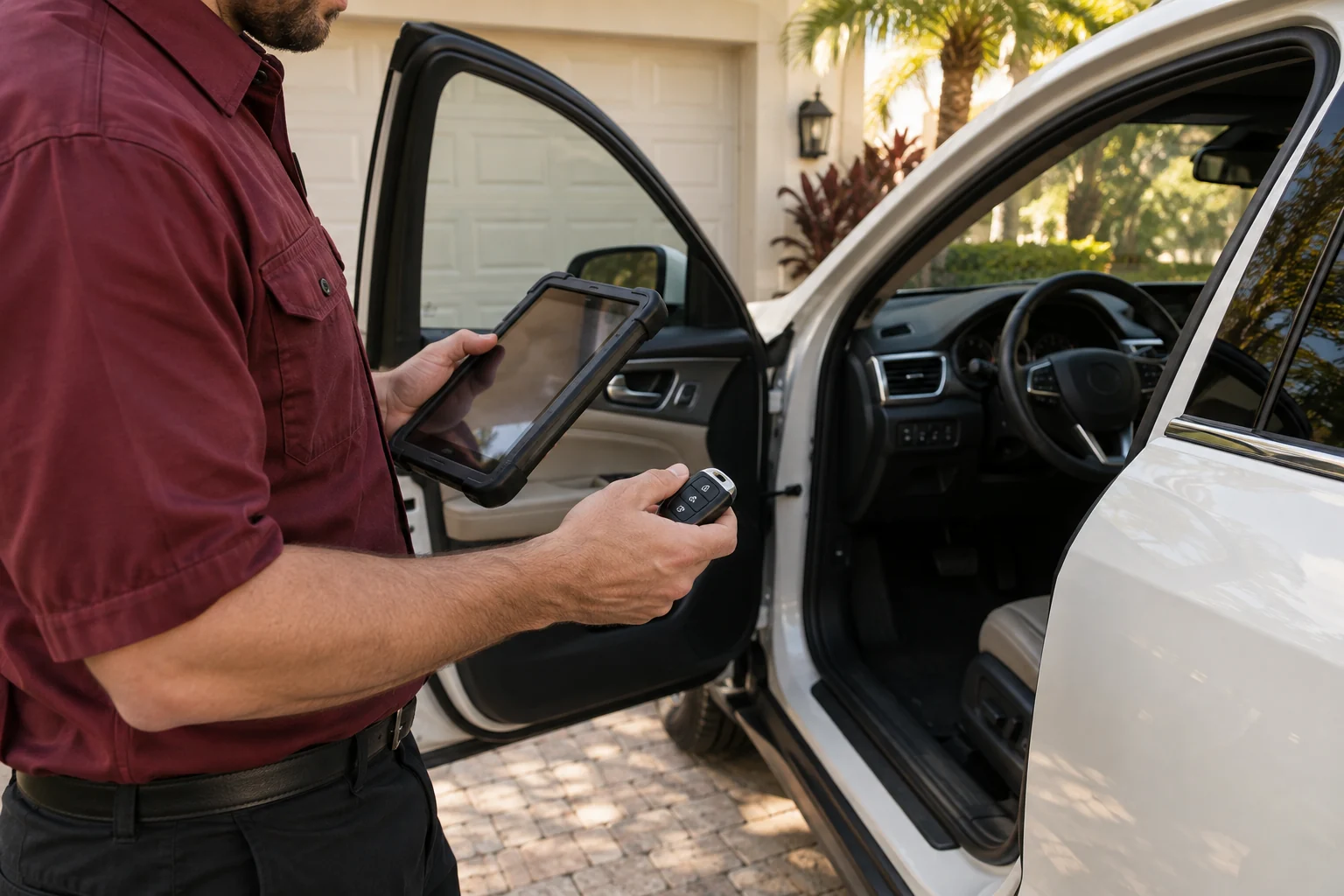
Cars work differently. Vehicle locks and ignition systems are tied to keys with electronic components, and changing who can drive the car is a matter of key programming rather than simple rekeying. If you lost a car key and worry about it being used by someone else, ask a locksmith about options for your vehicle. Our page on automotive locksmith help in Fort Lauderdale explains the basics.
A good habit is to list every lock you own in one place: front door, back door, garage entry, gate, shed, mailbox, safe, file cabinet. Next to each, note the type of key and where spares live. When the day comes that you need to rekey, you will already know the scope, and you can make a sensible plan instead of discovering forgotten locks one at a time.
What it should cost you in attention, not alarm
Many people hesitate to rekey because they imagine a large disruption. In practice the work is usually modest, and the main effort is on your side: gathering the locks, deciding which doors are included, and keeping the new keys organized. Talk about the price on the phone and have it explained before the work begins. Our rekey cost guide describes the factors that shape it, such as the number of locks, their type and their condition.
When comparing options, avoid being drawn into a conversation that is only about the lowest number. A lock that is poorly rekeyed, or hardware that is too worn to hold a new setup, will cost more later. Look for clear explanations, honest assessment of your locks and a willingness to answer questions. Those qualities say more about the service than a headline figure ever could.
Finally, think about frequency. Some owners rekey only when something happens. Others adopt a routine, such as rekeying after each tenant or after any change of household. Neither is wrong; it depends on risk and circumstances. Our article on how often to rekey your home helps you set a rhythm that fits your life and your property.
Working with a locksmith and finishing well
Half Off Locksmith serves Broward County by phone. You call, describe the situation and the place, and the work and the price are explained before it begins. When the rekey is done, the finished work is tested with you. That simple pattern, explain, do and test, is worth expecting from any professional you hire for your locks.
Before the technician leaves, make sure you understand the details. How many keys do you have? Which doors are included? Are any locks worn and likely to need attention soon? Do you need extra copies? If you want to add a new deadbolt or upgrade a tired handle, mention it, and the lock installation page for Fort Lauderdale explains how that work is handled.
For a wider picture of services in the city, see our general page on locksmith services in Fort Lauderdale. Keep your new keys in a sensible place, share copies only with people you trust, and make a note of the date you rekeyed. A few minutes of tidy record keeping turns a one time job into long lasting security.
If you are rekeying because of a difficult situation, such as a separation or a dispute with someone who had access, take the practical steps calmly. Rekey the exterior doors first, check the garage entry and any side gates, and think about whether other items tied to that person, such as an alarm code or a smart lock code, should also be changed. Locks are one part of a larger picture, and a locksmith can help you cover the physical part of it.
Common questions
Does rekeying mean the locks are replaced?
No. Rekeying changes the internal parts of the existing lock so that a new key works and the old key does not. The handle, deadbolt body and finish stay on the door. Replacement means removing the lock and installing a different one. A locksmith can explain which approach suits your hardware and your reason for the change.
Will my old keys still work after rekeying?
They should not. The purpose of rekeying is to make previous keys useless while a new key works. The locksmith tests each lock with the new key, and you should try them yourself too. If an old key still turns anything, tell the locksmith before they leave so it can be corrected.
Can all my doors be set to use the same key?
Often yes, as long as the locks are of types that can be keyed together. Many people choose this for convenience. The trade off is that losing that one key affects every door. A locksmith can explain how to organize your doors, including keeping a separate key for sensitive areas.
Should I rekey after a tenant moves out?
Many landlords and property managers do, because it removes doubt about copies held by previous occupants. It also helps protect the next tenant. Lease terms and local expectations vary, so confirm what applies to your property with your management company or legal adviser, then plan the work into your turnover schedule.
Is rekeying enough if my lock is old or sticking?
Not always. If the mechanism is worn, gritty or corroded, a new key may still turn poorly. In that case replacement might serve you better. A locksmith can inspect the lock, tell you honestly what condition it is in and explain what each option will achieve before you decide.
Does this page describe rules for Fort Lauderdale rentals and condos?
No. It is general guidance for people in Fort Lauderdale and does not state local rules, lease terms or association policies. Those vary by property, so ask your landlord, building manager or association what applies before arranging any work on your locks.
Talk through the job before work begins
Say what went wrong and what you need to work when we leave. Scope and price are settled with you ahead of the work.
Call (954) 888-8804