Rekey Service in Plantation
Rekeying is one of the most useful and least understood lock services. This page is general guidance for Plantation residents and property owners who want to know what it is, when it helps and what to expect.
Call (954) 888-8804What rekeying means in plain words
Inside the round cylinder of a typical house lock sits a row of tiny spring loaded pins, and the cut of your key lifts each one to exactly the right height so the cylinder can turn. Rekeying means changing those internal pins so the lock responds to a different key. The old key still slides in, but it no longer turns, and a new key becomes the only one that works.
The big advantage is that the lock itself stays in the door. The handle, the deadbolt body, the finish and the fit remain just as they were. Only the part that recognizes the key is changed, which is why the job can be gentler on both the door and the budget than putting in an entirely new set of hardware.
This page is general guidance for people in Plantation. It does not describe local rules, and it does not claim any history with a given property. It is meant to help you decide whether rekeying fits the situation you are in.
Many people confuse rekeying with changing the whole lock, and that confusion leads to either overspending or putting off a simple fix. Knowing the difference lets you ask better questions and understand the answers you get. If you keep one idea in mind, make it this: rekeying changes who can open the lock, while replacing changes the lock itself, and each has its place depending on the condition of what you already have.
The usual reasons people rekey
The most common reason is simply moving into a place. You do not know how many keys were made over the years, who borrowed one, or which contractors, cleaners and former roommates kept copies. A rekey cuts that unknown list down to zero. The article on rekeying locks after moving explains why this is among the first things many new residents do.
Another frequent reason is a lost key. If a key vanishes and the address might be attached to it, rekeying the lock is a sensible response. The guide on lost house keys, rekey or replace walks through how to think about the risk without panic.
People also rekey after a breakup, after a roommate leaves, after a former employee or helper has had access, or after a family disagreement. In each case, the goal is simply to be certain that only the people you choose can open the door.
There are quieter reasons as well. Some people simply want one key for the front door, the back door and the garage entry, instead of three different keys that never seem to be in the right pocket. Others inherit a mixed set of locks from several years of piecemeal repairs and want everything to work together. Rekeying can bring order to that mess without changing a single handle.
How the visit goes
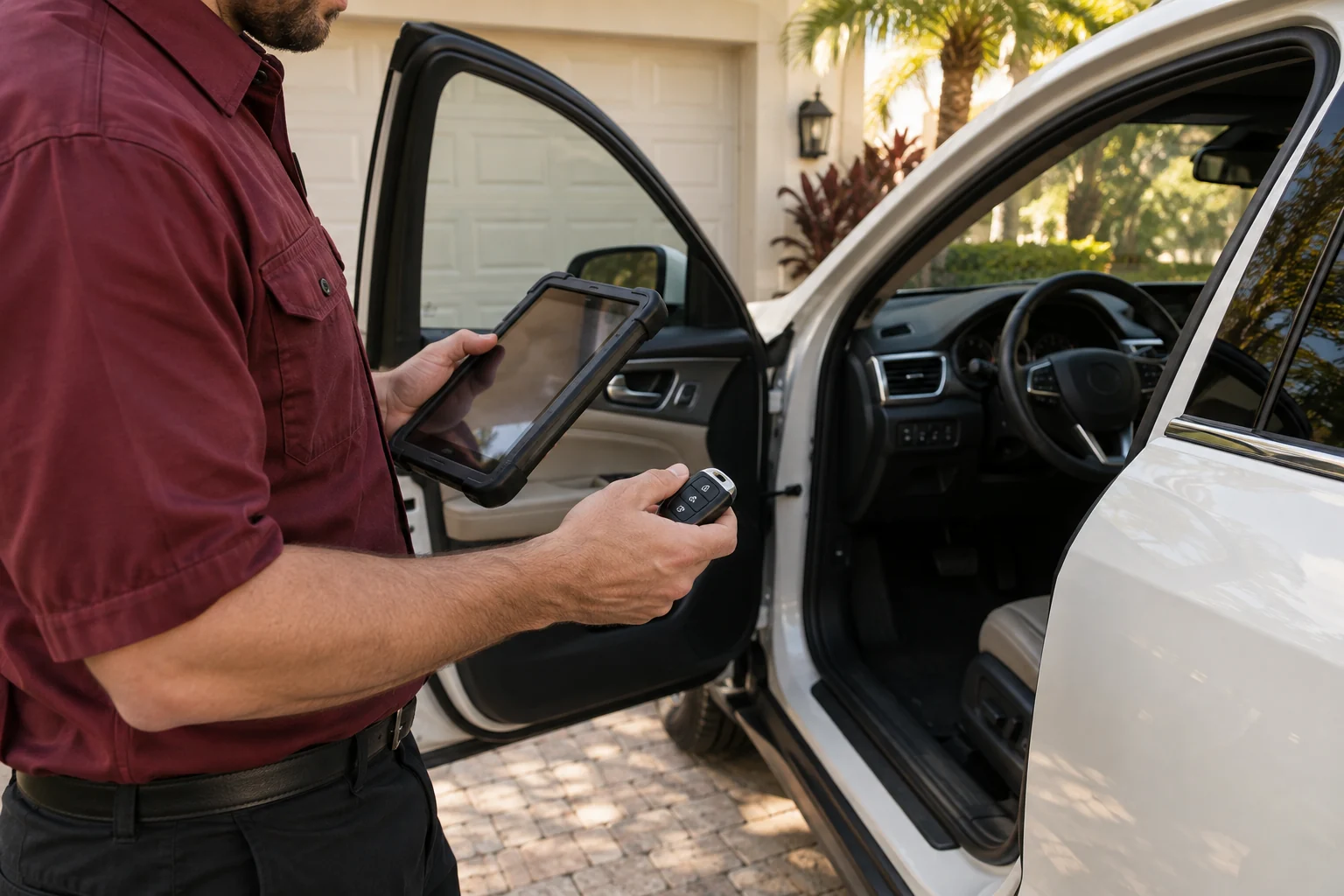
You call and describe the situation and place: how many locks, what type they are, and what you want to accomplish. The work and the price are explained before it begins, so you know what you are agreeing to. For a house, this usually means a technician removes each cylinder, changes the pins, cuts new keys to match and puts everything back.
While that happens, you can expect to be asked how many keys you want and whether you want every lock on the same key. Making all exterior doors work with a single key is a common request, and it is called keying alike. It is very convenient, but it also means one lost key affects every door, so it is worth thinking through.
When the work is finished, the locks are tested with you. You try each new key in each lock, from outside and inside, and confirm that the old keys no longer turn. If anything feels stiff or sticky, that is the moment to say so.
It is worth being home, or having someone you trust be home, for the visit. The technician may need to ask which doors you use most, whether a particular lock has been sticking, or whether a spare should go to a neighbor. Having the answers on hand keeps the visit calm and clear, and it means the keys you receive match your actual routine.
Rekeying or replacing
There are two honest ways to answer the question of whether to rekey or replace. If the lock is in good shape and you like it, rekeying is usually enough. If the lock is worn, damaged, dated or no longer at the security level you want, replacing it is the better answer and rekeying would just put a fresh key into a tired lock.
Our article on rekeying versus replacing locks sets out the factors in more detail, and the nearby page about lock installation in Plantation describes what is involved when new hardware is the right choice.
A good technician looks at the actual locks before advising you. Be wary of anyone who insists on one answer without looking, and ask them why they recommend what they do.
If you decide to replace, ask what changes in practice. A new lock may come with different keys, a different finish and a different feel in the hand, and you will want to know about all of those before anything is removed. If you decide to rekey, ask whether any cylinder looks worn. A cylinder that is close to failing is better replaced during the same visit than discovered later.
- Rekey when the lock works well and you only need new keys.
- Replace when the lock is loose, corroded, damaged or an old style you dislike.
- Replace when you want a different grade of lock or a smart lock.
- Ask about both options before the work begins.
- Expect the reason for the recommendation to be explained plainly.
How a rekeyed lock stays safe
A rekey does not make a lock stronger by itself. It makes the key different. If the lock was a lightweight model before, it is still a lightweight model after. That is why some people rekey and also upgrade a bolt or strike at the same visit, so that the new key opens a door that is built to withstand more than just casual pushing.
The connection between key control and real security matters too. A key stamped with a brand name can be copied at any hardware store by anyone who walks in. Restricted key systems limit who can have copies made, and we discuss them in the guide on restricted and high security keys.
It also matters how you handle the new keys. Count them, label them privately, and avoid putting your address on a keychain. These small habits do more than most people realize.
Another simple habit is to keep one spare key somewhere safe and away from the property, held by someone you trust. When a key is lost or a lockout happens, the existence of a spare turns an emergency into an errand. Just make sure the person holding it knows what it opens, and tell them to keep it away from any label that shows your address.
Landlords, turnover and shared homes
For rental properties, rekeying between tenants is a common and sensible routine. It protects the incoming tenant, it protects the owner, and it removes the argument about whether a previous resident kept a copy. Landlords with several units often ask for all their locks to be keyed in a pattern that simplifies things while keeping tenants separate.
The guide for rekeying rental properties explains how owners usually approach it, and the article on tenant turnover rekeying for property managers looks at the process across many units.
If you are a tenant, ask your landlord before rekeying anything yourself, because a lease may say that locks can only be changed by the owner. Requirements vary, so ask your landlord or property manager what is allowed.
Property managers also have to think about records. A clear log of which lock was rekeyed, on which date, and how many keys were cut, helps settle questions later. If a tenant says a key was never handed over, or a former tenant claims they returned all copies, the record answers the question. Good records make turnover calmer for everyone involved, tenants and owners alike.
Keyed alike, master keyed and separate
There are three broad ways to arrange keys across several locks. In a keyed alike setup, every lock responds to the same key. In a master key system, each lock has its own key but a master key opens them all. And if every lock is separate, each one has its own key and nothing else works.
For a home, keyed alike is usually enough and keeps the key ring small. For a duplex, a shared building or a small business, a master arrangement can make more sense. The ideas are explored in one key for all locks, keyed alike and master keyed.
Think about who needs access to what. Giving a house sitter a key that also opens your garage and your office may not be what you want, and separate keys for separate doors can be worth the extra ring.
Do not forget outbuildings and secondary locks. Garden sheds, pool equipment rooms, storage cages and mailbox locks often use their own keys, and they are easy to overlook. Decide whether these should be keyed to match the house or stay separate, and mention them when you call so they can be included in the plan rather than handled as an afterthought.
Knowing how often to do it
There is no single schedule that fits everyone, but a few events tend to trigger a rekey. Moving in, losing a key, ending a relationship, ending a tenancy, or giving a key to someone who no longer needs it are all good prompts. Some homeowners also rekey after major work, when many contractors have had access.
The article on how often to rekey your home offers a calm view of this, without suggesting that you need to do it constantly. For many households, a rekey every so often, or at the right moments, is entirely enough.
In a humid climate, also pay attention to the feel of the locks. If a key starts to stick or turn roughly, it may be a sign that the cylinder needs attention, and this can be dealt with at the same visit as a rekey.
Hurricane season is a useful reminder too. Before a storm, make sure you know where every key is, and keep a spare set in a place you can reach if you have to leave in a hurry. After a storm, test your locks, since swollen doors and shifted frames can make a perfectly good lock feel stiff, and the lock is not always the cause of the trouble.
Questions worth asking beforehand
You are entitled to know exactly what you are paying for. Ask how many locks will be rekeyed, how many keys are included, whether the price covers each lock or the whole job, and what happens if one of the cylinders turns out to be worn or incompatible. A clear answer to each of these is normal.
If you want to understand pricing before calling, our guide to what goes into the cost of rekeying explains the factors without quoting numbers. A caller who gives you a figure without asking anything about your locks is guessing.
It also helps to make a list of every door you want to include: the front door, back door, side door, garage entry, and any gate or storage room that uses a key. Locks that get forgotten are often the ones that cause trouble later.
When you receive the keys, check them against each lock before the technician leaves. Try them in the order you would use them, as if arriving home with arms full. Test the deadbolt from inside too. A rekey is a small job, but small jobs deserve attention, and ten minutes of testing at the door is a good investment compared with finding a problem when you are in a hurry.
What rekeying cannot fix
Rekeying changes the key, and that is all it does. It will not fix a door that sags, a strike that does not line up, a latch that sticks in humid weather or a frame that has been kicked loose. If your real problem is that the door does not close properly, a new key in the same cylinder will not help, and it is better to find that out before you spend anything.
It also does not protect against everything. A window left open, a sliding door with a weak latch or a garage entry that is never locked all remain exactly as they were. A rekey is one step in a larger picture, and the strongest results come when you look at all the ways in, not only the one with a keyhole.
If you want to think about weak points more broadly, the guide on whether your locks are good enough offers a sensible checklist, and a technician on a rekey visit can often point out one or two simple improvements without turning the job into something larger.
Around Plantation and nearby
Homes in South Florida vary a lot. Some are older houses with solid wood doors, others are newer builds with factory fitted hardware, and many are condos with building specific rules. Salt air and humidity affect lock internals, and a cylinder that has spent years in this climate may be ready for more than a pin change.
For general information about the area, see the Plantation locksmith overview. If you are comparing how rekeying works in nearby places, the page on rekey service in Davie covers similar ground, and the main house lockout and rekey page brings the topics together.
As always, requirements for condos and rentals vary, so ask your association or landlord about anything that might apply to your door.
If you are unsure whether rekeying suits your situation, simply call and describe it. You can talk through the number of doors, the type of locks and your reasons, and you will hear what is recommended and why. There is no obligation to go ahead, and the work and the price are explained before it begins, so you stay in control of the decision.
Common questions
Will my old keys still work after a rekey?
No. Rekeying changes the internal pins so only the new keys turn the lock. The old keys may still slide into the keyway but they will not turn. That is the point of the service, and the locksmith tests the finished work with you so you can see that the old key no longer works.
Can every lock in my house use the same key?
In most cases yes, if the locks are the same type or can be matched. This is called keying alike. It reduces the number of keys you carry, but it also means one lost key affects every door. Decide which doors should share and which should stay separate, then describe that on the call.
Does rekeying cost less than replacing locks?
It often costs less in materials because the hardware stays, but that depends on the locks and the number of doors. Prices are explained before the work begins, so you can decide with the facts. If a lock is worn or damaged, replacement may be wiser than rekeying it.
Do I have to be home during the work?
Someone with authority over the property usually needs to be present at least at the start and end, so the locks can be tested with you. If you cannot be there, discuss alternatives on the call. For rentals, tell the technician who has authority, and confirm any landlord approval beforehand.
Can a lock be rekeyed if I have no key at all?
Often yes. A technician can work with the lock itself and cut new keys for the changed cylinder. You will be asked for evidence that you may change the lock, such as identification and something connecting you to the address. Describe the situation and place on the call and the process is explained first.
Does this page describe Plantation rules for locks?
No. It is general guidance and does not state local rules or describe any particular property or past job. Condos, rentals and managed communities often have their own requirements, so ask your association, landlord or property manager what is allowed before changing locks on a door.
Talk through the job before work begins
Start by describing the situation, the lock or key involved and who must have access. You hear the price and the plan before anything is done.
Call (954) 888-8804