Lock Installation in Plantation
Putting a new lock on a door sounds simple until the holes do not line up. This page is general guidance for Plantation residents who want to understand what a proper lock installation involves before they make a decision.
Call (954) 888-8804What an installation actually includes
People often picture a lock installation as swapping one gadget for another, and sometimes that is all it is. Just as often it also involves measuring the door, checking that the existing holes are the right size, making sure the latch reaches into the frame, and confirming that the strike plate lines up. Each of those small checks decides whether the lock works for years or starts to stick within a season.
A complete job usually ends with the finished work being tested with you. You turn the key from outside, throw the bolt from inside, close the door firmly and try it again. Doors that look fine when open can behave differently once they are shut and weight is on the hinges.
This page is general guidance for people in Plantation. It does not claim any local history or describe a particular building, and the details for your own door will depend on what is actually in front of you.
A good way to use this page is as a checklist of questions. Read through it, write down anything that applies to your door, and bring those notes to the call. The more precisely you can describe the place, the less guessing is needed on either side, and the less likely you are to be surprised by what the work involves.
Know your door before you shop
The most helpful thing you can do before choosing a lock is learn a few facts about the door. Is it wood, steel, fiberglass or glass? How thick is it? Does it already have a hole for a deadbolt, and is there a second larger hole for the handle or knob? Does it swing inward or outward, and is the hinge on the left or the right when you face it from outside?
These details decide which products fit without cutting into the door. A lock that needs a thicker door than yours, or a different hole spacing, may need extra work to be mounted. Cutting a door is not a casual step, because a wrong cut cannot be undone.
Photographs help a great deal on the phone. Take one of the edge of the door with the latch showing, one of the inside face and one of the outside face. When you call and describe the situation and place, a technician can often tell you what is likely to be involved before anyone drives anywhere.
It also helps to say what you want the new lock to do. Some people want a door that locks itself every time it closes, others want a keypad so children can let themselves in, and others only want a stronger bolt. Knowing the goal lets the technician suggest hardware that matches your habits instead of simply the most expensive item on the shelf.
- Measure the door thickness at the edge if you can.
- Note whether the handle and deadbolt are separate or combined.
- Check whether the door ever sticks, rubs or needs a shove to close.
- Write down the finish you want, such as black, bronze or brushed nickel.
- Count how many people need their own key.
Deadbolts, handlesets and combined locks
A deadbolt is the separate bolt above the handle that slides into the frame when you turn the key or the thumb turn. It does not spring back on its own, which is why it is trusted more than a simple latch. A handleset or lever sits at about hand height and mostly keeps the door closed against wind and casual pushes.
Some entry doors have both, some have a single combined lock, and condo doors often have a particular arrangement dictated by the building. The article on front door lock types shows how these differ in appearance and use, and the guide to deadbolt grades explains why two bolts that look alike on a shelf can feel very different in daily use.
If you rent, keep the arrangement your landlord expects and ask before changing the style of lock. Requirements vary by lease and by building, so ask your landlord or property manager what they permit.
Another point worth knowing is that keyed entry sets can be keyed alike, meaning one key opens the front door, the back door and perhaps a side gate lock. This is convenient, but it also means a lost key affects every one of those doors. Decide whether you prefer convenience or separation, and tell the technician so the cylinders are ordered and set up the way you intend.
Why the strike and the frame matter most
The strongest bolt in the world is only as secure as the wood or metal it enters. The strike plate is the metal piece set into the door frame, and the screws that hold it are the real link between the lock and the house. On many older doors those screws are short and bite only into a thin trim piece. On a hard push, that trim can split away and the door opens even though the lock never failed.
Longer screws that reach the stud behind the frame, and a reinforced strike, change the picture. Our guide on upgrading a strike plate to resist kick ins goes through why this small piece gets so much attention.
If your door has trouble latching, do not assume the lock is bad. The cause is often the door itself, and the notes on doors that will not latch because of strike alignment explain how to tell the difference between a lock problem and a fit problem.
Hinges deserve a glance too. If the screws in the top hinge have loosened, the door sags and drags on the latch side, which makes any lock seem faulty. Tightening or replacing screws is a small repair, but it should be done before the new lock is judged. Otherwise you may blame a good lock for a problem it did not cause.
Climate, salt air and finishes
Plantation sits inland of the beaches, yet South Florida homes everywhere deal with heavy humidity, afternoon downpours and sun that bakes exterior hardware. Thin plating can blister, internal parts can corrode, and a keyway packed with grit starts to feel gritty and tight. Choosing a finish that is meant for outdoor exposure, and keeping the keyway clean, goes a long way.
If you live in a building where the door faces an open breezeway, expect more weather on the hardware than you would get on a door tucked inside a porch. Direct sun makes dark finishes hot to the touch and can fade some coatings over time.
Ask the technician what the product is made of and how it is meant to be maintained. A short answer about cleaning and a light dry lubricant for moving parts, rather than heavy grease that collects dust, is the kind of practical advice you want.
Exterior doors that are painted shut or swollen in the wet season can also confuse an installation. If the door only latches in dry weather, the lock may be fine and the door may need planing or its weatherstripping adjusted. Mention seasonal behavior when you call, because it points toward the real cause and helps the technician plan the visit.
Older homes, newer homes and condos
Houses built in different decades have different doors. Older solid wood doors can be thick and heavy, and their frames may have shifted with age. Newer homes often use lighter steel or fiberglass doors with factory bored holes in standard sizes. Condo and townhouse doors may be a fire door or specified by the association, which changes what can be done to them.
If you are in a condo or a managed community, ask the association or manager what is allowed before buying hardware. Some require a particular finish or key system, and drilling into a fire door can cause trouble that has nothing to do with the lock.
In any of these situations, a locksmith can explain what the existing door will accept. If the door cannot take the lock you want without damage, you will hear about it before work starts, along with alternatives that do fit.
Rental turnover brings its own pattern. Landlords and property managers often want a consistent hardware style across units, so that replacement parts are easy to find and keys are simple to track. If you manage several doors, tell the technician, and consider writing down which units use which key so changes at the next turnover are simple to plan.
Fitting a smart lock
Smart locks have become a common request, and they can be installed on many doors that already have a standard deadbolt. The key difference is that they add electronics, a battery and often a connection to a phone, so there is more to set up than with a simple mechanical bolt. Door fit matters even more because a motor has to move a bolt that drags if the door is slightly misaligned.
Before choosing, think about who uses the door and what happens if the battery dies or the phone is lost. Our guide on smart lock installation and door fit covers these questions, and the main page on smart lock service describes the range of work involved.
If you prefer to keep your keys, there are retrofit styles that sit over the existing hardware. The notes on retrofitting a smart lock while keeping your keys compare the two approaches.
Power is the part many people forget. A battery operated smart lock needs a plan for what happens when the cells run low, such as an outside backup or a physical key. Our notes on what to do when a smart lock battery dies explain why that plan matters, and it is worth making before the lock is installed, not after.
Install new or rekey what you have
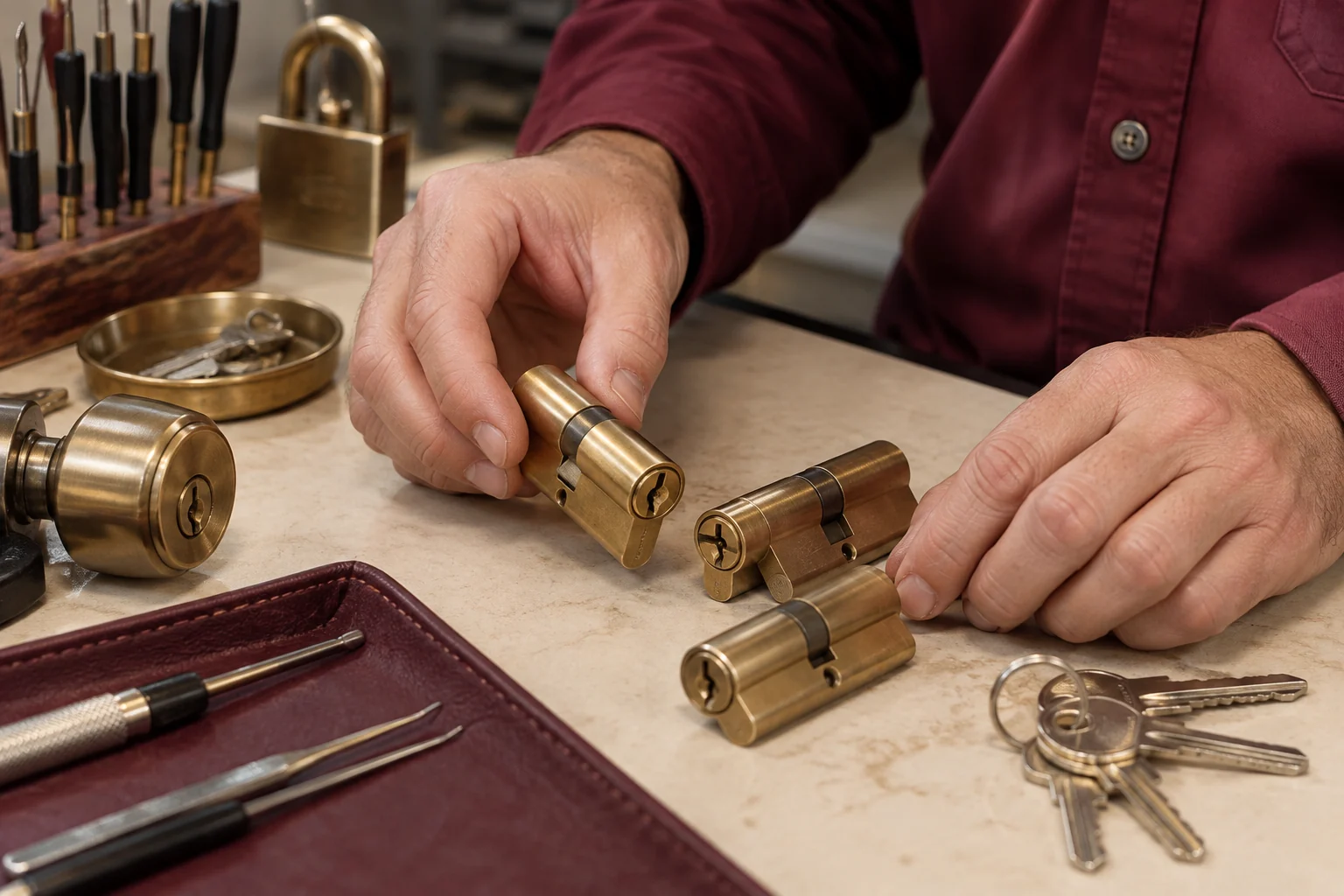
Not every lock problem calls for new hardware. If the concern is only that someone else might have a key, rekeying the lock changes the internal pins so the old key no longer works, and the lock stays where it is. That can be a good choice when the hardware is in good shape and you like how it looks.
New locks make more sense when parts are worn, the finish is damaged, the style is outdated or the security level is no longer what you want. The article on rekeying versus replacing locks helps you think through which direction fits, and the nearby page on rekey service in Plantation explains the other path in more detail.
Either way, the technician should say which one they recommend and why, and the work and the price are explained before it begins. If you feel pushed toward replacing something that still works well, ask them to explain what is wrong with it.
It is perfectly reasonable to ask for the old parts back or to ask what was wrong with them. A technician who is confident in their recommendation will not mind. You can also ask whether any part of the job could be done in stages if you want to spread the cost out, and the answer should be given plainly without pressure.
Choosing who does the work
Because a lock protects your home, you are right to be careful about who touches it. Ask plain questions: what will be done, what parts will be used, what will it cost, and what happens if the new lock does not fit the door as expected? A trustworthy technician answers without hurry or defensiveness.
We have written a guide on choosing a locksmith you can trust, and a companion piece on questions to ask a locksmith on the phone lists the kind of things worth asking before anyone is sent to your home.
Be wary of a caller who will not explain the work, quotes a number that changes as soon as they arrive, or pushes you to decide immediately. Calm explanations are a good sign, and you are always entitled to ask questions.
When you describe the situation on the phone, expect to be asked about the door, the building and what you are trying to achieve. These questions are a good sign, because a number given without them is a guess. The more complete your answers, the more reliable the plan, and the work and the price are explained before it begins.
Sliding doors, side doors and the ones people forget
Front doors get all the attention, yet many entries happen through other openings. A sliding glass door at the back of the house, a side door to the garage, and a laundry room door that opens to the yard all deserve the same thought. They often carry weaker hardware because nobody chose it carefully, and they are usually out of sight from the street.
The guide to sliding glass door locks explains why the latch built into the frame is rarely enough, and the notes on securing the door between the garage and the house cover a doorway that people tend to leave unlocked. Both are worth reading before you decide how many locks you need.
When you call, list every exterior door, not only the one you use most. A technician can then suggest a sensible plan that treats the whole house as a set, and you can decide what to do now and what to leave for later.
After the installation
Once the lock is in, make sure you know how to use it. Count the keys you were given, test each one, and ask what to do if one gets stuck. Check that the thumb turn moves smoothly from inside and that the bolt extends fully into the frame without scraping.
Keep a spare key somewhere that is not obvious and not under the doormat. If you want ideas, think about leaving a spare with someone you trust instead.
A few months later, notice whether the lock still feels the same. Doors move with seasons, and a small adjustment now can prevent a bigger problem. For more about Plantation in general, see the Plantation locksmith overview. Keep the receipt or a simple note of what was installed, including the brand and the finish. If you ever need a matching part, or want to add another door in the same style, that note saves a lot of guessing.
If anything about the new lock bothers you in the first week, such as a key that catches or a bolt that seems stiff, call and say so. Locks are mechanical and usually need only a small adjustment, and it is always better to deal with a minor issue early than to live with a lock you do not trust.
Common questions
Can a new deadbolt be fitted to any door?
Most standard wood, steel and fiberglass doors can take a deadbolt, but the door needs enough thickness and material around the hole. Glass doors, thin hollow doors and fire doors can be different. Describe the door when you call, and the options are explained before the work begins.
Will the new lock fit the holes already in my door?
Often it will, because many locks use standard hole sizes. If the old hole is a different size or spacing, an adapter or a different model may be needed. Cutting a door is a last resort, and a technician should tell you plainly before any such step is taken.
Do I need a new strike plate with a new lock?
Not always, but it is worth checking. A worn or misaligned strike can make a new lock stick. Longer screws that reach the framing behind the trim also add real strength. Ask the technician to check the strike while they are there and explain what they find.
Should I replace all my exterior locks at the same time?
Many people do, so every door uses one key and the finish matches. It is not required. If budget or time is a concern, start with the doors that matter most and plan the rest. Your technician can explain how keyed alike locks work for several doors.
How do I know the new lock is working properly?
The finished work is tested with you. Turn each key from outside, lock and unlock from inside, and close the door firmly several times. The bolt should extend fully and smoothly, with no scraping, wobble or need to lift the door. If anything feels off, say so before the technician leaves.
Does this page describe rules for Plantation homes?
No. It is general guidance and does not state local rules. Requirements vary by lease, association and building type, so ask your landlord, property manager or association about what is permitted before you change hardware on a door. A locksmith can explain what fits, but the approval is up to them.
Talk through the job before work begins
Start by describing the situation, the lock or key involved and who must have access. You hear the price and the plan before anything is done.
Call (954) 888-8804