Rekey Service in Davie
Rekeying changes which key operates a lock without replacing the lock itself. This page is general guidance for Davie residents on when it makes sense, how the work goes and what to decide beforehand.
Call (954) 888-8804What rekeying actually changes
Inside a typical house lock sits a cylinder, and inside the cylinder is a row of small pins of different lengths. The key lifts each pin to exactly the right height so a line forms and the cylinder can turn. Rekeying means taking the cylinder apart, swapping or rearranging those pins so they match a different key, and putting everything back together. The lock body, the handle and the door stay as they were.
The result is that the old key no longer turns the lock, while a new key does. From the outside, nothing looks different, which is part of the appeal. You keep the hardware you already chose and installed, and you simply change the secret that operates it.
This page is general guidance for people in Davie and is not a description of any particular local job. It aims to help you decide whether rekeying fits your situation and to prepare you to explain what you have when you call, so the work and the price can be laid out before it begins.
A final point on terms: people sometimes say they want their locks changed when they mean rekeyed, or the reverse. If you are not sure which word fits, simply describe what you want to happen. For example, say that you want the old keys to stop working but would like to keep the same locks. That plain description tells the person on the phone everything they need to suggest the right approach, and it spares you from guessing at trade vocabulary.
Situations where rekeying is the natural answer
Moving into a home you did not build is the classic case. You have no way of knowing how many people held keys to your front door: previous owners, their relatives, a cleaning service, a contractor, a neighbor who watered the plants. Changing the locks to a key only you control closes that open question, and it is one of the first items many new owners tick off.
Another common case is a lost or stolen key. If the key went missing along with something that identifies your address, such as a wallet or a bag, you may not want to wait and see what happens. A rekey stops that key from working while leaving your door and hardware intact.
Life changes also trigger it: a breakup, a roommate moving out, a former employee leaving, or a tenant ending a lease. In each situation the question is the same. Who still has a working key, and do you want them to? The guide on rekeying locks after moving walks through the logic for new owners and renters.
Rekey or replace: how to decide
Rekeying is not always the right move. If your locks are in good shape, rekeying is usually simpler, because the hardware remains and only the pins change. If the lock is worn, loose, corroded or of low quality, replacing it may make more sense, since new pins in a failing lock still leave you with a failing lock.
Think about what you want from the door beyond key control. If you also want a stronger deadbolt, a keypad or a different style, replacement is the doorway to those upgrades. If you are happy with the hardware and the finish, rekeying keeps the look you chose and avoids new holes or visible changes, which matters in communities that regulate exterior appearance. Cost can matter as well, though it varies with the number of locks, their brand and their condition, so ask for it to be explained before the work starts instead of assuming either path is the less expensive one.
The article on rekeying versus replacing locks sets the choice out step by step. If you decide you want new hardware, the page on lock installation in Davie covers that route in the same plain way.
- Rekey when the lock works well and you only need the keys changed.
- Replace when the lock is worn, damaged or too basic for the door.
- Replace when you want a different style, a keypad or a stronger bolt.
- Rekey when you want to keep the same exterior look.
Getting every door on one key
Many households live with a ring full of different keys: one for the front, another for the back, one for the garage entry, one for the side gate. When rekeying, it is possible to set several locks to the same key so one key operates all of them, which is often called keyed alike. It makes daily life simpler, and it is one of the most practical uses of a rekey visit.
There are details to consider. Locks from different brands use different keyways, which are the shapes of the key slot, and pins cannot always cross brands. Sometimes the answer is to rekey locks of the same brand to match and to replace a stray lock that does not fit the group. A tradesperson can look at the doors and tell you what is possible.
If you are curious about more complex setups, with several levels of access, the article on keyed alike and master key systems explains the difference. For a household, keyed alike is usually enough, while a master key arrangement is more common in offices and buildings.
One more thing to think about is who will carry the key. A family with teenagers, a dog walker and a housekeeper has different needs from a couple living alone. Everyone who holds a key is a person whose habits you depend on, so it is reasonable to give extra keys only to people you trust and to ask them to keep the key separate from anything with your address on it. Simple rules like that do as much for security as the lock does.
What happens during a rekey visit
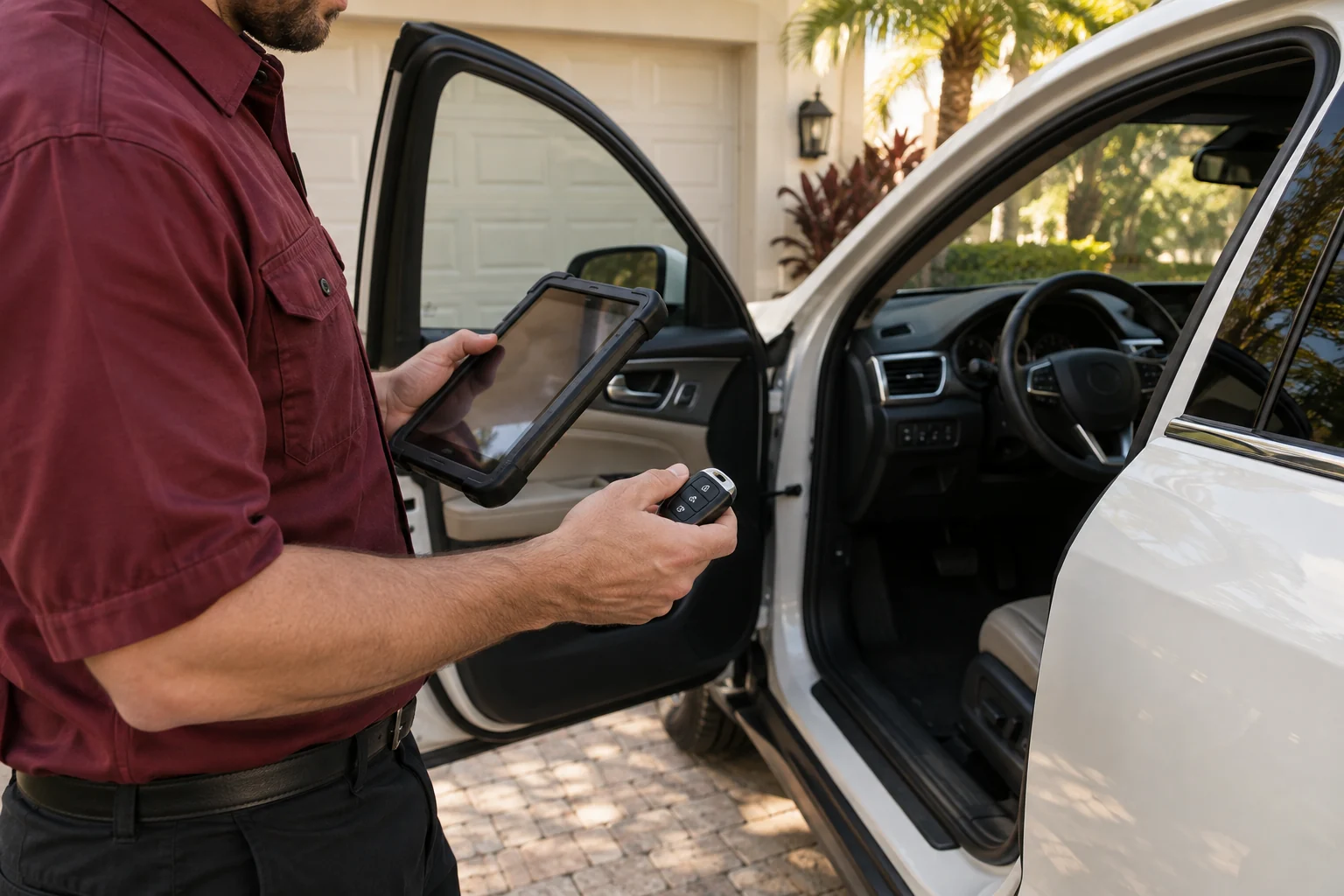
The process is straightforward, and you can follow it. You explain which doors and how many locks, and the work and the price are explained before anything starts. The cylinder is removed from each lock, the old pins are taken out, new pins are fitted to match the new key, and the cylinder goes back in. Then the lock is tested with the new key, repeatedly, and the old key is tried to confirm it no longer works. A locksmith may also check how smoothly the bolt throws, because a rekey is a good moment to notice a deadbolt that sticks or a latch that drags and to tell you about it.
Because the lock stays on the door, rekeying usually involves little mess and no change to the door. Locks that are tight, painted over or sticky from age may take more care, and a good tradesperson will tell you if the hardware is in poor shape rather than quietly leaving a weak lock in place.
When the work is complete, you should receive the new keys and try them yourself in each lock, from both sides if there is a thumb turn inside. This is the same process described for every job: the situation is described, the work and price are explained first, and the finished work is tested with you present.
Rekeying in rentals and between tenants
Landlords and property managers rekey more than anyone, because every change of occupant raises the same question about who still holds a key. Changing the key between tenants is a basic step in protecting both the departing and arriving renter. It also helps the landlord avoid disputes about who had access during a particular period.
For a single rental, a rekey of the entry locks between leases is often practical, especially with locks that are in decent shape. For a building with many units, doing the same on a schedule keeps the process consistent. Rekeying is also an easier conversation with a tenant than replacing hardware, since the locks look the same.
The guides on rekeying a rental property and tenant turnover rekeying for property managers go deeper into this. Tenants who want a change on their own should check the lease and ask the landlord, since requirements vary.
Condos, associations and shared hardware
In a condominium or an association community, some locks belong to the owner and some belong to the building. The unit entry lock is often the owner's responsibility, while mailbox locks, gate locks, common area doors or amenity room keys may be controlled by management. Rekeying a lock you do not control can cause trouble, even if you meant well.
Some associations also require that a key to each unit be kept on file for emergencies such as a leak or a fire inspection. If you change the key, you may be expected to supply a new copy. Requirements vary, so ask your management office what applies to your building before the work is scheduled.
If you are not sure who owns the lock, ask. A short question to the manager takes a minute and prevents the awkward situation of a rekeyed lock that management cannot open when they need to. Once you know the rules, you can plan the work with confidence.
Humidity is a quiet factor in all of this. Coastal air can leave lock cylinders gritty and a little stiff, and that is the sort of thing that shows up when a cylinder is opened. If a lock turns hard, it is better to have it looked at during the rekey than to force a new key through a dry, corroded cylinder. A rekey is sometimes the first time in years that anyone has looked inside the lock.
How often should locks be rekeyed
There is no single schedule that fits every home. A good rule of thumb is to rekey at predictable moments: when you move in, when you lose a key, when someone who held a key should no longer have access, and when you notice that keys have been shared too widely. If none of those apply, you do not need to rekey just for the sake of it.
Some households with frequent comings and goings, such as a rental that hosts short stays, choose to rekey on a regular rhythm or switch to a coded lock where the code can be changed without touching the pins. Each approach has trade offs in convenience, cost and the way the door behaves in humid weather.
The article on how often to rekey your home explores this question in more depth. And if you wonder what is driving the cost of the work, the piece on rekey cost considerations explains the factors without making promises about numbers.
Keys, copies and keeping control afterward
After a rekey, the point is to keep the new keys under control. Count them and decide who really needs one. Each copy is a potential loose end, so avoid casually handing duplicates to people who may not need them. When you do need a copy, have it cut from the new key by someone careful, and test it in the lock.
Be wary of copies cut on worn machines or from a key that is itself worn, because small errors multiply. A poorly cut copy can stick, wear out the pins or fail at the worst moment. The guide to where and how to make duplicate keys explains what to look for in a good copy.
It also helps to note where each key is kept. Keep a spare with someone you trust and make sure it works. If you ever lose one of the new keys, you can rekey again, which is a normal part of keeping control, not an overreaction.
If you rely on a key hidden outdoors, rethink that habit after a rekey. A hidden key is known to more people than you think, and it quietly undermines the whole point of changing the locks. A trusted neighbor or relative is a safer place for a spare. If you want guidance on the whole subject, the article on smart ways to hide a spare key covers the alternatives.
Common misunderstandings about rekeying
One misunderstanding is that rekeying is a temporary patch. It is not. A properly rekeyed lock is as secure as it was before, and for a lock in good condition it is a lasting solution. The strength of the lock depends on the hardware and the door, not on how recently the pins were changed.
Another is that you need the original key to rekey. In many cases you do not, because the cylinder can be opened from the door side while the lock is accessible. Having a working key can make the job smoother, but its absence does not stop the work. What helps most is knowing which doors are involved.
A third misunderstanding is that every lock can be rekeyed. Most standard house locks can, but a few specialty or very old locks cannot, and some electronic locks handle key changes differently. If you have an unusual lock, say so when you call. The honest answer may be that replacement is the better route, and that should be explained to you before anything starts.
Before you call: a short checklist
Decide which doors you want changed and how many locks that includes. Entry doors, garage entry doors, patio and side doors, and any shed or gate locks can all count. Note the brand if it is visible on the lock, and whether any of the locks are loose, stiff or hard to turn. Those details help the person on the phone picture the job.
Think about whether you want everything on one key, and how many copies you will need. If you are a tenant, check the lease and ask the landlord. If you live in an association community, ask about its requirements. When you call, describe the situation and the place, and ask for the work and the price to be explained before anything begins.
If you want a wider picture of what is available, see the house lockout and rekey page, or read about the area at locksmith services in Davie. Neighbors can find the same general guidance at rekey service in Plantation.
Common questions
Does rekeying make the old key stop working?
Yes. Rekeying changes the internal pins so they match a new key. The old key no longer lifts them into line, so it cannot turn the cylinder. A careful tradesperson will test the old key after the work to confirm it fails, and test the new key to confirm it works.
Will the lock look different after it is rekeyed?
No. The handle, deadbolt, finish and door stay exactly as they were, because only the internal pins in the cylinder change. This is why rekeying suits people who like their existing hardware or live in a community that cares about the exterior appearance of doors.
Can I rekey several locks to use the same key?
Often yes, particularly when the locks share a brand and keyway. One key can then operate the front door, back door and other entries. Locks of different types may not match, and a tradesperson can tell you whether any should be replaced to join the group.
Is rekeying better than replacing the lock?
It depends. If the lock is in good condition and you only need to change who has access, rekeying keeps the hardware and does the job. If the lock is worn, damaged or too basic, replacement is the sounder choice. Ask for both options to be explained.
Can a tenant rekey the locks of a rental home?
Only with the landlord's approval in many cases. Leases and local practices vary, and the landlord may need a key on file. Check the lease and ask before any work is scheduled so the change does not cause a dispute or leave the owner without access.
How do I know the rekey worked properly?
Test every new key in every lock, from the outside and from the inside where there is a thumb turn. The bolt should move smoothly. Try an old key as well, which should not turn. If anything feels rough, tell the tradesperson before the job is closed out.
Talk through the job before work begins
Say what went wrong and what you need to work when we leave. Scope and price are settled with you ahead of the work.
Call (954) 888-8804