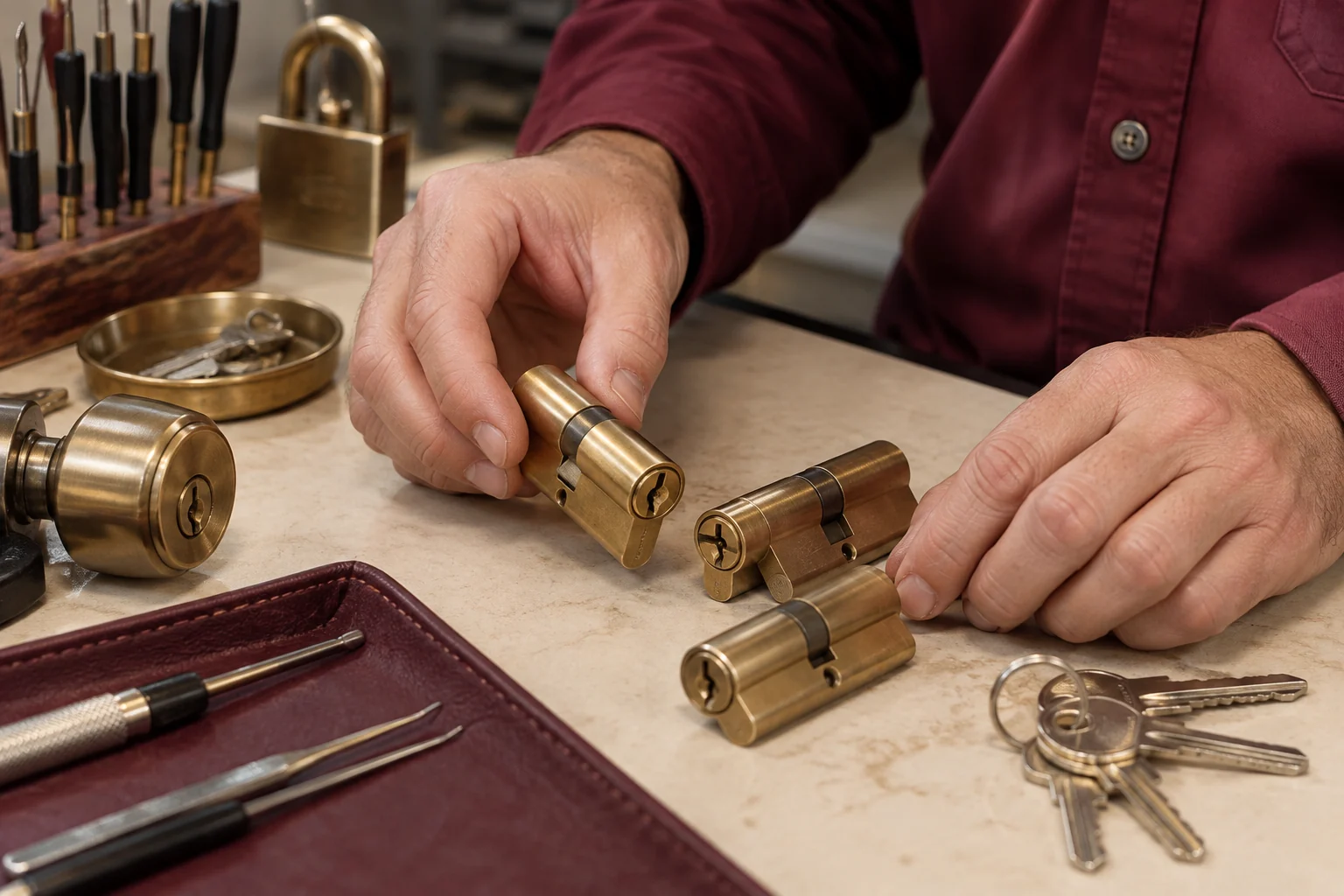
Lock Installation in Davie
Installing a lock is more than screwing hardware into a door. This page is general guidance for Davie residents on choosing, fitting and testing new locks so the door closes, latches and secures the way it should.
Call (954) 888-8804What installation really covers
People often use the word installation for anything that puts a new lock on a door, but the job can mean several different things. It might be a straight swap of one deadbolt for another in an existing hole. It might be a new lockset on a door that never had one. It might be adding a second lock above or below the first, or fitting a keypad or smart lock that needs the right bore, the right backset and a clear path for the bolt to travel.
Each of those jobs has its own checkpoints. A swap is mostly about matching sizes and making sure the new bolt lines up with the old strike. A brand new hole means careful measuring so the cylinder, latch and strike all land in the right place on both the door and the frame. A second lock means thinking about how much material is left in the door edge, because drilling too close to another opening can weaken it.
This page is general guidance for people in Davie and is not a description of any particular local job. The goal is to help you describe what you want clearly when you call, so the work and the price can be explained to you before anything begins.
Start with the door, not the lock
The door decides what can be installed. Solid wood, hollow metal, fiberglass skin over a foam core and a thin interior style slab all behave differently when they are drilled and fastened. A heavy exterior door can take a deadbolt with a long throw bolt and a reinforced strike. A light hollow door may need a different approach, and in some cases the honest answer is that the door itself is the weak point.
Look at the edge of the door where the latch sits. Is the wood or skin cracked, swollen or soft around the old hardware? In South Florida, humidity and rain can swell wooden doors and soften the area around holes that were drilled years ago. If the surrounding material is crumbling, a new lock will not hold well, no matter how good the hardware is.
It also helps to check how the door sits in its frame before anything is installed. A door that rubs, sags or needs a shoulder push to close will fight any lock you put on it. If that sounds familiar, the guide on doors that will not latch because of strike alignment explains the usual causes, and fixing the fit first makes the new lock work smoothly.
Choosing between lock styles
Most residential entry doors use one of three setups. A knob or lever with a separate deadbolt above it is the most common. An integrated handleset pairs a thumb latch and a deadbolt on a decorative plate, and is popular on front doors with a bigger look. A mortise lock sits inside a deep pocket cut into the door edge and is found on older or more traditional doors. Each one needs different prep work, so it is worth knowing which you have before you call.
Beyond the style, think about how you actually use the door. If you carry groceries and open it a dozen times a day, a lever handle is easier than a round knob. If children or older family members need to get in and out, the shape of the handle and the force needed to turn a thumb latch both matter. A lock that is secure but annoying to use tends to get left unlocked, which defeats the purpose.
If you are unsure what the current options look like, the overview of front door lock types walks through the common choices in plain terms. For homeowners curious about keypads and app controlled hardware, the smart locks page covers that side in more detail.
- Knob and deadbolt sets suit most standard residential doors.
- Handlesets give a front entry a more finished look but need a matching door prep.
- Mortise locks need a deep pocket and are not a simple swap with a standard bore.
- Keypad and smart options need the right door thickness and a spot for batteries or wiring.
Understanding deadbolt quality
A deadbolt is only as good as its bolt, its strike and the screws that hold the strike in the frame. The bolt should extend far enough into the frame to resist a hard push, and the strike plate should be anchored into solid framing rather than just the thin jamb trim. This is where many installations quietly fail: a strong lock on a door frame held together by short screws.
Grades are a way of describing how much abuse a lock is built to take, and they cover things like cycle testing, bolt strength and resistance to hard impacts. Higher grades generally cost more but are built from heavier materials. You do not always need the top grade for every door, but it is worth knowing where your front door sits compared with, say, a side door that is shielded from the street.
The guide to deadbolt grades explains what the labels mean without marketing language. When you call, you can describe the door, how exposed it is and who uses it, and the work can be explained to you before it begins, including what grade of hardware is being suggested and why.
A practical way to decide is to rank your doors by exposure. The front door and any door hidden from the street, such as a rear patio entry or a side gate door, deserve the stronger hardware. An interior door to a bedroom or an office may only need a privacy latch. Spending the most where the risk is highest, and keeping the rest simple, gives a sensible result without overbuilding every opening in the house.
Frames, strike plates and screws
Many people focus on the lock and forget the frame, which is the part that actually takes the force when someone leans on a door. A good installation includes checking that the strike plate is solid, that its screws reach into the stud behind the jamb, and that the jamb itself is not split or rotted. Humid air and the occasional leak around an exterior door can make the lower part of a frame soft over time.
Longer screws in the strike and in the hinge side of the frame are a simple upgrade that often makes a door feel noticeably more solid. A reinforced strike plate spreads force over a larger area. Neither is flashy, but both address the place where doors tend to give way under real pressure.
If you are thinking about this kind of reinforcement, the article on strike plate upgrades explains why it matters. It is a good companion read if you are adding a new deadbolt and want the whole door to match the strength of the hardware.
Smart and keypad locks in a humid climate
Electronic locks bring a few extra questions. The door has to be the right thickness, the bore has to match, and there needs to be room inside the door for the interior housing and batteries. Alignment matters even more than with a plain deadbolt, because a motor driven bolt that rubs against a misaligned strike will wear its batteries out and may stall.
South Florida adds its own considerations. Salt air, humidity and direct afternoon sun can be tough on finishes and on keypads that face the weather. A door under a covered entry is easier on electronics than one that takes rain and sun directly. It is reasonable to ask how a specific model handles outdoor exposure, and to keep a physical key option so a dead battery is an inconvenience rather than a lockout.
Fitting guidance for these products is covered in the smart lock door fit guide, and the question of whether to go electronic at all is explored in the piece on keypad versus smart lock. Both help you narrow down what suits your door before you call.
Rentals, condos and shared buildings
Davie has a mix of single family homes, townhomes and condo or rental properties, and the rules differ between them. In a condo or an association community, the exterior door, the frame and sometimes even the lock finish may be controlled by the association, not the unit owner. Requirements vary, so check with your association or property manager before changing visible hardware.
Landlords and tenants have a similar split. A tenant may want a better lock but may need written permission, and a landlord may want to change locks between occupants without changing the whole door. In those cases, rekeying an existing lock can be a simpler answer than installing new hardware, and it is worth comparing the two. The page on rekey service in Davie explains when that route makes sense.
If you are not sure who decides, the safe habit is to ask whoever manages the building before the work is scheduled. A short message to the manager now can prevent a lock from being removed later because it did not meet the building's rules.
What a good installation looks like when finished
When the work is done, you should be able to test everything yourself. The door should close without being pushed, the latch should click into the strike, and the deadbolt should throw smoothly with the key and with the thumb turn from inside. If you have to lift the door or press it to make the bolt line up, the installation is not finished.
Every key you were given should be tried in the lock, from the outside, with the door open and again with it closed. Interior hardware should feel solid with no wobble, and trim plates should sit flat against the door. Loose parts today become failures later, especially in a climate where doors expand and contract with moisture.
This is the same process described for every job: the situation is explained, the work and the price are laid out before it starts, and the finished lock is tested with you present. Asking to see each of those steps is perfectly reasonable, and a careful tradesperson will expect it.
Keys, key control and who gets copies
A new lock is a good moment to think about key control. How many people need a key? Have previous contractors, cleaners or former roommates held copies that were never returned? Installing a new lock while the old keys keep circulating is a half step, so many people ask about new keys at the same time.
If your goal is mostly about old keys, remember that a rekey can make old keys useless without replacing the whole lock. If your goal is better hardware, a new installation makes sense. Many homes do both: new deadbolts on the main doors, rekeyed existing locks on side doors, and all of them keyed so one key opens everything.
The guide on rekeying versus replacing locks lays out the decision plainly. It is worth reading before you commit to either path, since the right answer depends on the condition of the hardware you already have.
It also helps to keep a simple written record of what was installed on each door: the style, the finish and which key opens it. When a door is repaired or a lock is replaced years later, that note saves guesswork. Keep it somewhere private, not taped inside a cabinet where a visitor could read it, and update it whenever a lock is changed or a key is added. A tidy record makes future decisions easier and simpler to explain to whoever does the work.
Small details that decide how long hardware lasts
Two locks that look identical on a shelf can age very differently once they are on a door. Finish quality is one reason. In a coastal climate, plated surfaces that are thin or poorly sealed can pit and flake as salt air and moisture work on them, and the moving parts inside can stiffen. Solid brass or well sealed finishes tend to hold up longer, though the surest way to judge is to ask what the lock is made of and how it is meant to perform near the coast.
Lubrication is another quiet factor. A lock cylinder does not need heavy oil, and the wrong product can attract dust and turn into a sticky paste. A dry graphite or a lubricant made for locks, used sparingly, is the usual advice. If a key starts to feel gritty or hard to turn a few months after installation, that is worth mentioning rather than forcing it, since forcing can bend a key or damage the pins inside.
Finally, think about alignment over the seasons. Wood doors move with humidity, hinges loosen with daily use, and a bolt that slides in perfectly in the dry months may bind in the wet ones. A small tightening of the hinge screws now and then, and a look at where the bolt meets the strike, keeps a good installation behaving well. If the bolt starts to scrape or the latch needs a hip bump to engage, address it early before the wear turns into a problem that needs a bigger repair.
Preparing for the call
A little preparation makes the conversation clearer. Know which door you are talking about, what material it is, whether it is an exterior or interior door, and what lock is on it now. Note any problems such as sticking, rubbing, a loose handle or a bolt that does not fully extend. If you can, take a photo of the hardware and the edge of the door so you can describe it accurately.
Think about what you want from the new lock, not just what you want to buy. Do you want better resistance to forced entry, easier use, keyless entry for guests, or simply a matched set of finishes? Having a priority helps in choosing between options. Also decide whether you want all your doors keyed the same, which is a convenience many households appreciate.
When you call, describe the situation and the place, and ask for the work and the price to be explained before it begins. If you want to look at other services first, the services overview shows the full range, and nearby pages such as lock installation in Plantation and lock installation in Weston give the same general guidance for neighboring communities.
Common questions
Can a new deadbolt be added to a door that only has a knob lock?
Often yes, provided the door is thick enough and has solid material at the edge. The door needs a second bore for the bolt and a matching strike in the frame. A thin or hollow door may need reinforcement first. Describe the door when you call so the work can be explained properly.
Do I need to replace the door frame when I change the lock?
Not usually. Many installations only need a new strike plate and longer screws. The frame should be checked for cracks, rot or soft spots, though. If the frame is damaged, any lock will be limited by it, and that should be explained to you before the work starts.
Is it better to install a new lock or rekey the one I have?
It depends on the condition of the hardware and your goal. If the lock is sound and you only want old keys to stop working, rekeying may be enough. If the lock is worn, loose or too basic for the door, a new installation is the better path.
Will a smart lock work on any door?
No. Smart locks need the right door thickness, bore size and enough room for the interior housing and batteries. The door must also close and latch cleanly. A tradesperson can check these points and tell you whether a particular style suits your door.
What should I do if my condo or rental limits lock changes?
Ask the association, landlord or property manager what is allowed before work is scheduled. Requirements vary from building to building. Some places control visible hardware, and others require that a key be kept on file. Getting an answer first avoids having to undo work later.
How do I know the installation was done properly?
Test it yourself before the job is closed out. The door should close and latch without pushing, the bolt should throw smoothly with the key and the thumb turn, and all keys should work from both sides. Loose trim or wobbling handles mean something still needs attention.
Talk through the job before work begins
Say what went wrong and what you need to work when we leave. Scope and price are settled with you ahead of the work.
Call (954) 888-8804