The first minute matters more than the tool
Almost every locked car story starts the same way. A door closes, a pocket is lighter than expected, and a person who was calm a second ago is suddenly looking for something heavy. The urge to act right away is natural, but the kindest thing you can do for your vehicle is nothing for about sixty seconds.
Stand back from the door and look through the glass. Where exactly are the keys, and is the engine running or off? Is anyone or anything inside that changes how urgent this is? Those three answers shape every decision that follows, and they are also the first things a locksmith will ask when you call.
Check your own surroundings too. A busy lot, a shaded driveway and a roadside shoulder all call for different choices. If you are somewhere unsafe, getting yourself to a better spot comes before the car does. Vehicles can be opened later, and people cannot be replaced.
Write down what you see while you are still thinking clearly. Note the time, the spot where the car is parked, and anything that seems unusual about the doors or windows. If the call takes a while to arrange, that short note keeps the details straight and lets you hand them over without hunting for words.
Why breaking a window is rarely the clean solution it looks like
Modern car doors are not hollow boxes with a latch. Inside each one sit wiring for windows and mirrors, speaker leads, side impact sensors, and in many models a small control module. A hard blow or a pry bar in the wrong place can reach any of it.
Tempered side glass does not crack politely either. It shatters into small pieces that fall into the door cavity and the seat, and you will be finding fragments for a long time afterward. Then you still have an open car that needs to be sealed, which in South Florida means a rainstorm can arrive before the repair does.
So the damage you create to save a few minutes usually becomes a larger problem than the lockout. A trained technician approaches the same situation by working with the factory opening points instead of forcing them. That difference is what you are really paying attention to when you decide who to call.
There is also the matter of the seal. A door that has been forced or a window that has been replaced in a hurry may never close as tightly as the factory made it. Wind noise, a faint whistle on the highway and water finding its way in during a Florida downpour are the kind of slow reminders that follow a rough entry.
What a locksmith actually does at a locked car
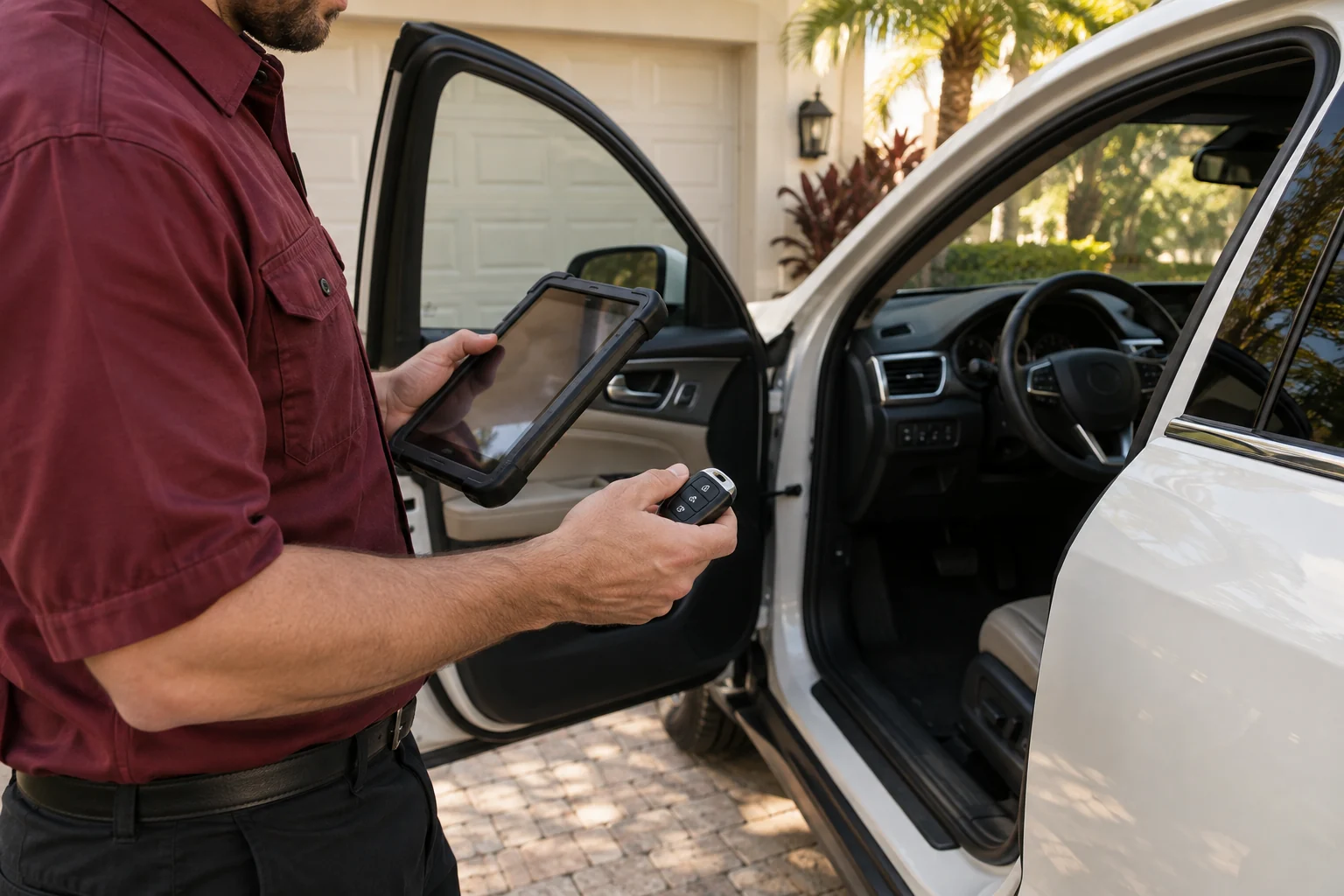
A professional lockout is a quiet, controlled job. The technician looks at the make, the door construction and the lock type, then picks a method that opens the door without leaving marks on paint, weather stripping or glass. Many vehicles can be opened with soft wedges and purpose made tools that never touch the finish.
Because every model is built a little differently, there is no single trick. Some cars have electronic locks that behave differently from older mechanical ones, and some have side airbags in the door that demand care about where tools go. This is exactly why the method belongs to the person with experience, not to a video you half remember.
When the door is open, the job is not finished. The technician checks that every lock, handle and window still works as it should, and you test it with them. That final check is part of the service, and you should expect it every time, because a problem found at the curb is easy to explain and a problem found at home is not.
Ask the technician to explain what they are about to do before they start. A calm explanation of the method, in ordinary language, tells you a lot about how the rest of the job will go. You are the owner of the vehicle, and you are entitled to understand how it is being opened and why.
Information to have ready when you call
A short, clear description saves time for everyone. Tell the person on the phone the make, model and approximate year of the vehicle, where it is parked, and whether the keys are visible inside. If the car is a push button start model or has a proximity fob, mention that, since it can change how the situation is handled.
Say honestly if you are in a place where you feel unsafe, if children or pets are inside, or if the weather is putting someone at risk. Those details change how the call is prioritized and what you should do while you wait. Do not hide a stressful detail because you feel embarrassed about the lockout.
You will also want to have proof that the car is yours nearby, such as a registration or ID. A responsible locksmith will ask you to show it before opening a vehicle. That is not suspicion aimed at you, it is the same habit that keeps your own car from being opened for someone else.
- Make, model and rough year of the vehicle.
- Exact location, including the lot, level or cross street.
- Whether the keys, the fob or a phone are visible inside.
- Any person or animal inside the car, or any weather risk.
- Your ID and proof that the vehicle belongs to you.
Children, pets and heat change the plan
A locked car with a person or animal inside is a different kind of call. Interior temperatures in a closed vehicle in Broward County can climb dangerously even on a mild looking day, and the humid air makes it harder for a body to cool itself. If anyone inside is in distress, contact emergency services first and let them guide you.
For a child who simply got shut in during a short moment and appears calm, stay at the window, talk to them, and keep them from panicking while help is coming. Reassurance is a real tool here, and it takes nothing but a steady voice. A frightened child who stays calm is much easier to help than one who is crying and pressing buttons.
Do not leave the scene to look for a spare key unless someone else can stay with the vehicle. If you do break glass in a true emergency, choose a window far from the person inside and protect your hands. That is the exception that proves the rule, and it only applies when waiting is more dangerous than the repair.
Pets deserve the same seriousness as children. Dogs and cats cannot sweat or cool themselves the way people do, and a shut car turns warm in minutes in coastal sun. Stay calm, keep your voice steady so the animal does not panic, and make that call about urgency honestly rather than hoping it will be fine.
Other doors, trunks and the spare key option
Before you call anyone, walk around the vehicle and check every door, including the rear doors and the hatch. It sounds obvious, but a surprising number of lockouts end with an unlocked back door that nobody tried. A partly open window in the right place can also matter, though you should never push a hand into a gap that holds a window seal.
If a family member has a spare, think about whether getting it to you is realistic. A spare held across town means time, traffic and a second person's afternoon, and it may not be a transponder key at all. Our guide on whether a spare car key is worth keeping explains why a properly programmed spare matters before an emergency.
Trunk lockouts are their own story, especially when a key or fob ended up inside the cargo area. The mechanics are different from a cabin lockout, so we wrote a separate piece on what to do when keys are locked in the trunk. If you can describe which compartment is closed, the call becomes much easier.
Keep a mental list of who might hold a key for you. A partner, a parent, a neighbor with a spare to a family car and a roommate can all help, and the right time to decide this is now, not while standing beside a locked door. A short text to the right person can change the entire afternoon.
Smart keys, fobs and what a lockout can and cannot fix
Newer vehicles often use a proximity fob that the car senses without a metal blade. These keys can still be locked inside, and some systems will refuse to lock the doors when the fob is detected inside, which is a design feature that sometimes fails. Others will happily lock you out and leave you guessing.
A locksmith can usually open the vehicle, but opening a door does not repair a worn fob, a dead battery in the key or a damaged antenna. If your lockout happened because the fob stopped responding, read about why a key fob stops working so you can fix the cause and not repeat the problem next week.
If the real trouble is a missing key and not a locked door, the job becomes replacement. For those cases, see how a lost push to start key is handled, and how transponder key programming pairs a new key with the vehicle. The earlier you know which problem you have, the better your planning gets.
It also helps to know what kind of key you actually carry. A plain metal blade, a chipped transponder key, a remote head key and a proximity fob each behave differently once they are separated from the car. Knowing which one you own lets you explain the situation accurately, and that makes planning around a replacement more realistic.
How to judge a lockout provider before the work starts
Your phone call is the most useful screening tool you have. A trustworthy service will ask about the car, the location and the situation, then explain the process and the price before any work begins. A caller who avoids details or insists on arriving first and explaining later deserves your caution.
Read our guide to locksmith scam warning signs and keep the list in mind. Pay attention to how the business answers the phone, whether the name matches what you were told, and whether the person on the line seems to know what a lockout involves.
Our advice on questions to ask a locksmith on the phone gives you wording you can use even when you are stressed. Asking plainly what the quote includes and how the work is tested protects you, and a legitimate provider will welcome the questions.
Be wary of any quote that changes shape once the work begins. A plain description of the job, followed by a clear explanation of what you will pay, should be the normal order of events. If that order is reversed, you are allowed to say no, close the door and call someone else.
Preventing the next lockout in a coastal climate
Lockouts are often the result of routine, not carelessness. A bag handed over, a phone call taken, and a door pushed closed with a hip is all it takes. Build one small habit, like touching the pocket where the key lives before closing any door, and it will pay for itself.
Heat and salt air do their own damage to keys and fobs. Cases crack, buttons wear, and batteries die at inconvenient moments. Replacing a worn key shell or a tired battery on your own schedule is far less stressful than doing it at a curb in the afternoon sun.
A second key, kept somewhere genuinely safe and not in a magnetic box under the bumper, is the most reliable fix. If you do not have one, think about it as an ordinary maintenance task, much like checking tire pressure. Our car key replacement service page explains the options in plain language.
Seasonal habits matter too. During hurricane season, many people shuffle between cars, garages and shelters with bags and keys in their hands, and that is when keys end up on seats. A small hook by the door and a rule that keys live on the hook are plain household systems that keep stress low when everything else is busy.
Where to go next if the lockout was not the real problem
Sometimes a lockout is just the visible edge of a bigger issue. A key that sticks, a door lock that has turned stiff, or an ignition that no longer turns may all have been quietly warning you for weeks. If you notice any of that after the door is open, mention it to the technician while they are with you.
An ignition that is worn or jammed is a repair job, not a lockout job, and it can leave you stranded in a way that has nothing to do with the door. The ignition repair page outlines what that work involves and how it is discussed before it begins.
If you want the full picture of what we handle across Broward County, the services overview shows how automotive work sits next to home and business work. A single call to explain your situation is often all it takes to learn which path you need.
Finally, write down what you learned. The make and model, the type of key you carry, and the steps that worked are worth keeping in your phone. The next time something like this happens, you will have your own calm checklist, which is more reliable than memory at the worst moment.