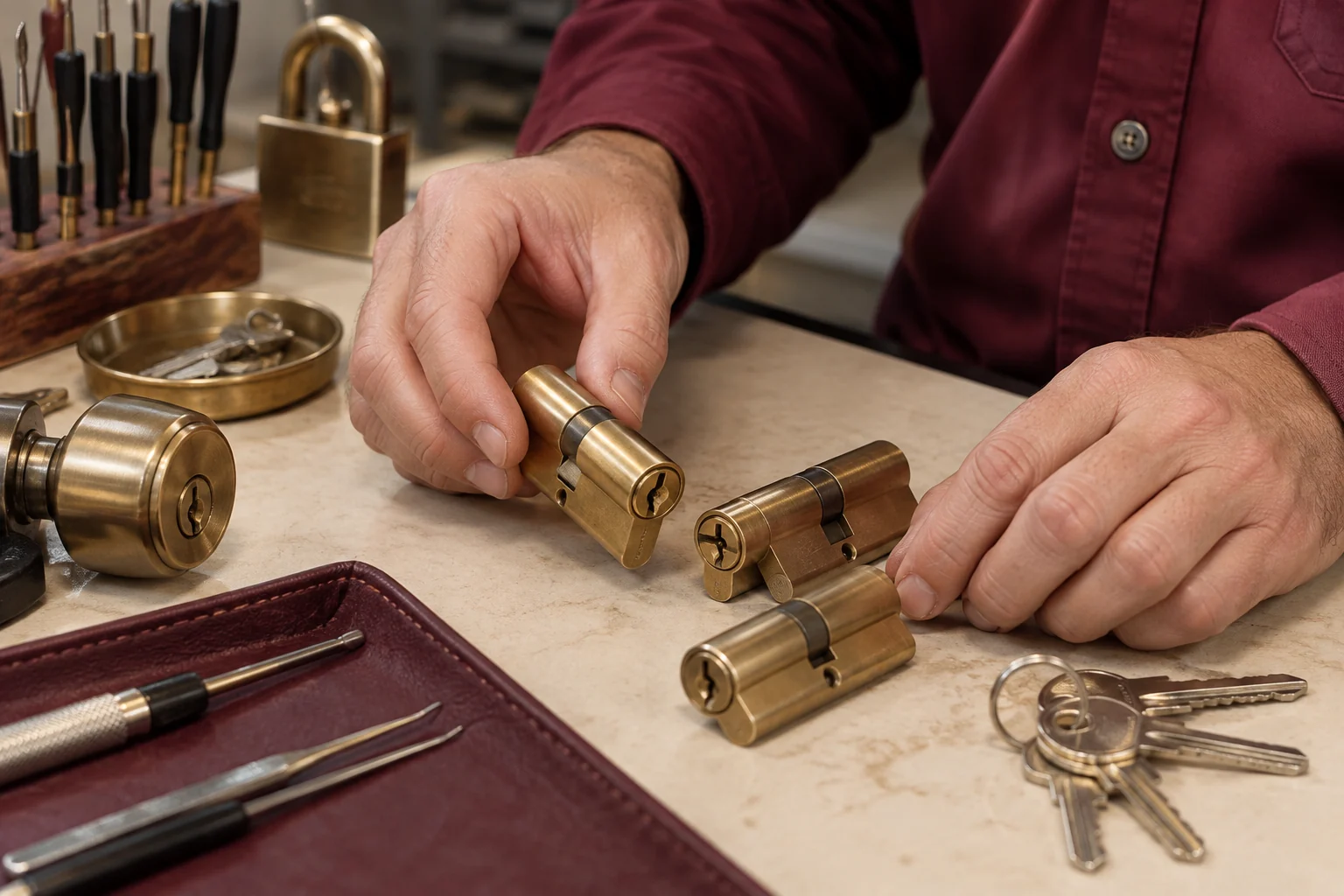
Lockout Service in Weston
A lockout rarely happens at a convenient moment. This page is general guidance for people in Weston on staying safe, thinking clearly, explaining the problem to a locksmith and preventing a second lockout afterward.
Call (954) 888-8804The first minute matters more than the first hour
The moment you realize the door has closed behind you, your body reacts before your mind does. You pat your pockets, rattle the handle, look through a window. Try to slow that down. The decisions you make in the first minute decide whether the next hour is a small nuisance or a larger problem with a damaged door and a sore ankle.
Start with a plain question. Is there a reason this cannot wait? A person who needs help, an animal in a closed space, or something on the stove changes everything. If the answer is no, you have room to think. If the answer is yes, say so loudly and clearly to whoever you call, and contact emergency services where someone is in danger.
Then take stock of what you have. Your phone, your wallet, your car keys if you came by car, and a place to wait that is safe and shaded. Those few items are your toolkit. Everything else, from a landlord's phone number to a relative who holds a spare, is a resource you can reach through the phone. Resist the temptation to improvise with tools you were never meant to use on a door.
It also helps to put a simple label on the problem. Is it a forgotten key, a lost key, a broken key, a jammed lock or a dead battery? Each has a different remedy, and naming it early prevents wasted effort. People who describe the problem accurately on the first call tend to have a smoother experience than those who explain it three different ways.
Different doors, different lockouts
Not every lockout looks alike. The front door is the obvious one, but people also lock themselves out of the garage entry, a pool gate, a side door, a patio slider, a shed or an interior room. Each has its own hardware and its own quirks. A slider with a pin lock is not the same as a deadbolt, and a gate latch is not the same as a mortise lock.
It is useful to describe the exact door. Say whether it is the main entrance or a secondary one, what it is made of and what kind of lock you can see. Mention whether there is a second lock above the first, a screen door in front, a security gate or a chain. Each of these details changes what the locksmith needs to bring and how long the work might take, even though no one can promise a time before seeing it.
Interior doors sometimes present their own issue, particularly bedrooms and bathrooms with privacy locks that children lock by accident. Those can often be handled calmly, and sometimes by a household member with a gentle approach. If a small child is locked inside a room alone and distressed, treat it seriously and get help promptly. Our guide on a lockout with a pet or child inside speaks to this.
What to say, in order
Many people make the call and ramble. A short, orderly description saves time and avoids confusion. Start with where you are. Then say which door and what type of lock. Then say what happened: keys inside, keys lost, key broken, or lock jammed. Finally, mention anything urgent or unusual. That sequence gives the person on the phone what they need.
Be ready to say who you are in relation to the property. A responsible locksmith will want to be reasonably sure you belong at the door, and will ask for something such as identification showing a matching address, a lease, or another record. This protects you and your neighbors. If you are a guest or a house sitter, say so, and expect to involve the owner.
Ask what will happen next. The work and the price are explained before anything begins, and you should feel able to question anything that is unclear. If a call leaves you confused, ask again until it makes sense. You are entitled to understand the plan before agreeing to it. Our general guide to what to do when locked out of your house adds further detail.
Jammed keys and broken keys are lockouts too
Sometimes you are not locked out in the usual sense. The key is in your hand, but it will not turn, or the lock will not accept it, or the key snapped in the cylinder. The outcome is the same, because you cannot get in, and the cause is different. Forcing is the enemy here, since extra pressure usually makes the situation worse.
A key that will not turn can mean a worn key, a worn lock, a misaligned door or a latch under tension from a swollen frame. Pulling or pushing the door slightly while turning sometimes relieves the pressure, but do it gently. Our article on a key that will not turn in a jammed lock goes through the common causes and safe checks.
A broken key needs more care. Do not push the stub deeper, and do not try to dig it out with a pin or a knife, because that can damage the cylinder beyond repair. Our guide to broken key extraction explains what a locksmith does and why it is worth waiting. Keep any broken pieces, since they can help identify the key type.
Electronic locks that stop answering
Keypads and smart locks have made lockouts less common in some ways and more mysterious in others. A lock with a dead battery, a keypad that no longer lights up or an app that cannot connect can all leave you outside. The usual cause is power, and the usual fix is replacing batteries or using a backup.
Before calling, check whether your lock has a physical key hidden behind a cover or an emergency power contact on the outside. Many models do, and your manual or the maker's website will say. If you have a spare key kept somewhere safe, this is the moment for it. Our article about a smart lock with a dead battery walks through what to try.
Do not hammer at the keypad or try random codes repeatedly. Many locks lock themselves out for a time after too many wrong attempts, which just adds delay. If the lock behaves strangely after a battery change, stop and describe exactly what you did. Details such as the battery type, the order of steps and any sounds or lights guide the locksmith directly to the likely fault.
Cars and trunks in the Weston heat
A car lockout shares the same basic idea, but the stakes differ. A car parked in the sun becomes dangerously hot, and anything left inside, including children, pets and medications, is at risk. If a person or animal is inside, treat the situation as an emergency and contact emergency services first. Do not wait politely.
If nobody is inside, check all doors and the trunk, and think about who could bring a spare. Modern doors contain wiring, airbags and electronics, so wedging tools into a seal is a poor idea. Our guides on keys locked in the trunk and the page about automotive locksmith help in Weston offer more detail on vehicle cases.
Take a moment afterward to consider why it happened. A key fob left on a seat, a door locked with the key inside, or a trunk shut on the keys can all be avoided with a short routine. Check for your fob before you close the door, and hold it in your hand until you are away from the car. Spare fobs belong with someone you trust, not in the glove box.
Staying safe while you wait
Waiting is the least comfortable part. Weston summers are hot, afternoon storms arrive suddenly, and nights can feel exposed. Find shade or cover, drink water if you can, and keep your phone charged and dry. If you are alone and it is dark, stay where others can see you, and tell someone where you are.
Be cautious about strangers who offer help. A neighbor you know is one thing. Someone who appears at your door with an offer to open it for a favor is another. Rely on the person you called, and check who arrives matches what you were told. Ask them to explain the plan before they begin, and do not hand over documents or payment before you understand the work.
If your wait is long, there is no shame in going somewhere comfortable nearby, provided nothing inside needs attention. Tell the locksmith where to find you and how to reach you. A cool café or a friend's porch beats standing in the sun. Return in good time, with your identification, so the work can proceed smoothly when the moment comes.
If you are waiting for a person to join you, such as a landlord or a relative with a spare, keep your phone available and answer calls from unfamiliar numbers, since that may be the person trying to reach you. Send your exact location in a message so no time is lost searching for the right door, and note any gate codes or building entry instructions that someone arriving will need.
Money, cost and plain explanations
Worry about cost is natural, particularly when you are stressed. We do not name figures on this page, since the right number depends on the door, the lock and the work required. What we can say is that the work and the price should be explained before anything begins, and you can ask what is included.
Lockout work differs from planned projects. The problem is urgent, you are tired or anxious, and that can make it harder to compare options. Take a breath, ask for a clear explanation, and decide calmly. Our article on what an emergency locksmith visit costs explains the factors that shape a quote without quoting numbers.
Be wary of anything that feels vague. A reasonable explanation names the work, the parts and the total. If you are asked to commit before the situation is described, or if the explanation changes after the work starts, pause. You can say that you need to understand it first. A professional who works honestly will not mind.
Keep a record of what was agreed. A short note or message listing the work, the parts and the total is helpful if a question comes up later. You do not need to be formal about it, and you do not need to be suspicious. Clear records simply keep everyone on the same page and make it easy to remember what was done if you need the same work again.
After the door is open
Once inside, resist the urge to move on at once. Check that the lock now works smoothly, that the door closes and latches properly, and that nothing was changed that you did not agree to. The finished work is tested with you, so use that opportunity. Try the key from outside and from inside.
Think about the cause. If a key was lost, the sensible step is to change what it opens, which is where rekeying comes in. Our page on rekey service in Weston explains how it works. If the lock is worn or damaged, replacing it may make better sense. A conversation about this while the locksmith is already there saves a second visit.
Keep your keys organized from now on. Count them, label spares sensibly without writing addresses, and decide where each lives. Give one to a trusted person. Fix the habit that caused the lockout, whether that means a hook by the door, a keyring clip or a reminder on your phone. Ten minutes of planning now prevents a repeat performance.
If you have just had a lockout, tell the others in your household what happened and what you changed. Everyone benefits from knowing where the spare is and who has it. Small lessons shared at the kitchen table are remembered far better than rules posted on a wall, and they turn one unpleasant afternoon into a useful improvement for the whole family.
Homes with several people, guests and renters
Households with many people have more chances for a lockout, since each person has habits of their own. Teenagers lose keys, visitors do not know the door's quirks, and caregivers or cleaners may arrive without a way in. A little organization helps. Decide who holds keys, who has codes, and how guests are let in.
Renters have an extra layer. If you rent, your landlord or property manager may hold a spare, and your lease may say what you can do about locks. Our guide to house lockout and rekey services covers the practical side, and you should contact your landlord early. In a managed building, the office may have a process of its own.
Hosts of guests, including short stays, can reduce lockouts by explaining the door before arrival. Describe how the lock works, which way to turn the key, and what to do if it sticks. A keypad with a personal code avoids keys altogether. Think about a fallback, such as a lockbox in a sensible place, but be careful about where it is and who knows the code.
General guidance and where to read more
This page offers general guidance for people in Weston. It does not describe any specific building or neighborhood, and it does not state the rules of any association, landlord or local authority. Requirements vary, and you should ask the relevant office if you are unsure whether something is permitted.
If you want to explore further, our overview of locksmith services in Weston brings the main topics together. You might also compare the guidance for nearby areas, such as lockout service in Davie. The core steps are consistent across Broward County: stay safe, think clearly, describe the situation and agree on the work before it starts.
When you are ready, keep this page in mind for the next time, and share it with your family. A calm plan made in advance is worth more than improvising in the moment. And if you are standing at the door right now, take a breath, check on anyone inside, and make the call.
Common questions
What is the first thing I should check if I am locked out?
Check whether anyone or anything inside is at risk, such as a child, a pet or something cooking. Where life is in danger, contact emergency services first. If all is calm, check your pockets, bag and vehicle, and think about who holds a spare key. Avoid forcing the door.
What details help most when I call?
Say where you are, which door is involved and what type of lock it has. Explain whether the key is inside, lost, broken or jammed. Mention anything urgent, and be ready to show you belong at the property. Short and orderly beats long and rambling.
What if my key broke inside the lock?
Do not push the stub deeper or dig at it with improvised tools. That can damage the cylinder. Keep any pieces you have and describe what happened. A locksmith can remove the broken piece and often restore the lock, or advise if replacement makes more sense.
What if my smart lock battery died?
Check for a physical key or an emergency power contact on the lock. If neither is available, do not try random codes repeatedly, since some locks pause after wrong attempts. Describe the model and what you tried when you call, and the locksmith will guide you on next steps.
Do I need to prove I live here?
A careful locksmith will ask for reasonable confirmation, such as identification with a matching address, a lease or a bill. This protects you and your neighbors. If you are a guest, house sitter or tenant, say so and expect the owner or manager to be involved.
How do I stop being locked out again?
Build a simple habit, such as checking for keys before the door closes. Leave a spare with a trusted person instead of hiding it. Fix any lock that sticks, replace batteries on electronic locks on a schedule, and if a key was lost, consider rekeying so the missing key stops working.
Talk through the job before work begins
Tell us what happened, which doors or keys are involved and who needs to get in. The price and the plan are agreed with you before any work starts.
Call (954) 888-8804