Why an emergency call feels different
When you are locked out of a car in a dark parking lot, or standing outside your front door with groceries melting in the trunk, your judgment gets shaky. You want the problem gone, and you want it gone now. That feeling is understandable, and it is also the reason this is the moment people most often make a choice they later regret.
A locksmith visit is a service like any other, but because stress shortens everyone's patience, the usual habits of comparing, asking questions and reading the details tend to disappear. The good news is that a few calm questions, asked in the first minute of the call, change the whole experience. They cost nothing and they set the tone for the rest of the visit.
This article is not a price list. Nobody can honestly say what your particular situation involves without hearing about it, and any single figure printed on a web page is a guess about someone else's problem. What follows instead is a clear picture of what shapes a quote, what to have ready, and what a trustworthy conversation sounds like. If you want a companion view, the guide to what shapes a locksmith quote covers the same ground from another angle.
It helps to separate two kinds of urgency. One is genuine danger, such as a person or animal trapped in a closed space, which calls for emergency responders first. The other is the heavy inconvenience of being shut out of your own life for a while. Both deserve care, but only the first justifies skipping your usual questions, and even then a locksmith can answer them in a sentence.
What the locksmith is really trying to learn
When you call and describe a situation, the person on the other end is sorting it into a type of job. A house door that will not open is different from a car with a key inside, which is different from a broken key in a deadbolt, a stuck safe or a commercial door with a failed exit device. Each type needs different tools, different skill and a different amount of effort.
Within the type, details matter. How old is the lock? Is it a standard cylinder or something more specialized? Is the door metal, wood or glass? Is the car older, or does it have an electronic key? Is there damage already, perhaps from an earlier attempt to force the door? A locksmith who asks these questions is not being nosy. They are trying to arrive prepared so the work can go smoothly.
It also helps to say honestly what has already happened. If you or someone else tried to open the lock and it jammed, say so. If a key snapped off, say so. If you are not sure whether the door is locked or just stuck, say that too. Clear information reduces wasted effort on the day, and it makes the quote you receive a better match for the real situation.
- Say what is locked: a house, an apartment, a car, a safe or a business door.
- Describe what happened just before the problem began.
- Mention any damage, a broken key, or earlier attempts to open it.
- Share the make and year if it involves a vehicle.
- Say whether anyone, including a pet or a child, is inside.
The pieces that shape what you are quoted
Several ingredients go into any service quote, and it helps to know them by name. The first is the type of work: opening a lock, repairing it, replacing it, rekeying it or making a key. The second is the hardware involved, since some locks are simple and others are built to resist entry and take more care. The third is the skill and equipment the job calls for, which can be modest for a common cylinder and substantial for a vehicle with an electronic system.
The fourth is the setting. Location, access and conditions all play a part. A job on a ground floor entrance is a different matter from one in a condo building with controlled access, a gated community with a guard, or a vehicle parked in a crowded lot. Weather and darkness also change how work is done. The fifth is what happens after the opening, such as whether a lock needs to be replaced, a key made or a door adjusted.
Parts, when needed, are a separate piece. If a lock must be replaced rather than opened, the new hardware is part of the conversation. A good locksmith explains this before starting rather than after, and tells you what choices exist. That is the core of fair practice: the work and the price are explained before it begins, and nothing is added without your agreement. For a look at what a straightforward honest conversation sounds like, see how to recognize a fair quote in Broward.
Notice that none of these pieces is about your mood or how desperate you sound. A fair quote follows the work. If a figure seems to follow the caller instead, rising when you sound panicked or falling when you push back, that mismatch tells you something about the business. Ask the person to name which of the pieces above are included in what they just told you.
Questions worth asking before anyone drives over
The phone call is your strongest protection. Before you agree to a visit, ask how the quote works in plain terms. Ask whether the figure you are given is for the whole job or only for part of it, and what could change it once the technician sees the lock. Ask what happens if the lock needs to be replaced, and whether you will be told before any extra work starts.
Ask who is coming, and what name the business uses. Ask whether the technician will be able to show who they are and how you will pay. These are not rude questions. A real business expects them, and an honest one answers them without irritation. If the person on the phone gets vague, evasive or annoyed, treat that as information.
You can keep the list short. A page of questions is hard to remember when you are stressed, so choose three that matter most to you and write them on your phone before you dial. The questions to ask a locksmith on the phone article offers a longer set to draw from, and how to choose a locksmith you can trust explains the bigger picture.
Warning signs that deserve a pause
Most locksmiths are honest working people, but the trade has a few well known problem patterns, and they usually show up in the first call. Be careful if the business answers with a generic greeting that does not name itself, if the person refuses to say where they work, or if the figure given is unusually low with no explanation of what it covers.
Another warning sign is a quote that changes sharply once someone arrives, with no clear reason. Unexpected pressure to replace a lock that was working before the problem began is a related concern. A lockout does not by itself mean the lock is damaged, and a technician should be able to tell you why replacement is needed instead of simply declaring it.
If you feel uncomfortable at any point, you may decline the work before it starts and call someone else. Take the time to read the locksmith scam red flags guide when you are calm, so the warning signs are familiar before you ever need them. Knowing them in advance is one of the strongest forms of protection you can have.
Pay attention to how the call ends, too. A reliable business will tell you what to expect when the technician arrives, what identification and payment methods will be accepted, and how to reach the office if something changes. Vague endings, such as someone will be there, leave you with nothing to hold anyone to.
Doing the safe thing while you wait
Waiting for help is easier when you are safe. If you are locked out at night, move to a well lit place, preferably one with other people nearby, and let someone you trust know where you are. Do not try to force a door, break a window or climb to an upper floor. Those choices create injuries and damage that become much bigger problems than the original lockout.
If you are locked out of a car, step away from traffic and keep the vehicle in sight. Do not use tools meant for other jobs to pry at the door or window seal, since this can damage the weatherstripping, the glass and the electronics inside the door. A calm wait is a better plan than an improvised repair.
Some situations have more urgency. If a child or pet is inside a closed car or a locked home, the priority is their safety, and emergency services are the right first call. The guide to being locked out with a pet or child inside lays out the steps. Locksmiths can help with the lock, but they are not a substitute for emergency responders when someone is in danger.
Think also about your belongings. If you are standing outside with bags, a laptop or medication, find a spot where you can keep them close and dry. Coastal weather in Broward County can turn from sunshine to a heavy downpour in a short stretch, and a lockout in the rain is much more miserable than one under shade. A covered entrance, a lobby or a nearby store can make the wait far easier to bear.
Different emergencies, different questions
A house lockout has its own feel. You are often dealing with a deadbolt and a knob, perhaps a smart lock with a dead battery, and the question is how to get in without damaging the door. Think about whether you hold a spare somewhere safe, whether a landlord or property manager has a key, and whether anyone at home could let you in. The what to do when locked out of your house post covers the steps in order, and the house lockout and rekey page describes the service itself.
A vehicle lockout is a separate kind of call. Newer cars have complex electronics, side airbags and delicate door linings, so the technician needs to be careful and experienced. Tell them the make, model and year at the start. If keys are inside the trunk or the car is running, say that too. The car lockout solutions guide goes through the common scenarios.
Night calls add another layer. Darkness makes everything harder to see, and people are more willing to say yes to anything. If you are calling after hours, slow down and ask the same questions you would ask at noon. The night time emergency locksmith guide explains how to stay in control of a late call.
When the emergency is a lost or stolen key
A lockout is not the only emergency. A lost key, especially one carrying an address, is a security concern even if no one has used it. Wallets get stolen, bags get left on trains, and keys fall out of pockets. The real question is whether anyone could connect the key to your door.
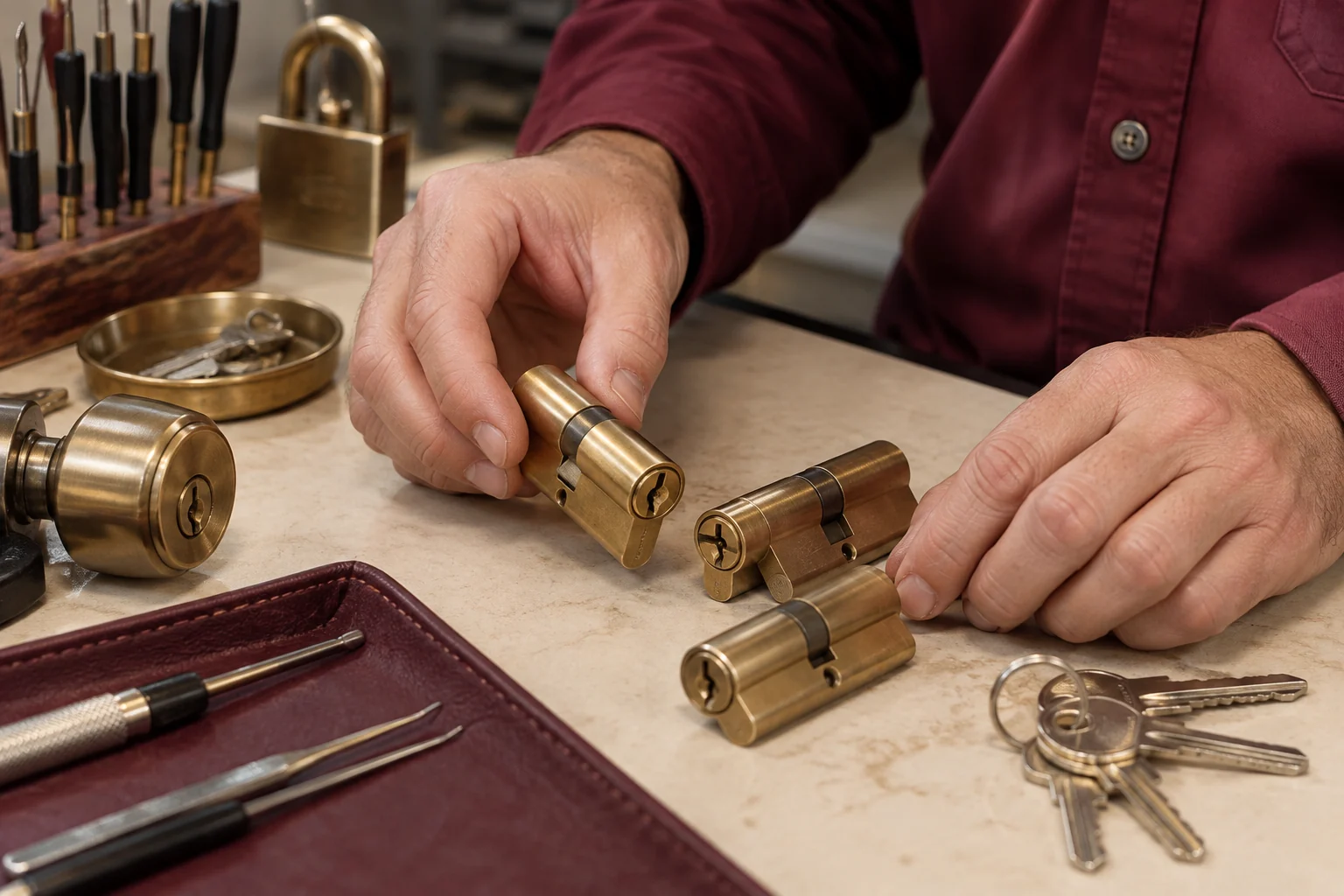
In many cases, the right move is to change what the lock accepts, which is rekeying. It makes the old key useless without replacing the hardware. Some situations call for new locks instead, such as when the lock is old, damaged or lacks the security level you want. A technician can explain which makes sense, and the lost house keys: rekey or replace article walks through the thinking.
For cars, a lost key is also a matter of the electronic chip. The vehicle can often be set up so a missing key no longer starts it, though the details depend on the model. The car key replacement page explains the general approach. In every case, ask what the technician recommends and why, and make the final call yourself.
Think about timing in a plain way. Rekeying does not need to happen in the first minute after you notice a missing key, but it should not be postponed for weeks either. Retrace your steps, check the usual places, and if the key is still missing by the end of the day, decide on a plan. That balance keeps you from overreacting while still protecting the home.
At the door: what a good visit looks like
When the technician arrives, you should know who they are and who they work for. They should confirm the job you described, look at the lock or vehicle, and explain what they see. If the situation is different from what you said on the phone, they should tell you plainly and explain what changes before starting any work.
You will also be asked to show that you have a right to access the property or vehicle. For a home, that might be identification showing the address, or a lease. For a car, it usually means identification and registration. This protects owners, and it is a sign you are dealing with a careful professional rather than someone who will open anything for anyone.
When the work is finished, the result is tested with you. You should try the key, turn the lock, open and close the door, or start the car, so you see for yourself that everything works. Ask for a clear receipt that lists what was done. If you have questions about how to care for the lock afterward, this is the time to ask, while the person who did the work is right in front of you.
If you rent, tell the technician who the owner or manager is. Some buildings have rules about lock changes, and tenants are sometimes not allowed to change hardware without permission. Requirements vary by lease and by property, so ask your landlord or management office before agreeing to any replacement.
Planning ahead so the next call is calmer
The easiest emergency is the one that never becomes an emergency. Keep a spare key with someone you trust, or in a secure place that is not obvious to strangers. For cars, consider an extra programmed key. For homes, think about whether a keypad or smart lock suits your household, since it removes some kinds of lockout.
It also helps to save a trusted locksmith's contact information before you need it. A name you chose while calm is better than one you grab from a search page at midnight. If you live in a condo or a rental, find out who holds keys and what the process is for lockouts. Nearby readers in Davie, Sunrise and across Broward County can use this page as general guidance.
Hurricane season is another reason to prepare. Storms can damage doors, jam locks and send people to other homes with only some of their keys. Check your spares before the season starts, and keep key information somewhere you can reach if you have to leave in a hurry. A little planning turns a frightening call into a manageable one.