Why storm season is also a hardware season
Every June people in Broward County start thinking about water, flashlights and shutters. Door hardware rarely makes the list, yet the lock and latch on a door are what keep it closed when wind pushes on one side and pulls on the other. A door that is slightly loose on a calm day can chatter, flex and eventually spring open when the pressure changes around the house.
Hardware also matters before and after the storm, not just during it. Before, you want every exterior door to close cleanly and lock without a fight. After, you may be dealing with a swollen frame, a key that suddenly will not turn, a car that will not unlock, or a garage entry door that was left unsecured while you were away.
This article is general guidance, written for homeowners, condo owners, landlords and drivers in Broward County. It does not replace instructions from emergency officials, your insurer, your building or your association, and it does not tell you what any local rule requires. It is a calm, practical walk through the locks, doors and keys that deserve a look before the season starts.
Start with the door that takes the wind
Pick the exterior door that faces the direction your area usually gets weather from and open and close it a few times slowly. Watch the gap around the edge. If the gap is even, the door sits well in its frame. If it is wide at the top or the latch side and tight elsewhere, something has shifted, and that shift will matter more when the door is under load.
Next, push the door closed and watch the latch bolt enter the strike plate. It should slide in smoothly and sit snug, without the door needing a shoulder to close or a lift to line up. A latch that barely catches is a latch that can let go. Our guide on a door that will not latch because of strike alignment explains what is usually going on and what a locksmith checks.
Hinges deserve a glance too. Look for hinge screws that spin or sit proud, and for a door that drops when you lift the handle slightly. Short screws that only bite into thin door jamb trim are common in older homes and in doors that have been repainted several times. Longer screws that reach the framing behind the trim make a real difference, and this is a good moment to ask a trained technician instead of guessing.
Deadbolts, latch bolts and what each one does
Most entry doors have two different bolts, and people mix them up. The latch bolt is the spring loaded piece in the handle set that holds the door shut when you pull it closed. The deadbolt is the solid bolt you turn with a key or thumb turn, and it only extends when you lock it. In a storm, the deadbolt is what keeps the door from being pushed open if the latch lets go, so it needs to be thrown every time, not just when you leave.
The depth of the bolt into the frame matters, and so does what it is screwed into. A strong deadbolt held by a weak strike plate is still a weak door. If you are comparing hardware, the deadbolt grades explained page walks through how builders and locksmiths think about strength, and the strike plate upgrade article shows why the small plate on the frame is often the first thing to fail.
A few simple checks help you decide whether the hardware is worth leaving alone:
- The deadbolt throws all the way out and retracts without you lifting or pushing the door.
- The thumb turn or key moves smoothly with no grinding or sticking.
- The strike plate is firmly attached and the bolt enters the hole without rubbing the edge.
- The handle set is tight on the door and does not wobble when you grip it.
- There are no cracks in the wood around the latch or the strike.
Sliding glass doors and the track problem
Sliding glass doors are common across Broward County, and they behave differently from hinged doors. The panel rides in a track, and the lock is usually a small hook latch at the edge. Sand, salt residue and debris collect in the track, and over time the panel can rattle, lift or ride unevenly. In strong wind, a loose panel can move more than you expect.
Clean the track gently and check that the panel rolls without catching. If the latch does not line up with its keeper, or the panel can be lifted slightly in the track, the lock is not doing its whole job. Our guide to sliding glass door locks covers secondary devices that add a second point of resistance and how to tell which ones fit your frame.
Remember that glass is not a lock. Where shutters or impact resistant glazing are installed, the hardware still has to be sound, because the frame and latch carry load. If your sliding door has an odd noise, a sticky track or a latch that feels sloppy, mention it to a locksmith when you call, and describe the situation and the location so the work can be explained properly before it begins.
The garage entry door is part of the house
The door between the garage and the house is often an ordinary interior style door with a basic lockset, even though it is the entrance an intruder or a swinging wind gust would reach once the garage is breached. During storm preparation, people tend to focus on the big overhead door and forget this one completely.
Check that it closes and latches on its own, that the deadbolt is used, and that nobody has propped it with a rug or a bucket. Read the garage entry door security guide for the practical weak points on these doors, such as thin jambs and short strike screws.
The overhead garage door itself is a different matter. Its springs, cables, brackets and opener are under high tension and are not a place for guesswork or a home fix. If something looks off, keep people and vehicles clear and have a trained garage door technician handle it. What a locksmith can help with is the lock on the entry door and the keys that go with it.
What humidity and salt air do to cylinders and keys
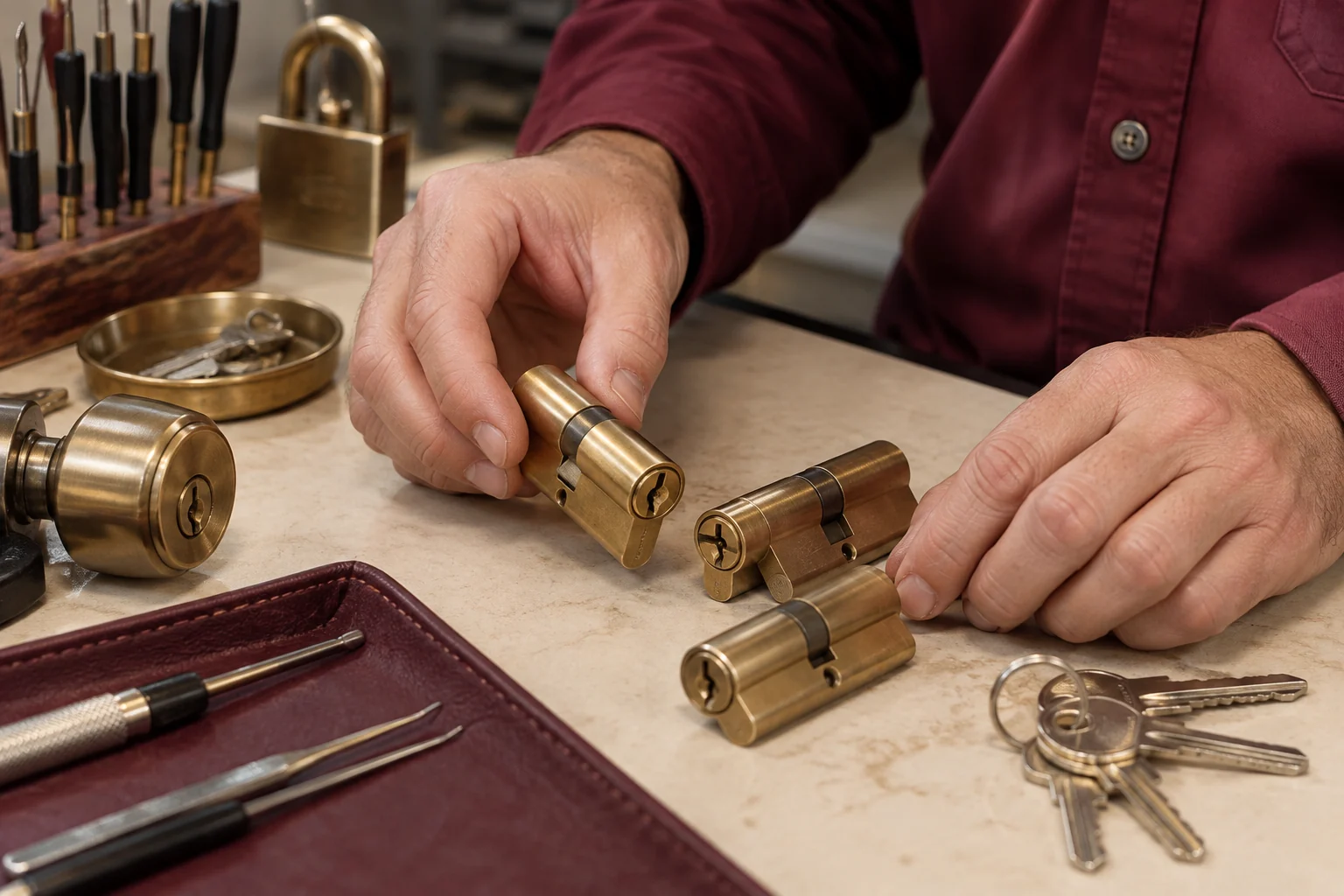
South Florida air is damp for much of the year, and homes close to the coast also deal with salt. Inside a lock cylinder, the small brass pins and springs sit in a space that never really dries. Over a season or two, corrosion and dust can make a key feel gritty, stiff or slow to turn, particularly on an exterior door that sees weather.
Do not reach for heavy oil. Oily films attract grit and make a cylinder worse over time. A dry graphite style lubricant used sparingly is the usual advice for a stiff lock, and if the key still binds, stop forcing it. A key that is being turned with extra muscle can snap, and a broken key inside the lock turns a small problem into a bigger one. The key will not turn or lock is jammed page explains what to try and when to call.
Worn keys deserve attention as well. A key copied from a copy that was itself copied can drift out of spec, and humidity speeds up wear on soft brass. If a key works only when you wiggle it, cut a fresh one from the original, or ask about rekeying the cylinder so that the old, tired keys stop working altogether.
Keys, fobs and cards you will want in a go bag
If you leave home, you will want a short list of items that are easy to forget when everyone is rushing around: house keys, car keys, fobs, mailbox keys, keys to any storage unit, and keys for a vacation property or a relative's home that you look after. Put them in one small waterproof pouch rather than hunting through drawers.
Having a spare of the important ones matters too. Duplicating before the season, not during it, is calmer, and our guide to duplicating keys explains the difference between a quality copy and a rough one. If you drive a push button start vehicle, think about the second fob as well, since one lost fob in a flooded or crowded situation can leave you stuck. That is worth thinking through before the season starts.
Here is a short checklist for the pouch:
- One working copy of every exterior door key you use.
- Both car fobs or keys, with the small emergency blade still inside each fob if it has one.
- Mailbox, storage and gate keys that are easy to overlook.
- A written note, kept somewhere private, of which key belongs to which lock.
- Fresh batteries or spare coin cells for any fob and keypad you rely on.
Smart locks, keypads and the power question
Smart locks and keypad deadbolts are popular in Broward County, particularly in rentals and condos. Most run on batteries, so a power outage does not by itself lock you out, but the batteries themselves have to be healthy. Before the season, replace aging batteries on your own schedule and keep spares on hand. Do not wait for the low battery warning to appear during a storm.
Connected features such as phone control, schedules and remote codes depend on your home network. If the router is down, the lock may still work from the keypad or the key, but the remote parts will not. That is why a mechanical key override matters so much. Keep a working key somewhere reachable, and do not hide it where water can ruin it. The smart lock dead battery guide explains the usual emergency options.
If you are considering a smart lock for the first time, a retrofit device that keeps your existing keyway is worth a look, since it leaves you with a mechanical backup. Read about retrofit smart locks that keep your keys before deciding. Whatever you choose, test it with the door open, then closed, and then from the outside, so you know it behaves the way you expect before you rely on it.
After the storm: swollen frames, stuck locks and debris
Wood doors and frames absorb moisture, and in the days after heavy rain you may find that a door rubs, sticks or will not latch. This is often temporary. Give a door time to dry before changing hardware, and avoid planing or cutting a door in a damp state, because it may shrink back later and leave a gap. If the lock itself is the problem, a locksmith can look at the cylinder, the latch and the strike alignment together.
Check for physical damage before you assume anything is just swollen. Look for a cracked jamb, a bent strike plate, a latch that no longer extends, or a deadbolt that cannot reach its hole because the frame has shifted. If a door cannot be secured, say so clearly when you call and describe where it is and what has happened, so the work and the price can be explained before anything starts. Our page on being locked out in bad weather covers what to do when conditions are poor and you cannot get inside.
Debris and moisture can affect vehicles, too. Dampness in a key fob can make it unreliable, and a car parked outdoors may have door locks that feel stiff after heavy rain. If a fob stops responding, check the battery and the basics before assuming the car needs major work.
Condos, rentals and shared buildings
If you live in a condo or an apartment, the front door of your unit may be your responsibility, while the building entrance, the garage gate and the stair doors belong to someone else. Requirements for changes vary by building and association, so ask your property manager or association what is allowed before you replace hardware on a door that faces a shared hallway. Our condo and HOA lock changes article explains how to approach that conversation.
Landlords and property managers have a different task. Vacant units during storm season are easy to forget, and tenants who have moved out may still hold keys. If you are between tenants, this is a good time to consider rekeying so that old keys stop working. The keypad deadbolts for rental turnover article shows how some owners handle that without chasing every key.
Renters should know what they can and cannot change. If a door will not lock properly, report it to the landlord in writing and keep a copy. Ask the landlord or manager who holds the extra keys, so you know whom to call if you cannot get in. Never swap a lock on a rental without checking your lease and asking permission, since that can cause trouble later.
A calm order of operations
If all of this feels like a lot, take it in order. First, check the doors that take the most weather: latch, strike, hinges, deadbolt. Second, look at the sliding door track and the garage entry door. Third, deal with the keys, spares and fobs, and put them in one pouch. Fourth, handle batteries and any smart lock settings. Fifth, if you travel for the season or own a second property, read the vacation home security checklist so that an empty house is not an easy target.
Work from the outside in, and do not try to do it all in one afternoon. Small adjustments, such as tightening screws or cleaning a track, are easy for most people. Anything involving a cracked frame, a stuck bolt, a damaged cylinder or a lockset that needs to be replaced is work for a trained technician, and it is better to ask early than to be locked out when conditions are poor.
When you do call Half Off Locksmith, describe the door, the lock and the problem, and tell us where you are in Broward County. The work and the price are explained before it begins, and the finished work is tested with you. If you ever need to start over after a break in or a lost key, the rekey versus replace guide helps you decide what makes sense.