Why a shared building changes a simple lock job
On a standalone house, a lock change is a decision between you and the door. In a condo tower or a community with an association, there are more voices. The board, the management office, the building's insurance arrangements and the neighbors who share a hallway can all have an interest in what happens at your entry door.
That does not mean you cannot change your own locks. Many owners do, and plenty of associations are relaxed about it. It means the first step is not choosing a lock. The first step is finding out what your community expects, so the work you pay for does not have to be undone later.
Broward County has a wide mix of housing, from older low rise condo buildings near the coast to newer gated communities with homeowner associations. Rules and habits differ from one property to the next, so this page is general guidance. Treat it as a list of questions, not a statement of what your building requires.
Sort out which parts of the door are actually yours
The word door covers several different things. There is the slab you walk through, the frame it closes against, the hinges, the lockset on the inside and outside, the peephole, and sometimes a second deadbolt added years ago by a previous owner. In many condominium arrangements, the exterior face of an entry door and its frame are treated differently from the hardware on the inside.
Some associations consider the door and frame part of the building's common appearance, even though the lock cylinder belongs to the unit owner. Others leave everything from the threshold inward to the owner. You cannot guess this, and your locksmith cannot decide it for you. Your declaration, rules and any recent notices are where the answer lives.
Ask yourself a few plain questions before you pick up the phone. Did the building supply the lockset, or did you or a former owner install it? Is there a master key or a service key held by the association? Is the door fire resistant, with a label on its edge? The answers shape every choice that follows. Take photographs of the door from inside and outside before anything is touched, including the edge where a label may be. Those photos help you describe the door accurately, and they are useful evidence if a question about the original condition ever comes up.
Read the documents before you read lock catalogs
Most condo owners received a stack of paper at closing and have not opened it since. The governing documents usually describe what an owner may alter, what needs written approval, and what must stay uniform across the building. Entry door hardware often appears under alterations, appearance standards or security rules.
Look for wording about exterior doors, door hardware, finishes, peepholes and keys. If a rule asks for a particular finish, brand family or keying arrangement, note it now. If the documents are silent, that is also useful to know, because it tells you your question goes to the board or manager rather than being answered on paper.
Requirements vary from one association to the next and can change when rules are amended, so check the current version rather than an old copy. When something is unclear, ask the management office or the association's board. Do not rely on what a neighbor remembers, since a verbal habit is not the same as a written rule.
- Find the section on alterations or modifications to a unit.
- Search for rules about exterior doors, hardware, finishes and keys.
- Note whether approval must be in writing before work starts.
- Check whether the association keeps a copy of unit keys.
- Ask for the most recent amended version, not an older copy.
Questions worth putting to the board or management office
A short, polite email or office visit saves a long argument later. Begin by saying what you intend to do in ordinary words: you want to rekey your unit's entry lock, replace the deadbolt, or add a keypad. Then ask whether approval is needed and what form it takes. A written reply is better than a hallway comment.
Ask whether the association holds a master key, an emergency key or a lockbox entry that depends on a specific cylinder type. If your building's staff or emergency responders expect to open your door under certain conditions, changing the cylinder can interfere with that arrangement. Better to hear it before the work than after a notice arrives.
Also ask whether there is a preferred or required vendor list, whether the work must happen at certain times of day, and whether elevators or common areas need to be reserved for the visit. Some buildings want a contractor to check in at the front desk. Knowing this avoids a technician being turned away at the door of the lobby. If several owners on your floor have had similar work done, ask the manager how it was handled. A precedent inside the same building is often the simplest way to learn what the board will accept, and it saves you from inventing a request from scratch.
Matching the lock to the door you really have
Entry doors in older Broward condos and in newer townhomes are not the same. You may have a solid wood door, a hollow metal door, a fiberglass slab or a steel skinned unit with a foam core. The thickness, the bore size and the distance from the edge to the hole all affect what hardware fits cleanly without cutting into the door.
This matters more in a shared building because some associations discourage altering the door itself. A lock that needs new holes drilled can turn a simple approval into a complicated one. Choosing hardware that fits the existing preparation keeps the door as it was, which often makes approval easier to obtain. A hallway door in a building with shared corridors also faces a different kind of wear than a private front door. It is opened and closed by many hands in the building, kept under artificial light, and often fitted with a closer that pulls it shut hard. A closer that slams can wear a latch sooner than normal, so mention it to your locksmith if you notice one.
Your locksmith can look at the door, measure it and tell you what will fit without modification. If you are thinking about a better deadbolt, our guide to how deadbolt grades differ explains what the grading means in plain terms. For a home setup with a broader range of options, the house lockout and rekey service page describes the kinds of work available.
Keys, key control and the master key question
Many buildings run on a master key or service key arrangement, where one key opens a group of locks for staff or emergency use. If your unit's cylinder is part of that system, changing it can break the arrangement. If it is not part of any system, the choice is yours, although the association may still want a spare to be available for emergencies.
Another question is key control. Standard keys can be copied at almost any hardware counter, which means you cannot be sure how many copies exist after years of tenants, cleaners and contractors. Restricted key systems limit who can have copies made. They are worth understanding if you want tighter control over who holds a working key. Our page on restricted and high security keys explains how those systems work. Keep a simple record of who holds a key, including family members, a dog walker, a cleaner and any contractor who has been given one. When the list is written down, it becomes obvious when it is time to change the locks, and you can tell your locksmith exactly how many keys you want cut.
If you are replacing keys because someone moved out, the thing to remember is that rekeying changes which key operates the lock without changing the hardware. You can read how rekeying works before you decide whether it is the right step for a unit with association oversight.
Rekey the lock you have, or replace it
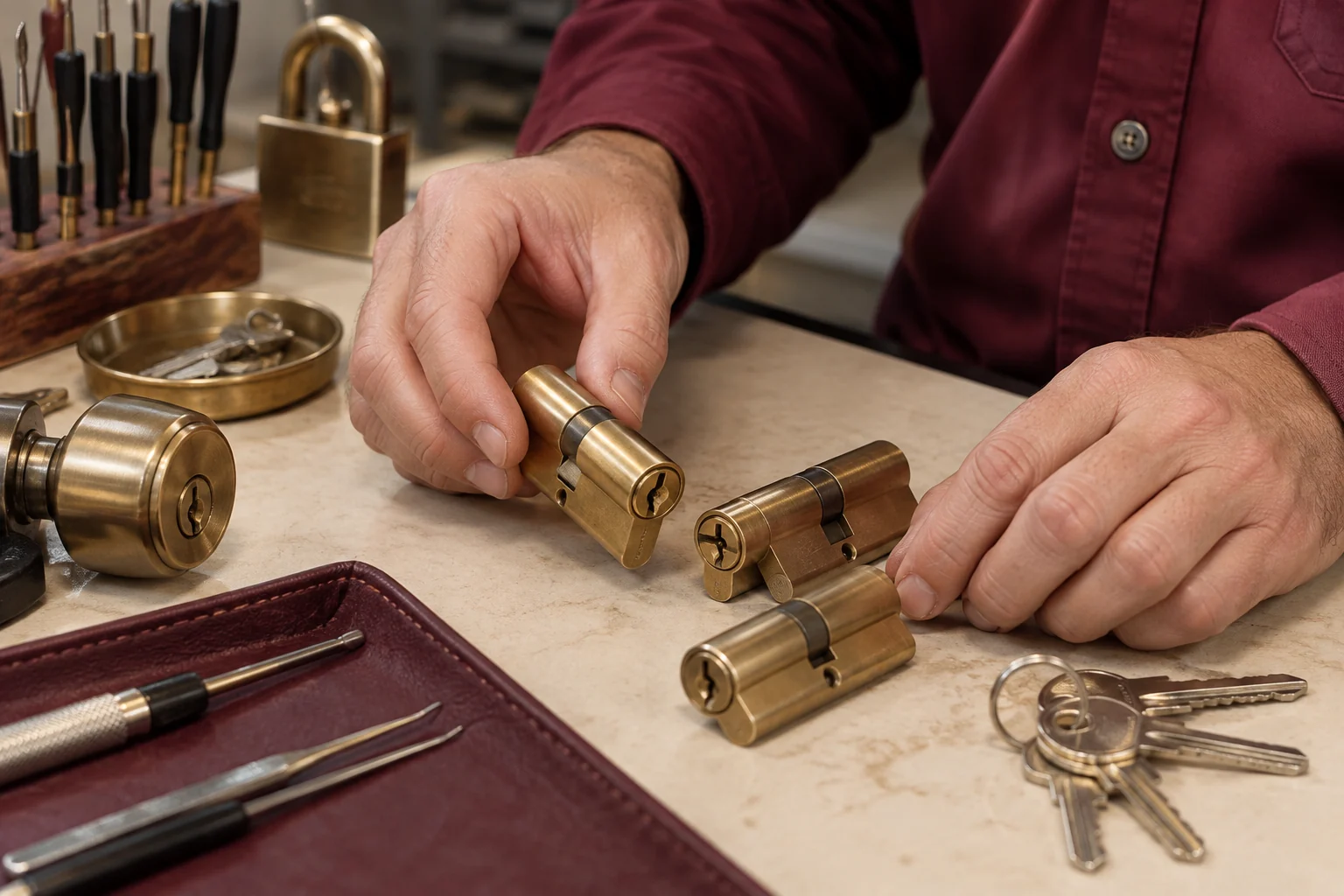
In a condo, rekeying is often the gentler option because the visible hardware stays exactly as it was. The door looks the same from the hallway, the finish does not change, and the association rarely has anything to object to. The inside of the cylinder is reconfigured so that old keys no longer work and new keys do.
Replacement makes sense when the hardware is worn, damaged, corroded or simply not secure enough for how you live. In a coastal climate, salt in the air can pit finishes and stiffen internal parts, so some locks reach the end of their useful life sooner than a similar lock inland. A replacement may need approval if it changes the look of the door.
If you are unsure which direction suits you, our comparison of rekeying versus replacing locks sets out the practical differences. The same thinking applies to a newly purchased unit, where nobody can say how many old keys are still around.
Smart locks and keypads in a condo or community
Electronic entry locks are popular in Broward, but they raise extra questions in a shared building. Some associations want to be sure staff can still enter in an emergency. Others have rules about hardware that is visible from the hallway, or about devices that connect to a wireless network. A lock that looks very different from its neighbors can also trigger an appearance rule.
Ask whether a keypad, a smart lock or a retrofit device that works with your existing key is acceptable, and whether a mechanical key must still operate the door. A retrofit that keeps the original cylinder can be a practical compromise. Our page on keypads versus smart locks explains what separates the two, and the smart locks service page covers installation.
Think about batteries too. A dead battery on a door you cannot easily bypass is a real inconvenience in a high rise where help is several floors away. Choose a model with a clear low battery warning and a mechanical backup, and keep a spare key somewhere sensible that is not under the doormat.
Salt air, humidity and hurricane season
Lock hardware in coastal South Florida lives in a tough environment. Humid air and salt carry moisture into cylinders, and balcony doors and ground floor entries are especially exposed. A stiff key, a lock that sticks in wet weather or a latch that has started to drag against its strike plate can be early signs that hardware is wearing out.
Hurricane season adds its own routine. Before a storm, owners often think about shutters, windows and supplies, and forget that a door which will not close and latch properly can fail when wind pressure builds. If your door drags or needs a shove to latch, have it looked at before storm season rather than during it. Our guide on locks, doors and keys during hurricane season offers a practical checklist. Do not leave this for the last week before a storm. Hardware suppliers and technicians get busier as a season builds, and a door adjustment that is simple in calm weather becomes a scramble when everyone wants it done at once. A short inspection early in the season, with the door closed and latched, tells you most of what you need to know.
Also remember that after a storm, buildings may restrict access or change procedures. Keep your documents, a spare key and any building access cards together in one place so you are not searching for them when you most need them.
Landlords, tenants and owners who live elsewhere
If you rent out a condo, the rules stack up. The association may have requirements for tenants, the lease may say who is responsible for locks, and the law about changing locks on a leased unit is not something to guess at. Ask a qualified professional or the relevant authority when you are unsure about your legal obligations as a landlord.
From a practical standpoint, rekeying between tenants is a common way to make sure old keys no longer work, without replacing hardware. Our notes for landlords who need to rekey set out how many owners approach it. If you use short stays, the page on smart locks for short term rentals may help.
Whatever you choose, tell the association who is authorized to hold keys or codes for the unit, and keep that list current. Confusion about who can enter your home is one of the most common headaches in shared buildings, and a short written record prevents it. Confirm too whether your unit is subject to rental registration or screening rules, since some associations ask for tenant information and key arrangements to be on file. Requirements vary, so ask the office rather than assuming, and keep a copy of whatever they send you for your own records.
Before you call a locksmith, pull this together
A call goes more smoothly when you can describe the situation clearly. Be ready to say what type of building you live in, which door needs work, whether the existing lock is yours or the association's, and whether approval has been obtained. If you know the brand of the current lock or can describe its look, say so. Our short guide on questions to ask a locksmith on the phone will help you check you have covered the basics.
When you speak with Half Off Locksmith, describe the place and the problem and the work and the price are explained before it begins. The finished work is tested with you, so you can see that keys turn smoothly and the door latches as it should. If your building needs paperwork or a sign in, mention that during the call so the visit is arranged properly.
Locksmith service is available across Broward, including communities near Fort Lauderdale and Hollywood. The same questions apply wherever you live: whose door is it, what do the rules say, and who needs to be told.