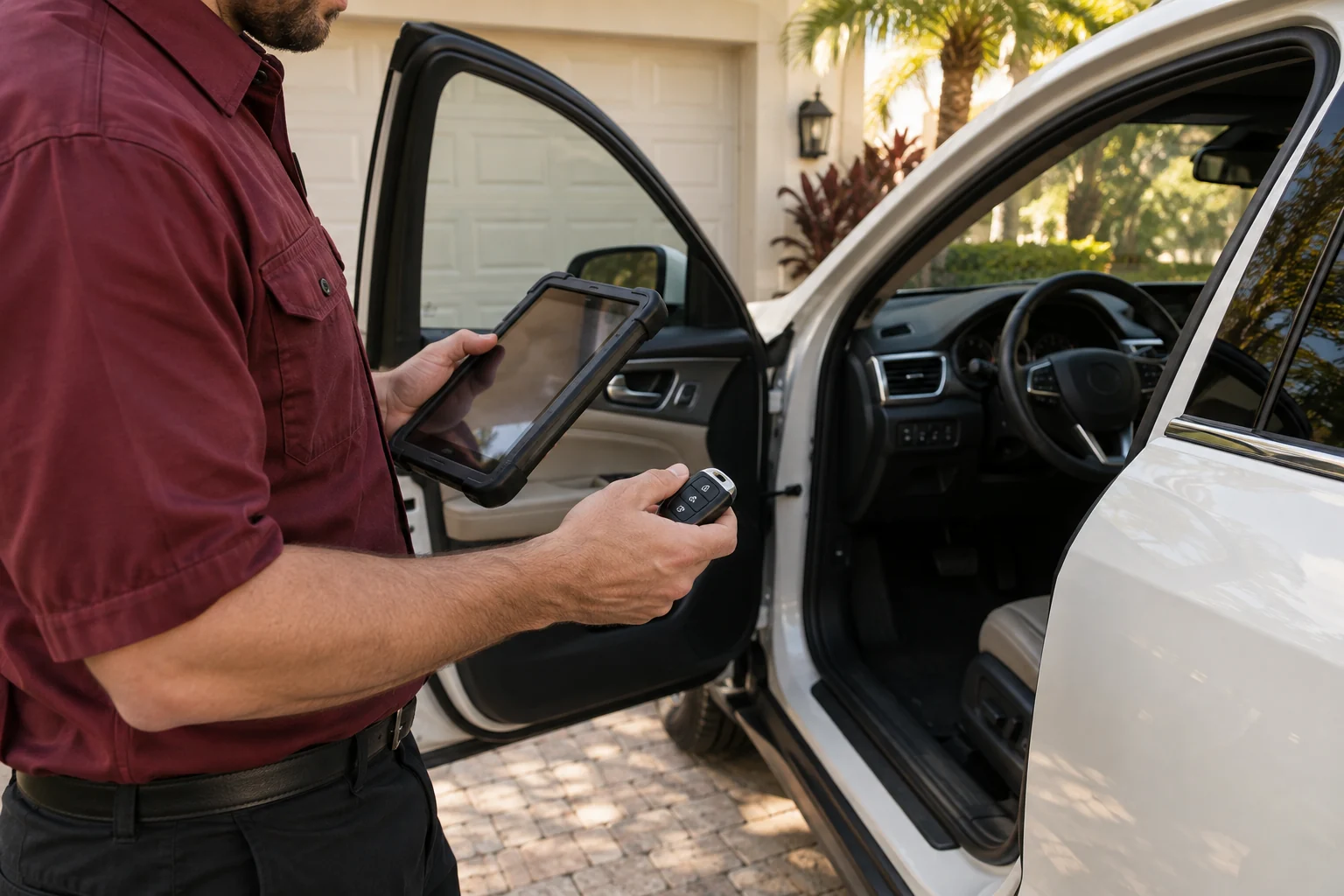
Rekey Service in Dania Beach
Rekeying changes which key fits a lock without changing the lock itself. This general guidance for Dania Beach homes and rental units explains how it works, when it is the right move and what to expect from the visit.
Call (954) 888-8804What rekeying really means
A lock holds a secret in the shape of its internal parts. Inside a typical cylinder sits a column of small pins that must line up exactly when the right key is inserted. Rekeying means rearranging those parts so that a different key does the lining up. After the change, the old key slides in but no longer turns, and a new key takes over.
The attractive part is what stays the same. The deadbolt, the handle, the finish and the door are untouched. You keep hardware you may already like, and you change only the secret. That is why rekeying is a standard answer when the concern is who might hold a working key rather than the condition of the lock.
This page is general guidance for people in Dania Beach, written without claims about specific streets or buildings. If you want the mechanical story in more detail, the guide to how rekeying a lock works goes through it step by step in everyday language.
One point of confusion is worth clearing up early. Rekeying is not the same as copying a key and not the same as getting a locksmith to open a door. Copying makes another key for the same secret, and opening gets you through a door once. Rekeying changes the secret itself, which is why it is the tool for a situation where you no longer trust the keys already out in the world.
Moments when rekeying makes sense
The most common reason is a move. When you buy or rent a place, you do not know how many copies of the old keys exist. Previous owners, tenants, relatives, contractors, cleaners and real estate visitors may all have had one. Rekeying at the start gives you a clean slate without having to trust anyone's memory.
Other moments include a lost or stolen key, a breakup or separation where a former partner still holds a copy, a worker who no longer needs access, or a feeling that your keys have been passed around too widely. Rekeying is also a good idea after a break in where a key may have been taken, even if the lock looks fine.
The articles on rekeying locks after moving and what to do about lost house keys take two of these situations further. You can read them to see which one resembles your own.
Some triggers are quieter. A roommate moves out and says they returned the key, but you cannot be sure no copy was made. A house guest stayed for months and had a spare. A relative who once helped with the house is no longer part of the household. None of these involve any wrongdoing, and rekeying in such cases is simply tidy housekeeping that removes doubt.
Rekey or replace the lock?
The choice depends on the state of the hardware. If the lock works smoothly, looks acceptable and meets your needs, rekeying is often enough. If the lock is worn, damaged, rusted, loose or of poor quality, replacing it may be the wiser move, since changing the keys on a failing lock does not improve the lock.
Replacement also makes sense when you want something different, such as a stronger deadbolt, a keypad, a smart lock or a style that matches new hardware throughout the house. It may also make sense when the lock model is old and parts are hard to find.
The comparison in rekey versus replace lays out the decision in plain terms. Both choices are legitimate. The point is to pick the one that suits your situation, not the one that sounds more impressive.
Quality is the thing to weigh. A well made lock in good condition is worth keeping, and it is a waste to throw it away because of a key concern. A weak builder grade lock may be worth replacing even if the keys are fine, since you will gain strength at the same time. Ask the technician for an honest view of what is on your door, and listen to the reasoning rather than just the conclusion.
What the visit looks like
The process is simple. You call and describe the locks you want changed and the reason. The locksmith explains what the work involves and the price before starting. At the door, the cylinders come out of the hardware, the internal parts are rearranged, and new keys are cut to match. The cylinders go back in, and everything is tested with you.
Testing is the part to take seriously. Try the new key in every lock, several times. Make sure it turns smoothly and that the bolt extends and retracts fully. Then try the old key, and check that it no longer works. That last step confirms the whole purpose of the job.
Ask how many new keys come with the work, and whether additional copies can be made later. Keep the new keys safely and give the old ones back to the technician or discard them, so no one confuses them with the current set.
If you hold a lot of locks, consider labeling the new keys with a small tag marked by door, not by address. A tag that says front or garage helps you and your family, while one that gives your street gives a stranger who finds the ring a map. Keep a spare set at home in a place where only trusted members of the household can reach it.
Keying several locks alike
Rekeying lets you decide how many keys you want to carry. A house often has a front door, back door, garage entry, and maybe a side gate or storage room. If each lock has its own key, you end up with a heavy ring. If all the locks are rekeyed to accept one key, daily life gets easier.
This arrangement is called keyed alike. It is convenient, and for most households it is a sensible choice. The tradeoff is that one lost key opens every door, so you should be thoughtful about which locks to include. A spare room or an outbuilding with valuable tools might be better on its own key.
If you want to know more about the idea, read about keyed alike locks and master keys. It explains how one key can fit many locks and what it means for security.
Pause before deciding on convenience alone. Ask who in the household needs access to which doors. A teenager may need the front door but not the workshop. A helper may need the side entrance but not the main house. Sometimes a sound answer is two groups of keys, one for everyday doors and one for sensitive ones, each carried by the right people.
How often should locks be rekeyed?
There is no fixed schedule that suits everyone. Instead, think in terms of events. Rekey when you move in, after a key is lost, after a person with a key leaves your life or your business, after repairs when contractors held keys, and whenever you have a feeling that too many copies are out there.
In a rental, rekey between tenants. A previous tenant who still holds a working key is a risk to the next one and a liability to the landlord. For a long term owner occupied home, a periodic check of who holds keys, with the list written down, is sensible even without a trigger.
The guide to how often to rekey your home covers this topic with practical examples. It is worth reading if you cannot remember when the keys last changed.
Hurricane season offers a natural reminder. Many families check supplies, documents and shutters in the weeks before the season starts, and keys belong on that list. Count them, test them in their locks, and rekey if you find an unaccounted copy. It is a small task that fits comfortably alongside the other preparation you already do.
Landlords, property managers and rentals
Rental owners face rekeying more than most, because turnover is built into the business. Each time a tenant leaves, the keys they held remain a question. A landlord who rekeys between tenants protects the new occupant, keeps a clear record of who has access and reduces disputes about who entered when.
Property managers handling multiple units benefit from a system. A consistent approach, with each rekey logged by unit and date, makes future work easier and avoids a drawer of mystery keys. If a master key arrangement is in place, the rekey must be planned so that the master still works afterward.
Read more in rekeying rental property for landlords and tenant turnover and rekeying for property managers. Local rules and lease terms may affect the process, so check with your attorney, association or the relevant authority for requirements that apply to you.
Records matter more than people expect. A simple sheet that lists each unit, the date it was rekeyed, how many keys were cut and who received them can settle a dispute in a few seconds. Store it where more than one person can reach it, and keep the key copies that you hold in a locked cabinet that is itself carefully controlled, so the system protecting tenants is not weakened at the office.
Condos, associations and shared doors
In a condo or a community with an association, the entry door to your unit may be yours to rekey, but other doors may not be. A lobby, a mailroom, a gym or a gate belongs to the building, and changing those is the association's decision. Ask before assuming.
Some associations require a copy of the key on file, particularly for emergencies or maintenance. Others forbid certain types of locks on unit doors. This page cannot state those rules, since they vary by community. Your documents, or the management office, can answer.
If you are not sure which locks you control, tell the technician what you know and what you have been told. Do not guess. A short conversation with the manager before the work starts is far easier than an argument afterward.
Bring along anything that helps. A copy of the relevant rule, an email from the manager or a note about which doors are shared lets the technician work with confidence. If the association needs a key copy, agree beforehand who will deliver it and how the handover will be recorded, so the new system is not undone by a casual exchange in a hallway.
Salt air, wear and the state of your cylinders
Coastal conditions can age locks sooner than owners expect. Salt and moisture corrode metal parts and stiffen cylinders. A cylinder that sticks or turns roughly may not be suited to rekeying, because the internal parts are worn or corroded. Forcing a rough lock to take a new key just creates a fresh set of problems.
A good technician will check the condition of the cylinder before committing to rekeying. If the lock is in poor shape, they will say so and explain the options. That honesty is part of the value of the visit, since a rekey on a failing cylinder may not last.
Look at your own locks. If keys stick, if the bolt drags, or if you have to wiggle the door to lock it, mention those signs when you call. They help the technician plan the visit and decide whether rekeying is the right choice.
Simple care helps keep cylinders healthy. Avoid heavy household oils, which attract dirt, and ask the technician what they suggest for your door. Keep keys clean and straight, since a bent or worn key damages the pins inside each time it is used. If a key looks worn smooth at the edges, have a fresh one cut from a good original before it wears the lock down.
Understanding what the work will cost you
Prices depend on the number of locks, the type of hardware and what else comes up during the visit. This page does not state any figures, and you should not accept any quote that is vague about what is included. Ask whether the price covers all the locks, the new keys and the visit itself.
The guide to what affects the cost of rekeying explains the factors without naming numbers. It is a useful read before you call, since it helps you tell a clear estimate from a muddy one.
In the end, a plain explanation and a price before the work begins are the signs of a business you can trust. If either is missing, ask again, and do not feel pressured to say yes on the spot.
It also helps to ask about extras before the work begins. If you want more keys than the standard set, say so, and ask how copies will be handled later. Find out whether the keys are ordinary or restricted, since restricted keys cannot be copied at an everyday kiosk and require the original holder or a record to prove permission. That protects you, though it asks for a little planning.
Nearby cities and next steps
Rekeying advice is much the same across Broward, and you may want to compare it with pages for Hollywood and Davie. The details of your own doors are what matter most.
When you are ready, call and describe how many locks you have, what you want to achieve and any worries about the hardware. The technician will explain the plan and the price before starting, do the work, and test it with you. Keep the new keys somewhere safe, and write down the date for your records.
If you are not ready to rekey yet, the minimum step is to count the keys. Know how many exist, who holds them, and which ones you could not account for if asked. That list alone makes the decision clearer.
Common questions
What is the difference between rekeying and changing a lock?
Rekeying changes the internal arrangement of the cylinder so a new key works and old keys stop working, while the hardware stays in place. Changing a lock removes the old hardware and installs new. Rekeying suits sound locks with a key concern. Replacement suits damaged, worn or unwanted hardware.
Will my old key still work after rekeying?
It should not. The purpose of rekeying is that old keys stop turning the cylinder. Test this with the technician: try the new key in each lock and then try the old one. If the old key still operates a lock, tell the technician right away so it can be corrected.
Can all my locks be made to use the same key?
In most cases, yes, provided the locks are compatible and in good condition. That is called keyed alike, and it reduces the number of keys you carry. The tradeoff is that one lost key opens every lock in the set, so consider leaving a few sensitive locks on a separate key.
Should I rekey when I move into a new place?
It is a common and sensible step. You cannot know how many copies of the old keys exist or who holds them. Rekeying gives you control from the first day. If you rent, check with your landlord or property manager first, since lease terms may affect what you may change.
Can a locksmith rekey a lock that is worn or sticking?
Sometimes, but a badly worn or corroded cylinder may not hold a rekey well. A technician can examine the lock and tell you whether rekeying will last or whether replacement is the better choice. Describe any sticking or rough turning when you call so they can plan.
How many keys should I expect after the work?
That depends on the arrangement you agree on before work begins. Ask how many keys are included and whether extra copies can be made later. Keep the new set in a safe place, hand back or discard the old ones, and record the date of the rekey.
Talk through the job before work begins
Tell us what happened, which doors or keys are involved and who needs to get in. The price and the plan are agreed with you before any work starts.
Call (954) 888-8804