Why this decision feels harder than it should
In the hours after a break in, almost everyone is running on adrenaline and bad information. A neighbor says to change everything, a relative says rekeying is enough, and an online article says something different again. The truth is that rekeying and replacing solve different problems, and your situation may call for one, the other, or a mix of both.
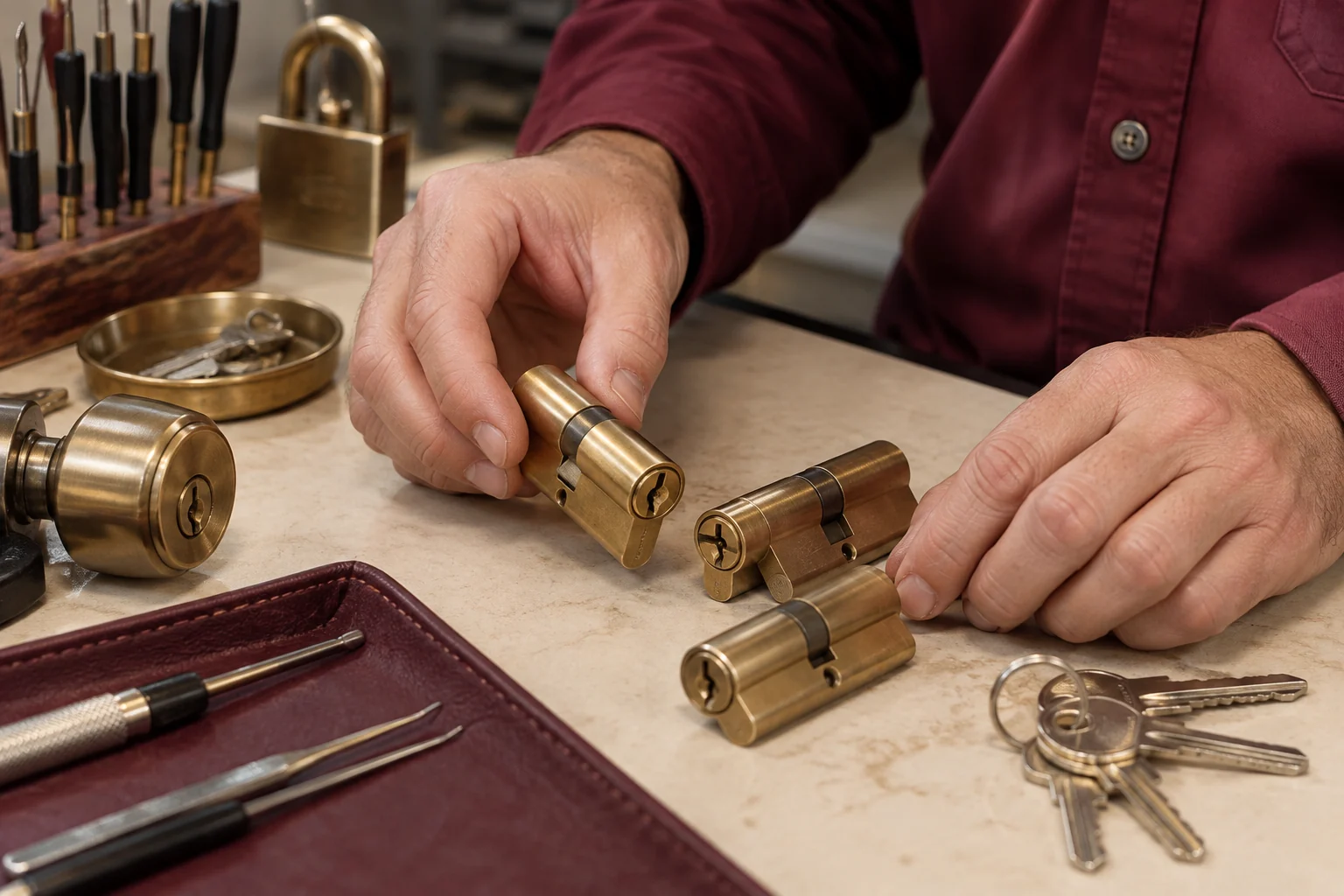
Rekeying changes the inside of a lock cylinder so that the old keys no longer work and a new key does. The lock body, the handle and the finish stay exactly as they were. Replacing means removing the hardware and installing something new, which can be the same type of lock or a different one entirely. Neither is automatically better. What matters is what actually happened at your door, window or garage.
This guide walks through the questions that decide it. If you want the broader sequence of steps for the first day, our after a break in recovery checklist covers calls, photos and documentation. Here we stay focused on the lock hardware itself and how to choose with a clear head.
Start with how they got in
The entry point tells you more than anything else. If a door was forced, the damage is probably visible: a splintered jamb, a bent strike plate, a cracked frame, a handle hanging loose. If a window or a sliding door was the way in, the front door lock may be untouched, and your main concern becomes who might hold a copy of the key. If there was no sign of force at all, the question shifts from damage to access.
Walk the home slowly before you touch anything, and take photos of each door and window as it is. Look at the edge of the door near the latch, at the screws holding the strike plate, and at the area around the deadbolt. Notice whether the door still closes smoothly and whether the bolt extends all the way into the frame. Anything that looks bent, split or loose is information you will want to share when you call.
Please do not test a damaged lock repeatedly by forcing the key or the bolt. A cylinder that has been attacked can jam, and a jammed lock on a door you need to secure tonight becomes a bigger problem. Describe what you see to the locksmith over the phone and let the work be explained before it begins.
When rekeying is the sensible answer
Rekeying fits well when the hardware is sound but the keys are the concern. That includes a break in where entry was made with a key or a hidden spare, a case where keys were lost or taken along with other belongings, and situations where you simply cannot account for every copy. Because the lock itself is undamaged, the change is limited to the pin arrangement inside the cylinder and the keys that fit it.
A practical advantage is that rekeying lets several locks share one new key. Front door, back door, garage entry and a side gate can all be set up so you carry one key instead of four. If you want to understand what happens inside the cylinder, how rekeying a lock works explains it in plain language, and the house lockout and rekey service page describes how we approach it.
Rekeying also respects what you already own. If your deadbolts and handles are in good shape and match the look of your home, there is little reason to swap them. The one honest caution is quality: rekeying a worn out or very basic lock gives you a fresh key, but it does not give you a stronger lock. We will say so if we think the hardware deserves an upgrade.
- The lock turns smoothly and the bolt fully extends and retracts.
- The door, frame and strike plate show no cracks, splits or loose screws.
- The concern is a lost, stolen or unaccounted for key rather than damage.
- The existing lock is a type you are happy to keep using.
When replacement makes more sense
Replacement becomes the better choice when the lock itself has been compromised. A cylinder that was drilled, hammered, pried or twisted may still look fine from the outside but no longer behave the way it should. Handles that wobble, latches that stick, and bolts that only partly throw are all signs that internal parts have been stressed. Rekeying a damaged lock does not repair it.
Age and grade also matter. Some older locks were never built to resist much force, and a break in is often the moment homeowners realize it. If you are curious how locks differ, our guide to deadbolt grades explained describes what separates a light duty lock from a sturdier one, and front door lock types shows the common styles you will see in Broward homes.
A third reason is mismatch. After a break in, some people discover that their front door has one brand of lock, the patio door another, and the garage entry a third, each with a different key. Replacing with a coordinated set, keyed alike if you wish, can simplify daily life as well as improve security. This is a choice, not a requirement, and it can be done in stages if you prefer.
The door and frame matter as much as the lock
A strong lock in a weak door is a weak door. Most forced entries at residential doors come down to the strike plate, the screws that hold it, and the wood of the jamb behind it. If the frame has split, a brand new deadbolt will simply pull out of the same damaged wood the next time someone pushes hard. Repairing or reinforcing the frame is part of the answer, and sometimes the larger part.
That is why a thorough visit looks at the whole opening and not just the cylinder. The length of the screws in the strike plate, the condition of the hinges, the gap between door and frame, and whether the door itself has been cracked near the lock all affect how well the hardware can do its job. Doors that have shifted over time sometimes cause latching trouble that looks like a lock problem, and why a door won't latch and how strike alignment matters goes deeper on that.
Some repairs, such as replacing a door or rebuilding a frame, may call for a carpenter or door installer rather than a locksmith. A good locksmith will tell you plainly when a repair is outside the lock trade. Ask for that honesty up front, because it keeps you from paying for hardware that the frame cannot support.
Who else might have a key
Many homeowners spend the first night after a break in counting keys and realize how long the list is. Family members, a former roommate, a dog walker, a cleaning service, a contractor who worked on the kitchen, a previous owner, a neighbor holding a spare. None of those people is necessarily a suspect. The point is that you cannot know where every copy has traveled, and a key that fits your door is a key that fits your door, no matter who holds it.
This is the strongest argument for rekeying even when entry was by force or through a window. If anything about the incident suggests the intruder may have taken keys, a garage remote, or mail with your address, then treating the old keys as compromised is the cautious path. Our guide on lost house keys and whether to rekey or replace works through the same reasoning for a related situation.
Write down every lock that uses the old key, including the ones people forget: a storage closet, a mailbox, a shed, a pool gate, a detached garage door. Ask whoever you trust to hold a spare, and decide who actually needs one going forward. A short, deliberate key list is one of the most economical security improvements available, and it costs nothing but a few minutes of thought.
Sliding doors, windows and garage entry points
Broward homes often have more glass than a typical northern house, and that changes the picture. Sliding patio doors, jalousie style windows, and French doors are common, and each has its own weak points. A sliding door that can be lifted off its track or has a worn latch is a different problem from a deadbolt, and rekeying does nothing for it. Look at the latch, the track and any secondary bar or pin the door uses.
The door between the garage and the house deserves special attention. It is often a plain hollow door with a basic lock, because it feels like an interior space. If an intruder can get into the garage, that door becomes the next barrier, and garage entry door security explains why it is worth treating like an exterior door. We do not work on garage door springs, cables or openers in this guide, and we urge you not to attempt that yourself, because those parts hold dangerous tension and need a trained technician.
Also consider secondary protection that supports good locks without replacing them. A viewer so you can see who is outside, and a secondary lock on sliders, add layers. Our post on door viewers and secondary locks describes how those pieces fit together, and they can be added whether you rekey or replace.
- Check that sliding door latches catch fully and the door cannot be lifted off its track.
- Look at window locks and any hardware that has been bent or removed.
- Treat the garage to house door as an exterior door when choosing hardware.
- Keep spare keys and remotes out of vehicles parked in the driveway.
Smart locks and keypads after a break in
A break in often makes people curious about keypad and smart locks, since there is no physical key to copy and codes can be changed from a phone. That appeal is real, particularly for rental properties and homes where many people come and go. If you are weighing the idea, smart lock installation describes what the work involves, and keypad versus smart lock helps you separate the two options.
Still, a smart lock is not a magic shield. It sits in the same door and the same frame as the lock before it, so a weak jamb is still a weak jamb. Batteries, wireless connections, and the habits of the people who share codes all become part of your security. Humidity and salt air along the coast can also be hard on electronics, so ask how a particular model is meant to handle outdoor exposure.
If you want to think through the pros and cons calmly, our article on whether smart locks are worth it is a good starting point. Many homeowners choose to rekey now to secure the home right away, then add a smart lock later when they have had time to compare. That approach avoids making a big decision while still shaken.
Condos, rentals and shared buildings
If you live in a condo or an apartment, the decision includes people other than you. The deadbolt on your unit door may be yours to change, but the building entrance, a mailroom, or a master keyed lock may belong to the association or landlord. Requirements vary, so check your lease or governing documents, and ask your property manager or board before changing anything that is not clearly your own.
Renters face a particular version of this. After a break in, a tenant may want locks changed, but the legal and practical details of who pays for it and who must approve it depend on the lease and on the arrangement with the landlord. Our renters guide to locked out situations touches on how to communicate with a landlord, and the same calm, documented approach works after a break in.
Landlords and property managers dealing with a vacated unit have the opposite concern: a tenant turnover leaves old keys scattered. Rekeying between tenants is a routine way to handle that, and it fits naturally with the approach in how often to rekey your home. Whichever side you are on, keep a short written record of what was changed and who holds the new keys.
What a good visit looks like
When you call, describe the situation plainly: what you found, which doors or windows are involved, whether the door still locks, and whether you feel safe staying in the home. The work and the price are explained before it begins, and the finished work is tested with you. You should never feel hurried into a bigger job than the situation requires, and you are welcome to ask why each step is recommended.
A useful visit usually starts with a look at every entry point, not only the one that was used. Expect questions about who has keys, how old the hardware is, and what you want the home to feel like going forward. If a lock can be rekeyed, you should hear that option. If it should be replaced, you should hear the reason in plain words, along with what the new hardware offers that the old did not.
Be cautious of anyone who insists everything must be replaced without looking at it, or who will not explain what they plan to do. Our guide on how to choose a locksmith you can trust lists the signs worth watching for. If you are in Davie, Coral Springs, Cooper City or elsewhere in Broward, the Broward County service areas page shows where we work, and our services page gives the wider picture.
A simple way to decide
Boil it down to three questions. First, is the lock or door damaged? If yes, that hardware needs repair or replacement. Second, could someone else still hold a working key? If yes or maybe, change the keying, either through rekeying or by installing new locks. Third, do you want something different from what you have, such as a sturdier grade, matching keys, or keypad entry? If yes, replacement gives you the chance.
If you answered no to the first, yes to the second, and no to the third, rekeying is usually a calm and practical fit. If the first answer is yes, you are looking at replacement for at least part of the home, possibly with frame work as well. A mix is common: replace the damaged front door deadbolt, rekey the other doors to match. That is a perfectly reasonable outcome, not a compromise.
Whatever you choose, give yourself permission to do it in order. Secure the home first, document what happened, and handle the longer term upgrades once the shock has passed. When you are ready to talk it through, call us from the Half Off Locksmith home page, and we will listen to what happened, explain the options, and let you decide what fits your home.