Rekey Service in Wilton Manors
If you are unsure who has a key to your door, rekeying is the cleanest way to find out that the answer is only you. This page is general guidance for Wilton Manors owners, tenants, and landlords.
Call (954) 888-8804The question behind every rekey
Most people do not wake up wanting to rekey a lock. They arrive at it because of a question they cannot answer: who else can open this door? Maybe you bought a condo and the seller only handed over two keys. Maybe a roommate moved out in a hurry. Maybe the keys to a rental came back from the last tenant with a gap you cannot explain.
Rekeying answers the question by changing it. After the work, the keys that open the door are the keys you can count, and every earlier copy becomes useless. The door, the lock, and the handle look the same as before. The only thing that has changed is the secret inside.
That is what makes it different from a fresh installation. You are not buying a new product, and you do not have to match anything to the door. You are resetting the combination of a lock you already own, which is why it appeals to owners who like their hardware but want control back.
This page is general guidance for Wilton Manors and does not describe any specific street or building. The ideas apply equally to houses, townhomes, apartments, and small commercial spaces in Broward County.
Who tends to need it
New owners and new renters are the largest group. A home changes hands with an unknown number of keys in circulation, and the sensible reflex is to reset them. Our guide for rekeying locks after moving describes how to sequence the work in the first days.
Landlords and property managers are another large group. Between tenants, a rekey keeps a clean record of who has access to each unit. If you manage several doors, rekeying a rental property explains how to do it consistently so you are never wondering about an old copy.
Small business owners also benefit. When an employee leaves or a key goes missing, it is usually more sensible to rekey than to live with the uncertainty. The discussion in rekeying an office after an employee leaves applies directly.
Finally, people who have lost keys, had them stolen, or simply feel uneasy about old copies do well to rekey. There is no need to prove anything went wrong. Wanting to control your own door is reason enough.
Life changes also prompt it. A divorce or separation, a family member who has moved away, a caregiver whose work has ended, or a contractor who had run of the house during a renovation all leave keys scattered. None of those people need be untrustworthy. The point is simply that the circle of key holders should match the circle of people who belong there today, and a rekey brings the two into line without drama or accusation.
A look inside the cylinder
To appreciate what is being changed, picture a row of small spring loaded pins inside the lock. Each pin is divided into two parts of varying lengths. When the right key is inserted, its ridges lift each pin pair so that the break between them lines up with the edge of the plug. Only then can the plug turn.
Rekeying replaces the lower pins with different lengths so that a different pattern of ridges is now required. The old key lifts the pins to the wrong heights, so the breaks do not line up, and the plug stays locked. The new key lifts them correctly. It is the same mechanism with a new secret.
Because the work happens inside, you cannot see it from the outside. The lock looks untouched. This is why testing matters: the proof of a rekey is that the new key works and the old key does not. A responsible visit ends with both being tried in front of you.
Some people ask whether a rekey is the same as changing the lock, and the answer is that it is the same result for key control but a different job. A rekey costs you no new hardware and no change in appearance. A replacement gives you new hardware and an opportunity to change style or grade. Either way, the old key stops working, and that is what most owners care about first. A lock that is very worn, however, may have loose tolerances that make it less reliable. If the key wobbles in the lock or the cylinder feels gritty, the technician may suggest replacement of that cylinder instead.
How a visit usually unfolds
You call, describe your doors, and talk through what you want. Tell the person how many locks there are, whether they are deadbolts, knobs, or levers, and whether any are stiff, loose, or already broken. Ask what the work will involve. The work and the price are explained before it begins, and you should ask whatever you need to.
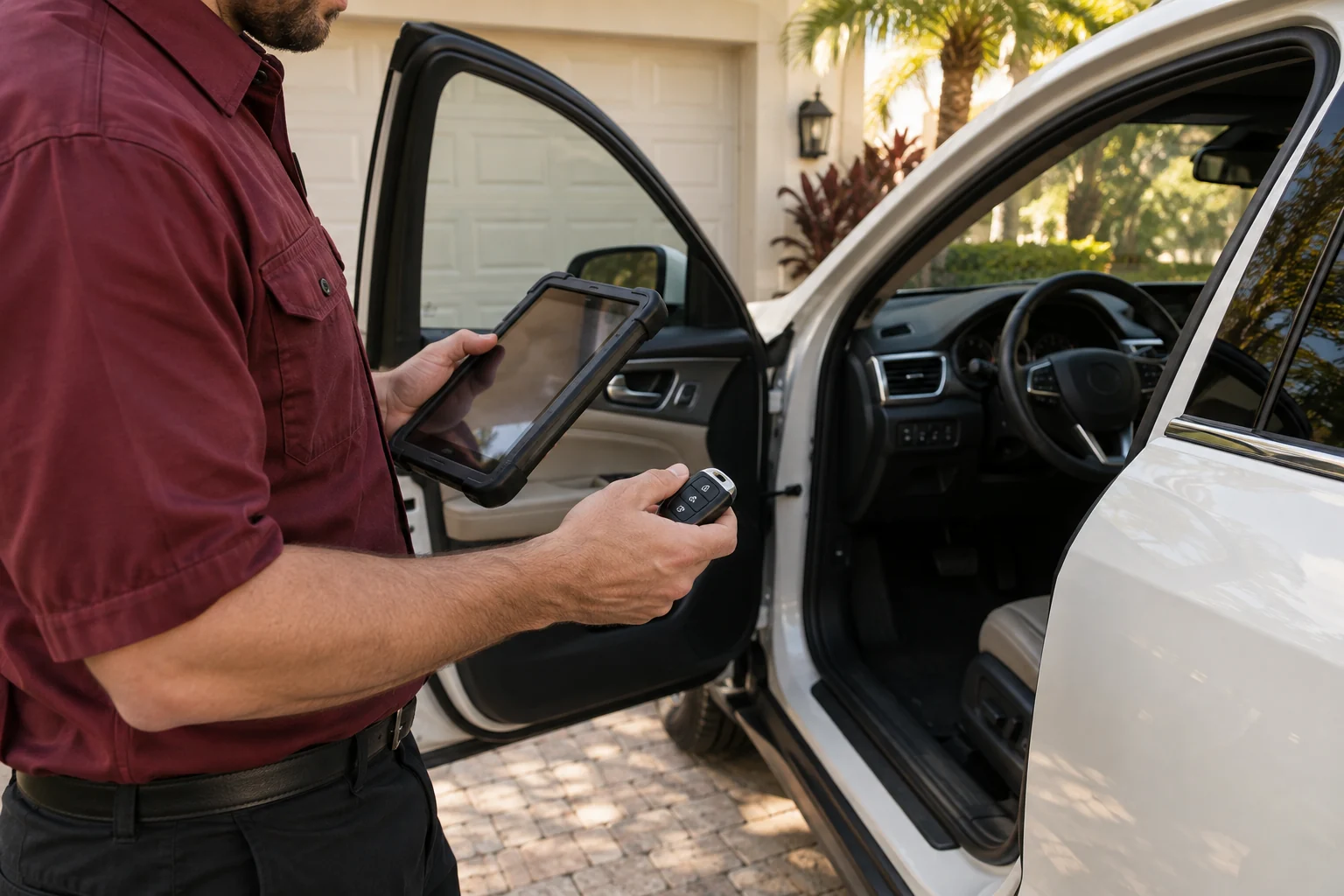
On site, the technician looks at each lock before touching it. They check that the lock is a type that can be rekeyed, that it is in decent condition, and that the key you have fits. They will also confirm you are entitled to have the work done, which is why it helps to have a lease, a bill, or other proof ready.
Then the cylinders are taken out, reset, and put back, door by door. For several locks that you want on one key, they are all set to the same pattern. For locks that you want separate, different patterns are used.
Many visits also include a short conversation about the rest of the property. A technician who is already at the door may notice a loose strike plate, a latch that rubs, or a back door with weaker hardware than the front, and a good one will mention it without pressing. You can decide whether to act on it now, later, or not at all. At the end, everything is tested with you. You use the new key in each lock, throw each bolt, and try an old key to confirm it fails. If anything binds, it is adjusted. You should leave with the new keys counted and a clear sense of what was done.
- Describe the doors and any problems when you call.
- Expect the technician to check each lock before work begins.
- Be ready to show that you live at or control the property.
- Test every lock with the new key and confirm the old key fails.
- Count the new keys before the visit ends.
Rekey, replace, or just add a deadbolt
Rekeying is not the right answer for every door. If a lock is badly worn, damaged, or poorly made, resetting its pins will not fix the underlying issue. In those cases a new lock is a wiser spend. The comparison in rekey versus replace goes through the questions to ask.
Sometimes the real issue is that the door has only a spring latch and no deadbolt at all. A rekey tidies the key situation but does not add resistance. Adding a deadbolt is a separate project and may be better done together with the rekey so you are working on the door once.
Another case is when the door and frame are the weak points. A split jamb or a loose strike plate undermines any lock. The article on whether your locks are good enough can help you judge the whole setup instead of only the cylinder.
Think about what you want from the doors in the next several seasons, too. If you plan to sell, a clean rekey with a documented set of keys is a tidy thing to hand a buyer. If you plan to stay, a modest upgrade at the same visit may serve you better than coming back later. Neither plan is better in itself, but stating yours helps the technician fit the work to it. A sensible technician will help you sort these out and will tell you honestly if a rekey is all you need or if something more is justified. You should never feel pushed toward extras.
Condos, apartments, and shared spaces
Wilton Manors has its share of multi unit buildings, and the details of shared housing add steps. Before changing the lock on your unit's entry door, check your lease or your association rules. Some require the landlord or the association to hold a copy of every key, and some ask for notice before any change. The answers vary from one building to the next, so ask your property manager or association directly.
Shared doors like lobby entries, stair doors, and gates are usually the building's responsibility, not yours. Do not assume you can rekey them, and do not assume someone else already has. If you think a shared door has been compromised, tell the management in writing.
Where the association keeps a master key or a key on file, make sure the new key is delivered to the right party. A rekey that locks out the people who must have emergency access can create trouble for you.
Roommates add a wrinkle of their own. If several people share a unit, decide beforehand who receives a key and who is responsible for the cost of a replacement if one is lost. Writing a short note or message thread on this prevents later disagreements, especially when someone moves out and the question of old keys comes up. Keep a copy of any permission you receive. A short email from your manager approving the work is enough to avoid misunderstandings later.
Turnover rekeying for rentals
For landlords, a rekey between tenants is among the most practical habits there is. It costs little compared with the risks of unknown keys, and it gives each new tenant confidence that the door is theirs alone. Many property managers make it a standard step in their turnover checklist.
Consistency matters. If you manage more than one door, think about how the keys relate. Some owners like a system where each unit has its own key and a master key opens all units. Others prefer separate keys with no master. Either way, documenting the arrangement saves headaches. See tenant turnover rekeying for property managers for a routine you can follow.
Short term rentals have a particular challenge, because keys and codes pass through many hands. A keypad or smart lock with changeable codes can reduce the burden. The discussion of smart locks for short term rentals compares your options.
Think about who actually handles keys during a turnover, too. Cleaners, painters, and repair crews often need access in the gap between tenants, and each of them is another set of hands. Scheduling the rekey after the last worker has finished, rather than before, keeps the new keys from spreading before the unit is occupied. Whatever your approach, keep a log of who received which key and when. A simple record turns an unknown into a fact.
Doing it yourself versus calling someone
Rekey kits are sold for home use, and a patient person with a screwdriver can sometimes complete one. It is a legitimate option for a single standard lock with a matching kit. But it takes care, the parts are small, and a mistake can leave a lock that sticks or that does not hold the new combination reliably.
A professional brings experience, the right tools, and the ability to spot problems. They can also handle locks that do not suit a kit, handle several doors together, and make sure the keys cut cleanly. If you value your time or are not confident, calling someone is reasonable.
Consider the lock's condition too. A kit cannot repair a cylinder that is already failing. If you try one and the lock still feels rough, you have spent effort on something that needed replacement.
Time is a consideration as well. A first attempt at a rekey kit often takes much longer than people expect, particularly if the pins spill or the plug will not go back in cleanly. If you find yourself frustrated partway through, it is better to stop and call than to force pieces into place. Whichever way you go, test the result thoroughly. A rekeyed lock that works with the new key and fails the old one is correct. A lock that works with both is not finished.
Salt, heat, and older hardware
Locks in South Florida live in a harsh environment. Humidity and salt air corrode metal, and heat dries out lubricants. A lock that has sat for years on a porch may feel stiff or gritty. Rekeying on such a lock is often possible, but the inspection beforehand decides whether it is wise.
Older homes may still have original hardware that was made to older standards. Some of it is sturdy and worth keeping, while some is worn out. A technician can tell which, and can tell you whether the parts are still available for it. Do not assume that older means weaker or that newer means better. Look at the individual lock.
Hurricane season adds a reason to check hardware ahead of time. Doors that stick, latches that do not catch, and frames that have shifted all show up around storms. It is better to find and fix them in calm weather.
Think about the tools you have used your keys for, too. A key that has been used to pry open paint cans or tighten screws can be bent or worn, and a worn key can make a healthy lock feel faulty. When you receive new keys, treat them as keys only. If a lock is failing, consider whether it makes more sense to replace it as part of the same visit, since you will already have the technician and the door open.
What to ask before you agree
A few questions make a visit run well. Ask how many locks can be rekeyed on the current hardware and how many might need replacement. Ask how many keys you will receive. Ask what the work will cost in plain terms before it begins, and whether anything could change that. If the answer seems vague, ask again.
Ask whether the locks will be keyed alike or separate, and make sure that matches what you want. Ask how the technician will confirm the old keys no longer work. Ask what you should do if a lock acts up afterward.
You can also read about how rekeying a lock works and how often to rekey a home if you want more background. If you live near a boundary, general guidance for rekeying in Oakland Park is similar.
The clearest sign of a good provider is that you understand the job when it is done. If you do, you will make better decisions the next time a key goes missing.
Common questions
Does rekeying change the look of my lock?
No. The handle, deadbolt, and faceplate stay exactly as they are. Only the internal pins change, so the outside looks untouched. That is why you test the new key and the old key at the end, since the proof is in how the lock behaves.
Will my existing keys work after a rekey?
Only if you ask for the new pattern to match one of them. In most cases the point is to retire old keys, so new keys are provided and the old ones stop working. If you want to keep one key, say so before the work begins.
Can I rekey if I rent?
Often yes, but check your lease first. Many require the landlord to approve changes or to hold a copy of the key. Ask your landlord or property manager, get the approval in writing, and make sure the right parties receive the new keys.
Is a do it yourself kit a good idea?
It can work for a single standard lock if you are patient and the kit matches. The parts are small and mistakes can leave the lock sticking. For several doors or older hardware, many people prefer to have a technician do it and test the result.
How many keys will I get?
That depends on what you arrange. Ask for the number you need, and count them before the visit ends. Additional copies can be made, but each one is another key in circulation, so be deliberate about how many you want.
How do I know the rekey worked?
The new key must turn the lock smoothly and the old key must fail. A proper visit ends with both being tried in front of you on every lock. If a lock accepts both, or either one binds, the work is not finished.
Talk through the job before work begins
Explain the problem, what has to work again and who needs access afterward. We talk through the scope and the price first, and work begins after you agree.
Call (954) 888-8804