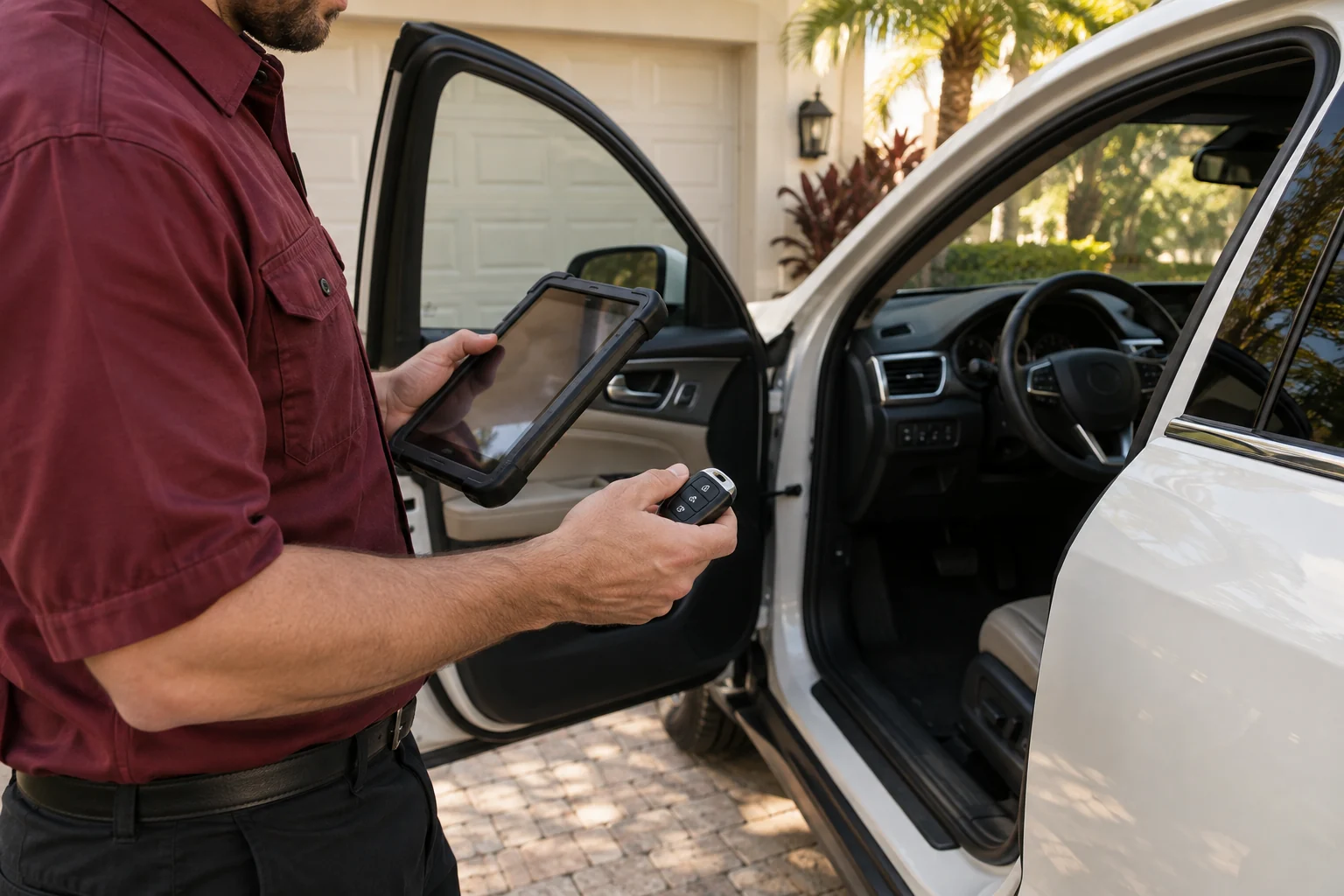
Rekey Service in Sunrise
Rekeying lets you keep your locks while making every old key useless. This general guide for Sunrise explains how the process works, when it is the right move, and how to plan it for a home or rental.
Call (954) 888-8804What rekeying changes and what it leaves alone
Inside a typical house lock sits a cylinder, a small barrel with a row of spring loaded pins. Each pin stack has to line up at exactly the right height for the cylinder to turn, and the cuts on your key are what set that height. Rekeying means rearranging those pins so that a different key pattern works and the old pattern does not.
The outside of the lock stays the same. The handle, the deadbolt, the finish and the way it feels in your hand all remain. What changes is the secret inside. Anyone who held a key to the previous arrangement now holds a piece of metal that no longer fits, and you receive new keys that do.
This page is general guidance for people in Sunrise. It makes no claims about particular neighborhoods or local rules, and it does not assume anything about your building. Different locks and different doors lead to different options, so treat what follows as a way of understanding the idea before you speak with a professional.
A helpful picture is a combination padlock whose code you can change. The padlock itself stays on the shelf, yet the code that opens it is new. A rekeyed lock is similar, except the secret is a pattern of tiny pins rather than numbers. That is why the work can be done on the door in a short visit without disturbing paint, trim or the surrounding frame, and why it suits so many ordinary homes.
Moments when rekeying makes obvious sense
The clearest case is moving into a home that someone else lived in. Previous owners, tenants, relatives, contractors and cleaners may all have copied keys, and you have no way of knowing how many exist. Rekeying on the first day is a simple way to start with a clean slate.
Another case is a lost or stolen key, particularly if the key could be tied to an address. A wallet or a purse taken from a car carries a risk that goes beyond the loss itself. Even if you think the key would never be found or used, changing the lock takes away the worry.
Relationship changes also matter. After a separation, after a roommate leaves, or after a falling out with someone who held a key, a rekey restores your control quietly and without argument. The same is true when a worker has finished a long project at your property and you want to be sure no copies remain in circulation.
There is a quieter reason too. Keys are copied casually. A friend borrows one to feed a pet, a repair person copies one at a hardware counter, and a spare gets handed to a relative who later hands it on. No one acts with bad intent, but the number of copies grows beyond what you can count. Rekeying turns an uncertain number into a known one, and that clarity is worth more than most people expect.
- Move in to a place that was previously occupied.
- Lost, stolen or unaccounted for keys.
- A tenant, roommate or worker who no longer needs access.
- A household change that calls for a fresh start.
Rekeying compared with replacing the lock
Replacing a lock means removing the old hardware and installing a new set. Rekeying keeps the hardware and changes only the inside. If your locks are in good condition, rekeying is usually the simpler path, and it lets you keep the style and finish that you already have.
Replacement is wiser in some situations. A lock that is worn, loose, corroded or damaged may fail soon, and changing its keys will not improve it. A very old or low quality lock may not offer the strength you want. You may also want a different style, such as a stronger deadbolt, a lever handle or a smart lock.
The decision is not always obvious, so ask for guidance. A professional can look at the lock and tell you whether it deserves to stay. Our article on rekeying versus replacing locks sets out the comparison in more detail, and the guide to how rekeying works explains the mechanism.
Condition is the deciding factor more often than style. Hold the handle and wiggle it: excessive play suggests wear. Turn the key slowly and feel for grinding. Look for rust, pitting or cracked parts. If the deadbolt throws only part way, or the lock sticks in humid weather, the hardware may be reaching the end of its life. A rekey on a failing lock gives you new keys for a lock that may not last, so be honest about the condition.
Keying several doors to one key
One of the pleasant side effects of rekeying is the chance to match your locks. Many homes have a front door, a back door, a garage entry and sometimes a storage room, each with a different key. The result is a heavy ring and a fumble every time you reach the door with your arms full.
By rekeying the locks to a single pattern, one key can open them all. This is called keying alike. It works well when the locks are from compatible families, and your technician can tell you whether your set can be matched. It does not weaken security, as long as you keep track of the keys.
Keying alike is especially welcome for families, for landlords with several units, and for small businesses. Our article on keyed alike and master key setups explains the options, including when different people need different levels of access.
There are a few limits. Locks from different makers sometimes use different keyways, which are the shapes of the slot a key slides into, and a key from one family will not enter another. A technician can often swap a cylinder for a compatible one so the set can match. Ask about this when you call, and mention the brands on your doors if you know them.
Planning for landlords and property managers
Landlords face turnover as a regular part of the business. Each time a tenant leaves, the number of people who might hold a key grows. A routine of rekeying between tenants removes that uncertainty and gives the next occupant a lock only they and the owner can open.
A good routine is simple to follow. Schedule the rekey after move out and before move in. Record which keys were made and who received them. Keep a master list that identifies each lock by unit or door, without writing the address on the keys themselves, which creates a risk if one is lost.
If you manage many units, a master key system may help, with each unit on its own key and a management key that opens all. Our guide on rekeying rental properties covers the planning side, and the article on tenant turnover rekeying for property managers adds ideas for scheduling the work.
Owners with a single rental often overlook the mailbox, the storage cage and the shared gate, each of which may have its own key. Add them to the checklist. Condominium units frequently depend on association rules for exterior locks and common areas, so ask the association which locks belong to the unit and which belong to the building before anyone starts changing cylinders.
Renters and what to ask first
If you rent, begin by reading your lease. Many leases say that tenants must not change locks without written permission, and some require a copy of any new key. Others allow it provided the landlord gets access. Rules differ widely, so ask your landlord or property manager, and keep the reply in writing.
Many landlords agree readily when a tenant has a good reason, such as a lost key or a safety concern. Offer to give a copy of the new key, and explain that the rekey is not a replacement of the hardware. A short, polite message usually settles the matter.
If you share a home with roommates, talk about who will hold keys and what happens when someone leaves. Agree in advance that the lock will be rekeyed at that point, and decide who pays. Having that conversation early prevents disputes later, and it makes the eventual rekey feel routine rather than personal. For a related situation, our article on renters who get locked out also covers how to deal with management.
What the visit looks like from start to finish
You call and describe the locks that need work, how many there are, and where you are. The work and its price are explained before it begins, so you know what you are paying for. Be ready to say whether you want all locks on one key or each on its own.
During the visit, the technician removes each cylinder, changes the pins to match the new key and puts it back. They check the movement of the bolt and the latch. They cut keys and test each one in the lock. Because the lock itself is not replaced, the process is usually calm and tidy, and nothing about the door needs to change.
If a cylinder turns out to be damaged or worn out when it is opened, the technician should show you and explain the options, rather than simply changing the plan. You are entitled to hear what was found, what it means for the lock, and what each choice would involve, then decide whether to repair, replace or leave it alone for now.
At the end, the finished work is tested with you. Try each key in each lock, from both sides if the lock has a cylinder on the inside. Lock and unlock several times. Make sure the old key no longer turns the lock, if you have one to try. Ask for the right number of keys, and keep them in a safe place.
Ask what to do with the old keys. Some people keep them for a while in case a lock was missed, while others discard them. A sensible compromise is to put them in an envelope labeled with the date and the door, store it, and throw them away once you are sure every lock has been checked. Never leave obsolete keys in a place where someone might assume they still work.
Smart locks and rekeying
Smart locks do not remove the need for rekeying, because many still include a physical keyway. If a smart lock has a key cylinder, that cylinder can usually be rekeyed like any other. Codes and app users handle the electronic side, while the cylinder handles the mechanical backup.
If you have a smart lock and lost the mechanical key, consider rekeying the cylinder and removing old codes at the same time. That way, both ways of entering the home are renewed. Keep a record of the users you have added, and remove anyone who no longer needs access.
Some people like retrofit devices that attach to an existing deadbolt and leave the keyway untouched. Those pair well with rekeying, since the cylinder can be changed without altering the electronics. Read our article on retrofit smart locks that keep your keys if you are considering that approach.
Short term rentals deserve a special mention. Hosts who use codes can change them between guests with no visit at all, yet the mechanical key behind the code still needs attention. If a spare key was left in a lockbox, with a cleaner, or with a neighbor, rekeying the cylinder closes that door too. Treat the physical and electronic sides as two separate doors to the same room, and look after both.
How often a home should be rekeyed
There is no single schedule that suits everyone. Some households rekey only when something happens, such as a move or a lost key. Others choose to do it periodically, especially if they have had many visitors or workers. What matters is that you know who has keys and are comfortable with the answer.
A useful habit is to count your keys now and then. If you cannot account for each one, consider rekeying. If you have given spares to family, friends or house sitters, make a list, and update it when plans change. Treat keys the way you treat other items of value.
Hurricane season is a natural prompt. When you check supplies and documents before the season begins, add a short look at your key situation: who has copies, where the spare lives, and whether any key has gone missing since last year. If a home will be empty for a while, a house sitter with a key you can later retire is better than one holding a copy forever.
Our article on how often to rekey a home discusses these patterns in more detail. A related guide on rekeying locks after moving gives a practical order of operations for the first week in a new place.
Caring for locks after the work is done
After a rekey, the lock should feel smooth. A new key can seem slightly stiff at first, but it should not bind or stick. If it does, mention it right away. A small adjustment at that stage is easy, and it prevents wear.
Keep a simple habit of testing the spare key as well. It is common to discover, months later and at a bad moment, that a spare was cut badly and never worked. Try the spare in each lock on the day the new keys arrive, and label it so you know which lock it belongs to. A spare that has been proven to work is a real safety net, while an untested one is only a hope.
Florida air is humid and salty in many places, so exterior locks benefit from occasional attention. Keep the keyway clean, avoid heavy oil, and ask a professional for the right lubricant if the key turns roughly. Pay attention to the latch and strike, which can shift as doors swell and shrink.
Keep your spare key somewhere safe, and write down how many exist. If you need help getting back inside a locked home, see our page on lockout service in Sunrise, and for the wider picture of what we cover, return to the overview of locksmith help in Sunrise. A modest amount of care keeps locks working for a long time.
Common questions
Does rekeying make my old key useless?
Yes. Rekeying rearranges the pins inside the cylinder so that only the new key lifts them to the right height. Old keys may still slide into the lock, but they will no longer turn it. That is the point of the process.
Can all my locks be rekeyed to the same key?
Often, yes, if the locks are from compatible families. A technician can check your set and tell you which can be matched. Keying alike gives you one key for the front door, back door and other locks, which many people find convenient.
Should I rekey or replace my lock?
Rekey when the lock is in good condition and you only need to change who has access. Replace it when the hardware is worn, damaged, weak for the door, or no longer the style you want. A professional can examine it and advise you.
Do I need my landlord's permission to rekey?
Possibly. Leases and building rules vary, and some require written approval or a copy of the new key. Ask your landlord or property manager before making any change, and keep their answer in writing so everyone is clear.
Can a smart lock be rekeyed?
Many smart locks have a physical keyway that can be rekeyed like a normal cylinder. The electronic side is handled separately with codes or app users. If you lose access to either, change both the cylinder and the stored users.
How will I know the rekey worked?
Test every new key in every lock before the technician leaves, from outside and inside where applicable. Try an old key if you still have one, and confirm that it does not turn. Open and close the door several times to check the latch.
Talk through the job before work begins
Say what went wrong and what you need to work when we leave. Scope and price are settled with you ahead of the work.
Call (954) 888-8804