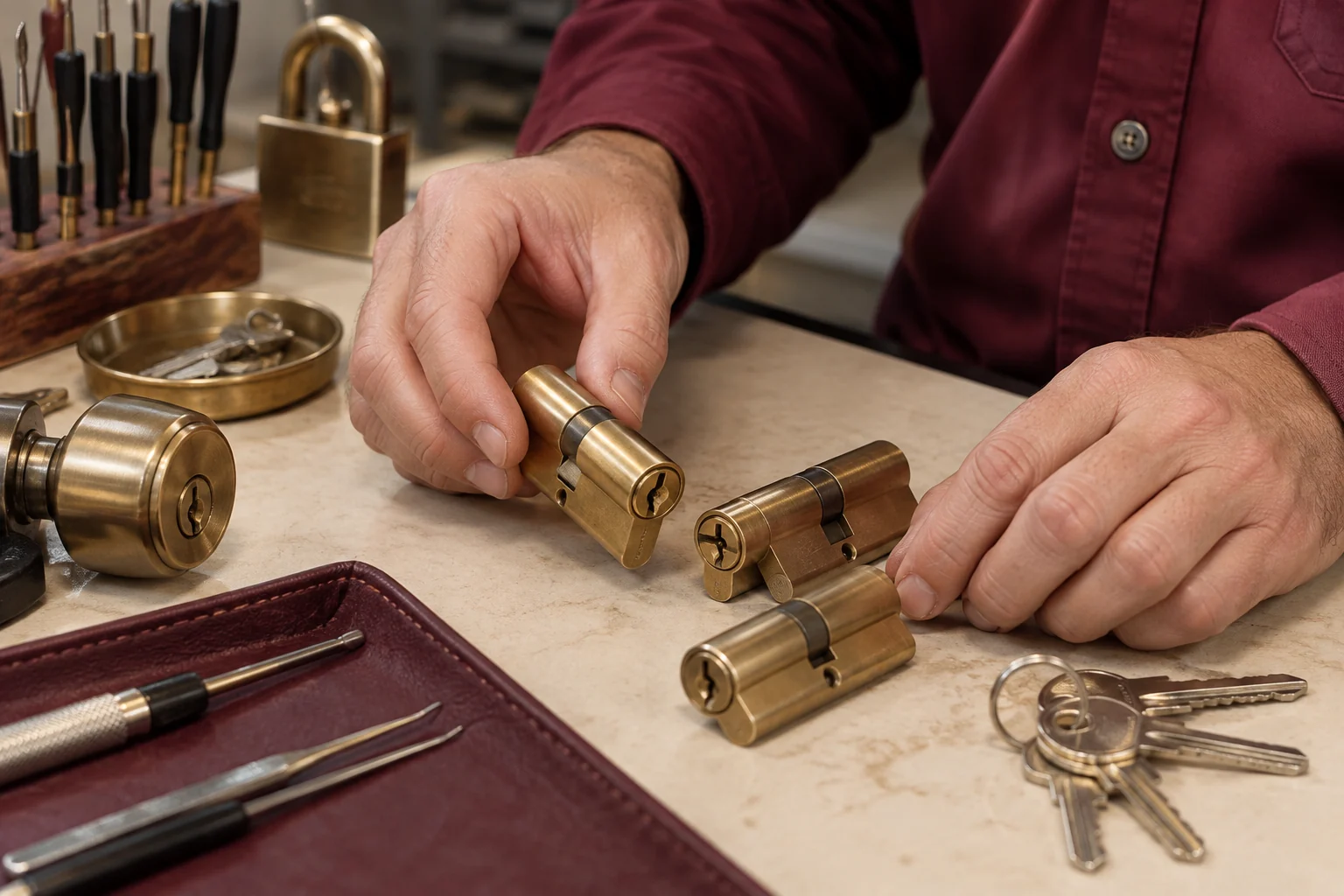
Lock Installation in Pompano Beach
Choosing and fitting a new lock is partly about security and partly about how the hardware copes with sun, rain and salt air. This page is general guidance for Pompano Beach residents planning a lock installation.
Call (954) 888-8804Before you buy anything
It is tempting to pick a lock from a shelf or a website because the picture looks right, but the door has the final say. A lock that does not fit the door's thickness, hole size or hand will either refuse to install or install badly, and a badly installed lock tends to stick, wobble or fail early. Spend a few minutes learning about the door first.
Check what material the door is made of, how thick it is, whether it already has holes bored for a deadbolt and a handle, and which way it swings. Notice whether the existing hardware works smoothly or whether the door itself rubs, sags or needs a push to close. These observations tell you whether you need a simple swap or some preparation work.
This page is general guidance for people in Pompano Beach. It does not describe local rules or claim any history with a particular building. It is a plain explanation of what a lock installation involves, so that you can make decisions with confidence.
If you are not sure which door matters most, start with the one you use every day and the one that is least visible from the street. Those two tell you the most about how your home is really protected. You can plan the rest later, and a technician can look at the others in the same visit if you decide to widen the job.
The salt air problem
Living near the ocean changes how hardware ages. Salt in the air settles on metal and speeds up corrosion, humidity sneaks into cylinders and mechanisms, and the sun's heat dries out lubricants. A lock that would last for many years inland can look tired and feel rough much sooner on a coastal street.
Materials and finishes matter more here than in drier places. Solid brass, stainless steel and quality coatings tend to resist corrosion better than thin plating over soft metal. Ask what the lock is made of and whether the finish is meant for exterior exposure. A pretty finish that blisters in a single wet season is not a bargain.
Care also helps. Wipe exposed hardware occasionally with a damp cloth to remove salt, keep the keyway clean and use a light dry lubricant meant for locks. Avoid heavy grease, which attracts grit and creates a paste that makes keys stick.
Keep in mind that coastal sun also bakes dark finishes until they are hot to the touch and can fade some coatings in a few seasons. If your door faces west or sits without shade, consider a lighter finish or a protected entry. These details look small in a showroom but add up to a lock that still looks good and works well a few years on.
Houses, townhomes and condo doors
Different homes mean different doors. A single family house may have a solid wood or fiberglass entry door with standard bored holes. A townhome may have a similar door but with shared walls and rules from a homeowners group. A condo unit often has a heavier, fire resistant door that the association controls, and drilling into it can create trouble beyond the lock.
Because of this, the first question for many people is who must approve the work. If you live in a condo or a managed community, ask the association or the manager what hardware is allowed, whether finishes must match and whether keys need to be registered. Requirements vary, so ask them before ordering anything.
If you rent, check your lease. Many landlords permit lock changes only by their own contractor or with permission, and some require that the landlord keeps a key. A short, polite question before you buy saves a dispute afterward.
Vacation and seasonal homes are common in South Florida, and their owners face a particular choice. A door that sits unused for months can seize in damp air, and a keypad that nobody tests may hide a dead battery. If you visit rarely, choose hardware you can check easily and keep a physical key somewhere reliable in case electronics fail.
Deadbolts and what the grades mean
A deadbolt is a bolt that extends into the frame and stays there until you retract it with a key or a thumb turn. Unlike a spring latch, it does not slide back when pushed. Deadbolts are sold in different grades that reflect the tests they are designed to pass, and a higher grade generally means thicker parts and more resistance to force.
Our article on deadbolt grades explained goes through the labels, and the guide to front door lock types shows how bolts, knobs, levers and handlesets differ. Grade is not the only thing to consider. A grade one bolt on a weak frame is still a weak door.
Think about whether you want a single cylinder bolt, which uses a key outside and a thumb turn inside, or a double cylinder, which needs a key on both sides. The second can slow you down if you need to leave in a hurry, so think carefully and ask what is appropriate for your door before choosing it.
Another consideration is how many different keys you want to carry. Entry locks can be keyed to match so a single key opens the front, back and side doors. It is convenient and many households choose it, but it also means that one lost key affects all of those doors. Decide before the work begins, so the cylinders are set up the way you want.
- Choose a grade that suits how the door is used and exposed.
- Look at the bolt length, since a longer throw reaches deeper into the frame.
- Check that the finish is made for outdoor exposure.
- Decide between thumb turn and key on the inside.
- Ask how the new keys will be cut and how many are included.
The frame, the strike and the screws
The strongest bolt in the world depends on the frame it enters. If the strike plate is held by short screws that bite into thin trim, a hard push can split the wood and open the door even though the lock never failed. That is why professionals pay as much attention to the strike as to the bolt.
Longer screws that reach the stud behind the frame, and a reinforced strike plate, change the picture significantly. The article on upgrading the strike plate to resist kick ins explains this in more depth.
If the door does not close squarely, the lock cannot do its work. A door that rubs on one side or sits off center may need its hinges tightened or its frame adjusted. A good installer checks these things first, and tells you plainly if the door needs attention before a new lock will perform.
Weatherstripping and thresholds also affect how a door behaves. If air or water leaks around the door, the frame may be moving, and that movement can pull the latch out of alignment. Fixing the seal and the fit can make a lock feel entirely new, and it may even mean you do not need to replace the lock at all.
Patio, sliding and secondary doors
In a warm climate, many homes have a sliding glass door that opens to a patio, a balcony or a pool area. These doors often have a basic latch that is easy to defeat or that wears loose over time. They can be improved with secondary hardware that adds a second point of security, and the choice depends on the type of door and frame.
Our guides on sliding glass door locks and window lock upgrades describe the options in general terms. It is also worth reading about door viewers and secondary locks, which cover ways to see who is outside and to add a layer of protection.
When you ask for installation, list every opening that matters: the front door, the rear door, the patio door, any side or garage entry door and the windows within reach. A technician can then suggest a plan that treats the home as a whole.
Gates and outbuildings deserve a mention. Pool gates, side yard gates, sheds and storage rooms often use simple hasps or basic padlocks that have been in place for years. They may also be subject to safety rules, particularly around pools. Requirements vary, so ask the authority that oversees your property what applies before changing anything on a pool gate.
Keypads and smart locks
Keypad and smart locks have become popular, especially for households with children, frequent guests or rental guests. They replace or supplement a key with a code, a card or a phone. The convenience is real, but so are the new tasks: batteries to maintain, settings to manage, and a backup plan for the day something goes wrong.
The comparison in keypad versus smart lock helps you pick the right level of technology, and the article are smart locks worth it takes a balanced look. For a fuller description of the service, see the page on smart lock installation.
A smart lock only works as well as the door it sits on. If the bolt drags because the door is slightly out of line, the motor will struggle and the batteries will drain sooner. Fix the fit first, and then add the electronics.
Think also about who needs to be able to open the door and how they will do it. An older relative may find a keypad easier than a small key, while a teenager may prefer a phone. Guests and service people may need temporary codes. Matching the lock to the real habits of your household is more important than choosing the newest model.
Planning for storms
Hurricane season is a fact of life here, and it affects locks in several ways. Before a storm, doors are closed tightly, shutters may cover windows and people may leave in a hurry. After a storm, swollen frames, shifted doors and water exposure can make locks stick or fail.
If you are installing locks in the months before a storm, test them under real conditions. Close the door firmly, lock it from outside, unlock it from inside and make sure the bolt moves freely. After heavy weather, test again. A lock that struggles in humid weather may need adjustment or cleaning.
Think about backup access too. A smart lock needs a plan if the power goes out, and a keyed lock needs a spare key kept in a place you can reach. Having both in mind before the season begins is calmer than improvising during a watch.
Documentation helps after a storm. A few photographs of your doors and locks, taken in good weather, give you something to compare against if you need to describe damage later. Keep them with your other important papers, along with a simple list of the locks and where the spare keys are kept.
Keeping the old locks or changing the keys only
Sometimes the right answer is not a new lock at all. If your current hardware is sound and your concern is who holds a key, rekeying changes the keys without replacing the lock. That keeps the look and fit of your door, and it can be a calmer choice than a full installation.
Our page on rekey service in Pompano Beach describes that route, and the main house lockout and rekey page explains how the two services relate. A technician should tell you honestly which fits, rather than automatically selling you hardware.
If you choose installation, ask what happens to the old locks. Some can be reused on a secondary door, and others should be discarded. A good installer can tell the difference.
It is reasonable to ask for a written list of what was installed, including the brand and model. If a part ever needs to be replaced, or you move and want to describe the locks to the next owner, that list is easy to hand over. Many people never think of it until they need it, and then they wish they had asked.
Rentals, turnover and shared keys
Landlords and owners of rental homes in a tourist and retiree area deal with frequent change. Tenants arrive, tenants leave, and each change raises the question of who still holds a key. Installing a consistent type of lock across units makes replacement parts simple to find, and it makes training anyone who handles the keys much easier.
If you manage several doors, think about how keys will be tracked. A simple system in which every key has a number, every number is recorded and every change is dated can prevent a great deal of confusion. Some owners prefer a lockbox or keypad to hand over access between stays, and others rekey on a regular schedule.
Whatever you choose, be clear with tenants about what they may and may not change. A tenant who adds a lock without telling the owner can create a safety problem, particularly if the owner or emergency responders cannot enter. Your lease should say what is expected, and a short conversation at the start of a tenancy avoids most trouble.
What the visit looks like
You call and describe the situation and the place: the type of door, how many locks, what you want to achieve and any building rules you know of. The work and the price are explained before it begins, and you should hear what hardware will be used and why.
During the visit, the technician removes the old hardware, checks the door and frame, installs the new lock, adjusts the strike and tests everything. When the job is finished, the work is tested with you. Lock and unlock from both sides, close the door with some force and check that each key works.
Keep the new keys somewhere safe, and consider making a spare right away. If you want to see general information about the area, visit the Pompano Beach locksmith overview, and if you ever run into trouble with a smart lock, the guide to common smart lock problems may help.
Common questions
Which lock finish suits a home near the ocean?
There is no single answer, but finishes and materials designed for exterior exposure tend to hold up better in salt air. Solid brass and stainless steel resist corrosion well, while thin plating can blister. Ask what the lock is made of and how to care for it, and keep the hardware clean.
Can a new deadbolt go on any door?
Many doors can take one, but the door needs enough thickness and solid material around the hole. Glass doors, hollow doors and fire doors can be different. Describe the door when you call, and the options are explained before work begins, including anything that cannot be done without harming the door.
Do I need permission to change my locks in a condo?
Often you do, or at least you should ask. Associations and managers may have rules about finishes, keys and fire doors. Requirements vary, so ask your association or property manager what is allowed before buying hardware. A locksmith can explain what fits, but approval comes from them.
Is a smart lock a good idea in a humid climate?
They can work well if the door fits properly and the product is suited to the conditions. Humidity and heat can shorten battery life and affect electronics, so ask about the product and the backup plan. A smart lock is a good match for some households and unnecessary for others.
Should I upgrade the strike plate when I install a lock?
It is worth considering. The strike and its screws connect the lock to the frame, and short screws in thin trim can fail under force. Longer screws that reach the framing add strength. Ask the technician to check the strike and explain what they find.
Does this page describe Pompano Beach requirements?
No. It is general guidance and does not state local rules or describe any specific property or past job. Requirements for condos, rentals and managed communities vary, so ask your association, landlord or property manager what applies before changing hardware on a door.
Talk through the job before work begins
Explain the problem, what has to work again and who needs access afterward. We talk through the scope and the price first, and work begins after you agree.
Call (954) 888-8804