Home | Cities | Deerfield Beach
Rekey Service in Deerfield Beach
Rekeying makes old keys stop working without changing your hardware. This page is general guidance for Deerfield Beach homeowners, owners of second homes and landlords on when to do it and how to plan the job.
Call (954) 888-8804The idea behind a rekey
Every key has a pattern of cuts, and every lock cylinder holds a set of tiny pins that must line up exactly when the right key is inserted. Change the pins and the old pattern no longer works. That is the whole idea of rekeying: the lock stays on the door, the finish stays the same, but the secret that opens it is new. Nobody walking past would notice that anything has changed, and you can start using the new key right away.
This is different from replacing a lock, which means removing the whole unit and installing a different one. Replacement gives you new hardware, which is useful if the old lock is worn or you want a different style. Rekeying gives you new key control while keeping the hardware you already have, and in many cases it is the more sensible and less disruptive choice.
This page is general guidance for people in Deerfield Beach and is not a description of any particular local job. The article on how rekeying a lock works goes through the mechanics step by step if you want to see the inside of the process.
After buying a home or condo
Closing on a property is exciting, and it comes with a question that is easy to overlook: who else has a key? Previous owners, their families, real estate agents, inspectors, cleaners, painters and neighbors who watered plants may all have had access. You cannot know how many copies exist, and most sellers cannot either.
Rekeying the entry locks soon after you take possession gives you a clean start. Every old key becomes useless and you decide who gets new ones. It is a modest step compared with the size of the purchase, and many new owners treat it as a standard part of moving in, alongside setting up utilities and changing the mailing address. Mailbox locks and gate fobs belong on the same list, since they often come with extra keys that went to former owners. It also lets you key several doors alike so one key opens everything.
The article on rekeying locks after moving covers this scenario in more detail. If you have just bought a condo, remember that the association may control some of the hardware, so check what you may change before you begin.
Second homes and seasonal use
Deerfield Beach has many second homes and seasonal residents. A house that is empty for months builds up an unusual number of loose ends. Property managers, cleaners, house sitters, family members and previous guests may all have keys, and the owner may be far away when something goes wrong.
Before a long absence, consider rekeying so that only people you currently trust hold working keys. If you want access that can be changed from afar, a coded lock may suit, though it brings batteries and humidity concerns of its own. The article on adding a smart lock while keeping your keys explains one way to combine the two.
It also helps to note who holds what. A short list kept somewhere safe, with each person's name and what they are allowed to open, makes future changes easier. When someone no longer needs access, you know exactly whose key to retire. Hurricane season is a good reminder to look over this list, since evacuations and repairs often mean that relatives, contractors and neighbors are given keys in a hurry and then forgotten.
Rentals and tenant turnover
Landlords and property managers see more key changes than anyone. Every change of tenant raises the same question: who still has a working key to this unit? A previous tenant may have copies, so may their friends, relatives or roommates. Rekeying between tenants closes that door without replacing the hardware.
The practice protects everyone. The new tenant gets a unit that only they and the landlord can enter, and the landlord avoids disputes about who had access. It is also more consistent than relying on tenants to return every copy. A routine holds up when it is part of the move out checklist, not an afterthought, and when the schedule leaves room for the work before the next occupant arrives.
The guide on tenant turnover rekeying for property managers explains how to organize this across several units. For owners of short stay properties, the article on smart locks for vacation rentals discusses an alternative that avoids handing out keys at all.
- Rekey between tenants so old copies stop working.
- Keep a record of which keys exist and who holds them.
- Include the key change in the move out checklist.
- Consider coded locks if guests change often.
Roommates, relationships and family changes
Life changes affect who should have a key. A roommate moves out, a relationship ends, an adult child leaves for good, a caregiver finishes their service. In each case the question is not about blame, it is about reducing uncertainty. A person who once had permission to enter may no longer have it, and the key should reflect that.
The conversation can be awkward, and rekeying offers a way to handle it without confrontation. You do not have to chase every copy, and you do not have to accuse anyone. You simply change what the lock accepts and hand new keys to those who need them. It is a practical step, and it often brings peace of mind.
Where you share a home, agree on who will keep spare keys and how many exist. Fewer keys are easier to track. If you are in a situation involving safety concerns, think about contacting the right authorities and support services as well as changing locks, because a lock is only one part of staying safe.
Getting every lock on one key
A key ring that jingles with a different key for every door is a nuisance, and nuisances lead to shortcuts such as hiding a spare under a flowerpot. Rekeying lets you set several locks to the same key. A front door, a back door, a garage entry and a side gate can then be opened with one key, and you can keep your ring light.
Brand and keyway affect what is possible. Locks from different manufacturers use different key shapes, and pins cannot always be matched across them. Sometimes the answer is to rekey the compatible locks and replace the odd one out, so the whole home ends up on the same key. If you plan a larger project, such as new front door hardware, doing the replacement and the rekey together lets everything be matched in one visit.
If you need more structure, such as a key that opens only certain doors, ask about a different arrangement. The article on high security and restricted keys explains how some keys are protected against casual copying, which is a useful option for anyone who wants tighter control over duplicates.
What a rekey visit looks like
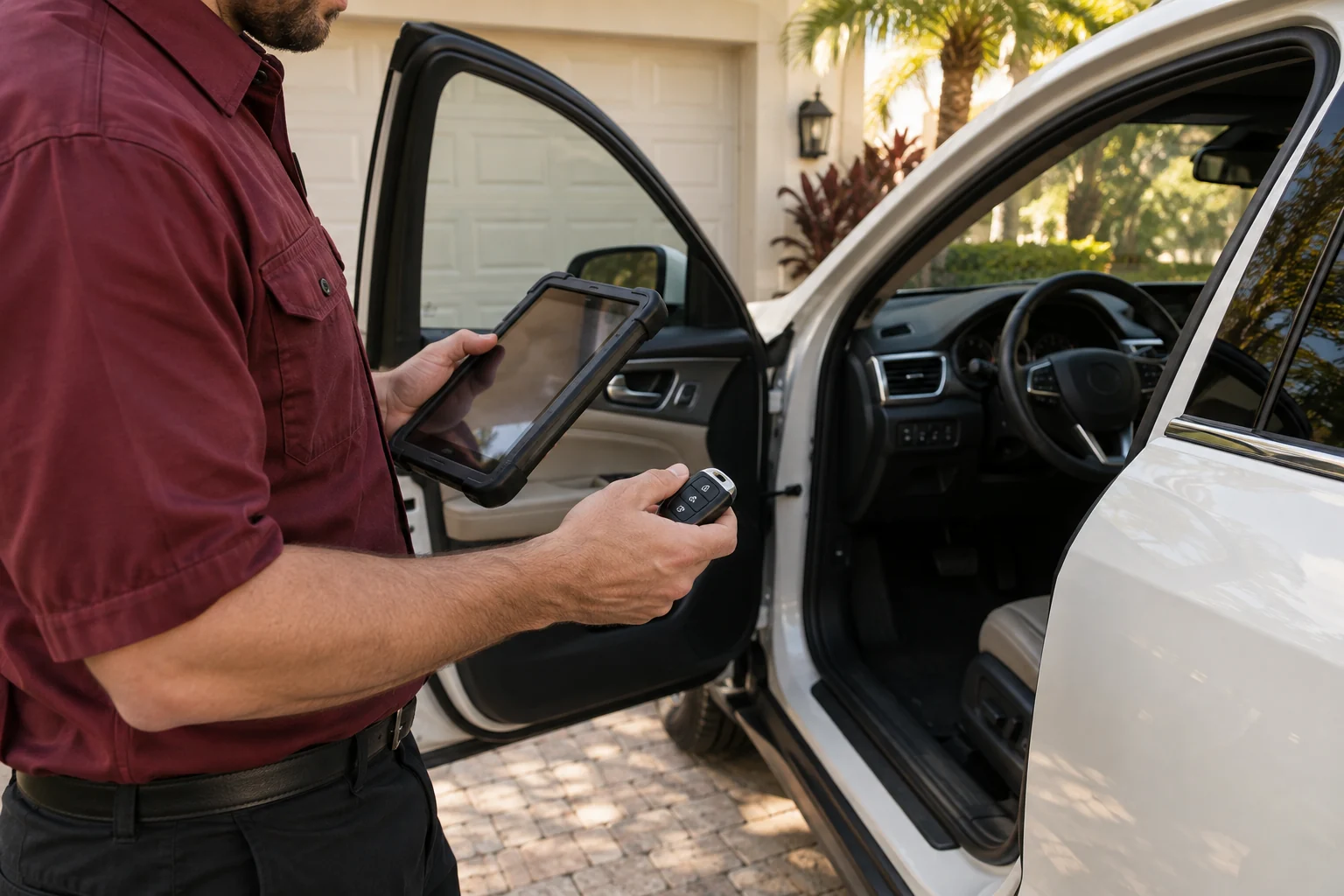
A rekey is a tidy job. You describe the doors and the locks involved, and the work and the price are explained before anything starts. Each cylinder is removed, opened, fitted with new pins to match a new key and put back together. The lock is then tested with the new key several times and with an old key to confirm that it no longer works.
Most locks can be rekeyed on site without removing them from the door entirely. A lock that is stiff, corroded or poorly made may need more care, and a conscientious tradesperson will tell you if it is not worth the effort. Coastal air takes a toll on cylinders, and old locks can be gritty inside, with salt and dust packed around the pins. A lock that has not been touched in years may need cleaning or part replacement before it can hold a new pattern reliably.
When it is over, you should hold the new keys and try them yourself. Check each door from both sides if there is a thumb turn. The process is the same each time: you describe the situation and the place, the work and price are explained before it begins, and the finished work is tested with you.
Rekey, replace or add something new
Not every situation calls for a rekey. If your lock is damaged, loose or too basic, a replacement may serve you better. If you want to upgrade to a keypad or a stronger deadbolt, installation is the path. And if you simply need old keys to stop working on locks that are in good shape, a rekey fits.
The article on rekeying versus replacing locks sets out the decision clearly. You can also read about lock installation in Deerfield Beach if you are leaning toward new hardware.
A common middle path is to do both. Replace the weak or worn locks on main entrances, and rekey sound locks on secondary doors so everything matches. This gives you the benefit of new hardware where it counts and keeps the cost of the whole project sensible.
After a lost key or a break in
If a key is lost, stolen or taken in a burglary, rekeying should be high on your list. The key might be used by someone who knows the address, and the sooner the lock stops accepting it, the safer you are. In a break in, the lock itself may also be damaged, and then replacement and repair of the door may be needed. Take photos of any damage before anything is changed, since insurance paperwork may ask for them.
Do not enter a home you suspect has been broken into. Call the authorities first and wait until it has been checked. After they have finished, you can think about the doors and locks. A calm, step by step approach is easier than rushing to fix everything at once.
The article on lost house keys: rekey or replace helps with the lost key case. If you were locked out and the key is simply inside, the page on lockout service in Deerfield Beach covers that separate situation.
Copies, key control and common worries
Once the locks are rekeyed, the rest depends on habits. Count the new keys and decide who needs one. Every copy is another key in the world, so avoid casual duplicates. When you do need a copy, have it cut from the new key by someone careful and test it in the lock before relying on it.
Be aware that keys cut on worn machines or from worn originals can be inaccurate. A poor copy might stick, wear the pins or fail at a bad time. The article on where and how to make duplicate keys explains what to look for.
Keep your spare keys in a safe spot, not in a magnetic box on the car or under a mat. Entrust one to a person you trust. If a key ever goes missing, remember that rekeying again is not an overreaction, it is a normal way of keeping control.
Think about a small routine too. Once a year, or whenever something changes in your household, take a minute to ask whether the key situation still makes sense. Who has keys now? Does anyone hold one who no longer needs it? Is there a spare that has not been tested in a long time? A short habit like this takes almost no effort and spares you from discovering a problem at the worst moment.
People sometimes worry that a rekeyed lock is somehow weaker, as though the process wears the lock out. It does not. The pins are simple parts, and fitting new ones leaves the lock as strong as the hardware was before. The strength of a lock depends on its build and on the door it sits in, not on the number of times it has been rekeyed.
Others worry that the new key will be easy to copy. Ordinary keys can be copied by many shops, which is why key control matters after the change. If you want tighter control, ask about restricted key systems, which limit who can duplicate a key. Such options vary by brand and need to be arranged ahead of time.
A last concern is whether the old key might still work some of the time. A properly done rekey leaves the old key unable to turn the cylinder at all, and the old key is tried in the lock to confirm this. If an old key still works, the job is not finished, and you should say so before the visit ends. Ask also whether any keys are left over from the old pattern, and have them removed from the set you receive so they do not get mixed up with the new ones.
Preparing for the call
Before calling, count the locks you want changed and note which doors they are on. Include entry doors, garage entry doors, side doors, storage rooms and gates. If you can see a brand name on a lock, note it. Mention any locks that stick, turn hard or feel loose, because those details help plan the work. If any doors are hard to reach, such as a gate across a yard or a door in a locked storage area, say so as well.
Decide whether you want everything on one key and how many copies you will need. If you rent, check the lease and ask the landlord. If you own a condo, ask the association what applies. Requirements vary from building to building, and a short question now avoids trouble later.
When you call, describe the situation and the place, and ask for the work and the price to be explained before it begins. For more on related services, see the house lockout and rekey page, and for a nearby community, rekey service in Pompano Beach gives the same general guidance.
Finally, keep your expectations realistic. A rekey changes keys, not doors, so if a door sticks, a frame is cracked or a latch does not reach its strike, those matters need their own attention. Mention them during the visit and ask whether they can be addressed in the same trip. Treating the door as a whole, not just the cylinder, gives a result you can rely on.
Common questions
Do I need the old key to rekey a lock?
Not always. Many cylinders can be opened and rekeyed without the original key, especially when the lock is accessible. Having a working key can make the job smoother, but its absence does not necessarily stop the work. Tell the person on the phone what you have.
Should I rekey after buying a condo?
It is a sensible step, since you cannot know who holds old keys. First check with the association, because it may control some hardware or require a key on file. The unit entry lock is often the owner's responsibility, but requirements vary from building to building.
How is rekeying different for a rental?
The aim is the same, to make old keys stop working, but a landlord is balancing several tenants over time. Rekeying between tenants is a common routine. Tenants who want a change should check the lease and ask the landlord, who may need a key on file.
Can all my doors use the same key?
Often yes, if the locks share a brand and keyway. Different manufacturers use different key shapes, so a lock that does not match may need to be replaced to join the group. A tradesperson can look at your doors and tell you what is possible.
Will a rekeyed lock be as secure as before?
Yes, provided the lock itself is sound. Rekeying changes which key operates the lock but not the strength of the hardware. If the lock is worn, loose or low quality, replacing it may be a better choice, and that should be explained before work begins.
What should I check once the work is done?
Try every new key in every lock, from outside and from inside where there is a thumb turn. The bolt should move smoothly. Ask about the old keys, which should no longer turn. If anything feels rough or sticks, mention it before the job is closed out.
Talk through the job before work begins
Explain the problem, what has to work again and who needs access afterward. We talk through the scope and the price first, and work begins after you agree.
Call (954) 888-8804