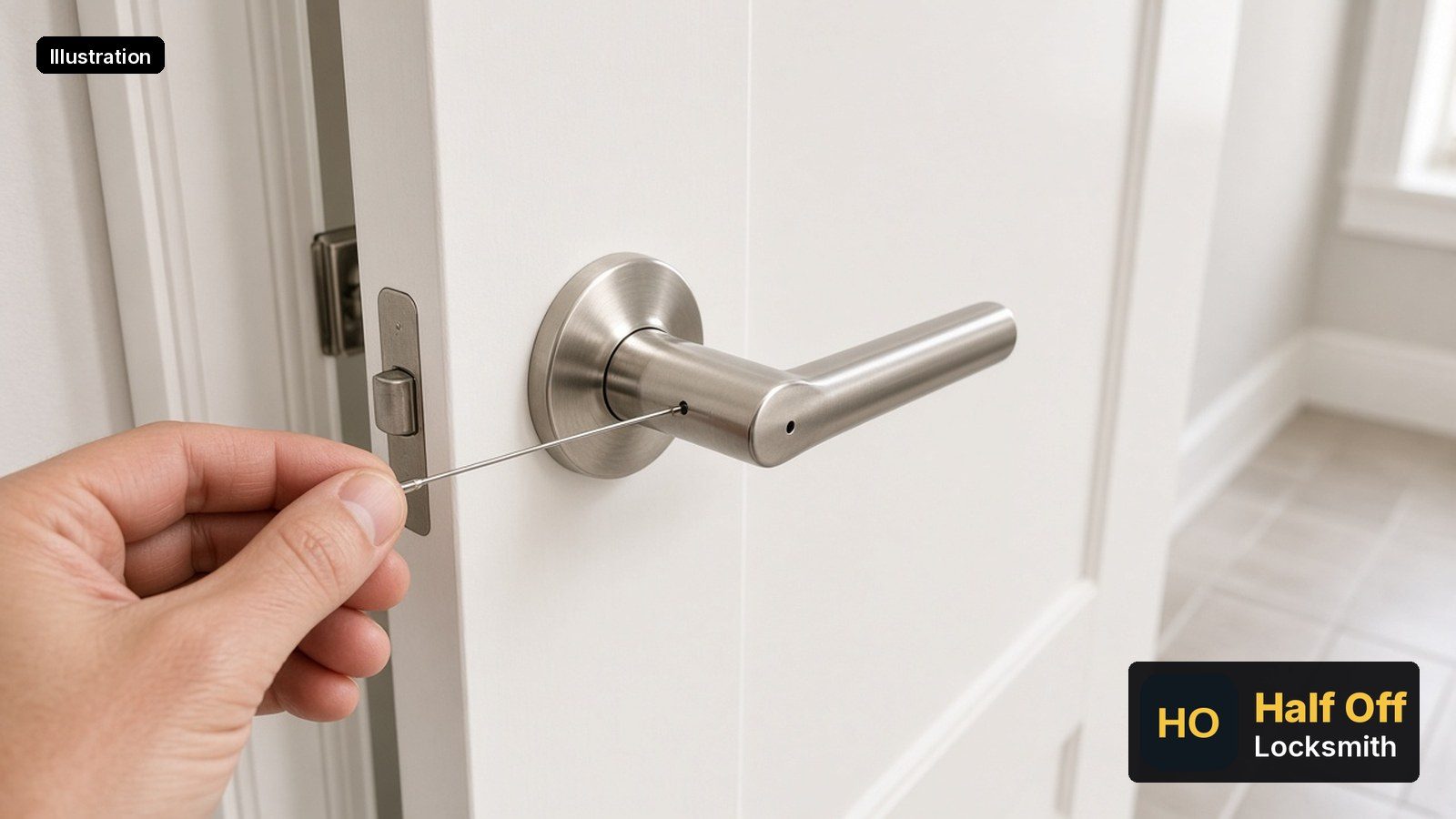
It is one of the most common calls parents never expect to make. A toddler pushes the little button on the bathroom knob, the door swings shut, and suddenly a small voice on the other side is asking for help. Or a teenager locks a bedroom door and falls asleep with headphones on. Or a grandparent visiting for the holidays locks the guest bath and the knob will not turn back.
The good news: the locks on most interior doors in Davie homes, and in homes across Broward County, are designed to be opened from the outside in an emergency. You usually do not need to break the door, take it off its hinges, or wait long. This guide explains how those locks work, how to open the common types safely, what to do when they will not release, and when it makes sense to call Half Off Locksmith.
First, the safety rule. If a child or anyone else behind the door seems hurt, unresponsive, unwell, or in danger, call 911 right away. Do not spend time on the lock. Emergency responders come first.
Why interior locks are different from your front door
The lock on your front door is built to keep people out. It has a keyed cylinder, a deadbolt or latch that resists force, and a strike plate screwed into the frame.
Interior locks are built for something else: privacy. A bathroom or bedroom lock tells the rest of the house "someone is in here." It is not meant to stop a determined adult. Because of that, almost all residential privacy locks include an emergency release on the outside, so a parent or caregiver can open the door quickly.
There are a few names you might hear:
- Privacy lock: a knob or lever with a push button or turn button on the inside and an emergency release on the outside. This is the standard bathroom and bedroom lock.
- Passage set: a knob or lever with no lock at all. Used for hallways and closets.
- Keyed entry lock: has a real key on the outside. Sometimes used on a home office or a room with valuables. These need the key, or a locksmith.
- Dummy handle: a fixed handle with no latch, used on some closet and pantry doors.
If your child is behind a privacy lock, you are most likely dealing with the easy kind.
How to open the most common privacy locks
Stay calm and keep talking to your child while you work. A steady voice from the hallway helps a lot. Tell them you are right there and the door will open soon. If they can understand, ask them to step back from the door.
Then look closely at the outside knob or lever.
Type 1: A small round hole in the center of the knob or lever
This is the most common design. The hole leads to a small release inside the lock.
- Find a thin, straight, stiff tool. Many locks come with a small metal release key, often a thin rod with a bend at the end. If you do not have one, an unbent paper clip, a small hex key or a thin nail can work.
- Push the tool straight into the hole until you feel it meet resistance.
- Press firmly and, at the same time, turn the knob or press the lever.
- On some designs you need to feel for a small slot inside the hole and turn the tool, instead of pushing.
The door should open. If it does not, try again a little more firmly and keep the tool straight.
Type 2: A slot across the center of the knob
Some locks have a narrow slot, like the head of a screw, instead of a hole.
- Use a small flat tool, such as a flat screwdriver, a butter knife or even a coin, that fits the slot.
- Turn it, usually a quarter turn, the way you would turn a screw.
- Turn the knob or lever.
Type 3: A small hole on the side of the lever, near the base
Some lever handles put the release on the underside or side of the lever, close to the rose (the round plate against the door). Look carefully with a phone flashlight.
Type 4: A thumb turn with a coin slot on the outside
Some bathroom locks, especially on pocket doors or in newer homes, have a small round indicator on the outside, sometimes red and white. These often have a slot you can turn with a coin to unlock from the outside.
Pocket doors
Pocket door privacy locks often use a small hook latch. Many have a tiny hole or slot on the outside edge pull. A thin tool pushed or turned there releases the hook. If the pocket door has come off its track, do not force it, because it can jam further.
Tips that make it easier
- Use a flashlight. The release hole can be small and hard to see, especially on darker finishes.
- Keep the tool straight. Pushing at an angle often misses the release.
- Turn while you push. Many releases need pressure and a turn of the handle at the same moment.
- Do not use a knife between the door and the frame. This rarely works on modern latches, and it can damage the door, the frame or your hand.
- Avoid kicking or shoulder ramming. It is dangerous for anyone standing behind the door, and it usually breaks the frame.
What if it still will not open?
Sometimes the emergency release does not work. Common reasons:
- The lock is old or worn. Over years of use, the internal parts can bend or break.
- The lock was installed the wrong way. If the inside and outside are swapped, the release may be on the inside of the room.
- It is not actually a privacy lock. If there is a keyhole on the outside, it is a keyed lock and needs the key.
- The latch, not the lock, is stuck. In humid South Florida weather, doors can swell and the latch can bind against the strike plate. The lock may be open but the latch will not pull back.
If you suspect the latch is binding, try pushing the door firmly toward the hinges, then away, while you turn the handle. Sometimes that relieves the pressure on the latch.
If none of that works, and nobody behind the door is in danger, call a locksmith. If anyone is in danger, call 911.
When to call Half Off Locksmith
Call us when:
- The emergency release does not work after a few careful tries.
- The room has a keyed lock and the key is missing.
- The latch or lock is broken and the door will not open.
- You want every interior lock in the house checked and replaced with designs that release easily.
When you call, tell us what kind of lock it is (knob or lever, hole or slot, keyed or not), whether anyone is inside, and whether you already tried the release. That helps us bring the right tools and give you an honest idea of what the visit involves before any work starts.
Interior door openings are usually simple for a locksmith, and in most cases there is no damage to the door. If the lock is broken, we can replace it on the spot so it does not happen again.
Choosing kid friendly interior locks
If your family has small children, or relatives visiting with kids, a few choices can prevent the next lockout.
Pick locks with an easy, visible release
Some privacy locks have a release that is easy to find and use with a coin, while others need a tiny pin. When you replace a lock, look for one with a clear outside release that any adult in the house can operate.
Store a release tool where adults can find it
Many families keep the small release key on top of the door frame of each bathroom, or on a hook inside a linen closet. Tell every adult and older child in the house where it is. Babysitters and grandparents need to know too.
Consider passage sets on some doors
For bedrooms of very young children, some parents choose a passage set with no lock at all. You can always add a privacy lock later.
Think about lever handles
Lever handles are easier for older relatives and people with limited grip strength. They are also easier for small children to open, which can be a good thing or a bad thing depending on the door. A lever on a laundry room or garage door, for example, may need a separate child safety latch.
Check how the door closes
A door that swings shut on its own is more likely to trap a child. If a bathroom door drifts closed, it may be slightly out of plumb. A simple hinge adjustment or a door stop can keep it open when nobody is using the room.
Older teens, adults and medical concerns
Not every interior lockout involves a toddler.
- Teenagers sometimes lock their door and fall asleep with headphones. Knock loudly, call their phone, and then use the release. If you cannot get a response and you are worried, treat it as an emergency.
- Older adults who live alone or with family sometimes lock the bathroom door out of habit. If an older family member has a medical condition or a history of falls, consider leaving their bathroom lock off or choosing one with a very easy outside release. Talk with them about it so they still feel they have privacy.
- Guests in your home may not know how your locks work. If you have holiday visitors, a quick "here is how the bathroom lock works" saves an awkward moment.
Bedroom and bathroom locks in rentals
If you rent your Davie home or apartment, interior locks are usually part of the property. Before you replace one, check your lease and ask your landlord or property manager. Many landlords are happy to have a broken privacy lock replaced, and some prefer to arrange it themselves.
If you are a landlord preparing a unit for new tenants, it is worth testing every interior lock and confirming the outside release works. A working release prevents frustrating calls later.
Humidity, swelling and interior doors in South Florida
Interior doors in Broward homes live in a humid climate, even with the air conditioning running. Hollow core doors, which are common in bedrooms and bathrooms, can absorb moisture over time, especially near a shower. When a door swells, a few things can happen:
- The latch rubs against the strike plate, so the lock feels stuck even when it is unlocked.
- The door sticks in the frame and needs a push to close, which can trap a small child who cannot push it open again.
- The screws holding the lock loosen as the wood softens, and the knob starts to wobble.
If a bathroom door has started to stick, it is worth fixing before it causes a lockout. Often the answer is small: tightening hinge screws, adjusting the strike plate, or running the exhaust fan longer after showers so the room dries out. A locksmith can check the latch and strike side, and a handyman or carpenter can help if the door itself needs planing.
What to look for when you replace a privacy lock
If you decide to replace an interior lock, a few details make the new one easier to live with.
- Backset: the distance from the edge of the door to the center of the knob hole. Most interior doors use one of two common sizes, and many new locks adjust to fit both. Measure before you buy.
- Door thickness: most interior doors are a standard thickness, but older or custom doors can differ.
- Release type: look at the outside of the lock in the package or the store display. Choose one with a release you can find and work quickly.
- Handle style: knobs, levers or a mix. Levers are easier for many people to use.
- Finish: match the rest of the house, or pick a finish that hides fingerprints in a busy family bathroom.
We are glad to bring options with us, or install hardware you already bought, as long as it is the right size for the door.
A quick checklist for your home
Take ten minutes this week to walk through the house:
- Test every bathroom and bedroom lock from the outside using its release.
- Find or buy the small release tool and store one near each door, or in one central place.
- Show every adult and older child how it works.
- Note any lock that is loose, sticky or hard to release.
- Check that doors do not drift closed on their own.
- Make a plan with babysitters and visiting relatives.
If anything on that list turns up a problem, we can help fix it in one visit.