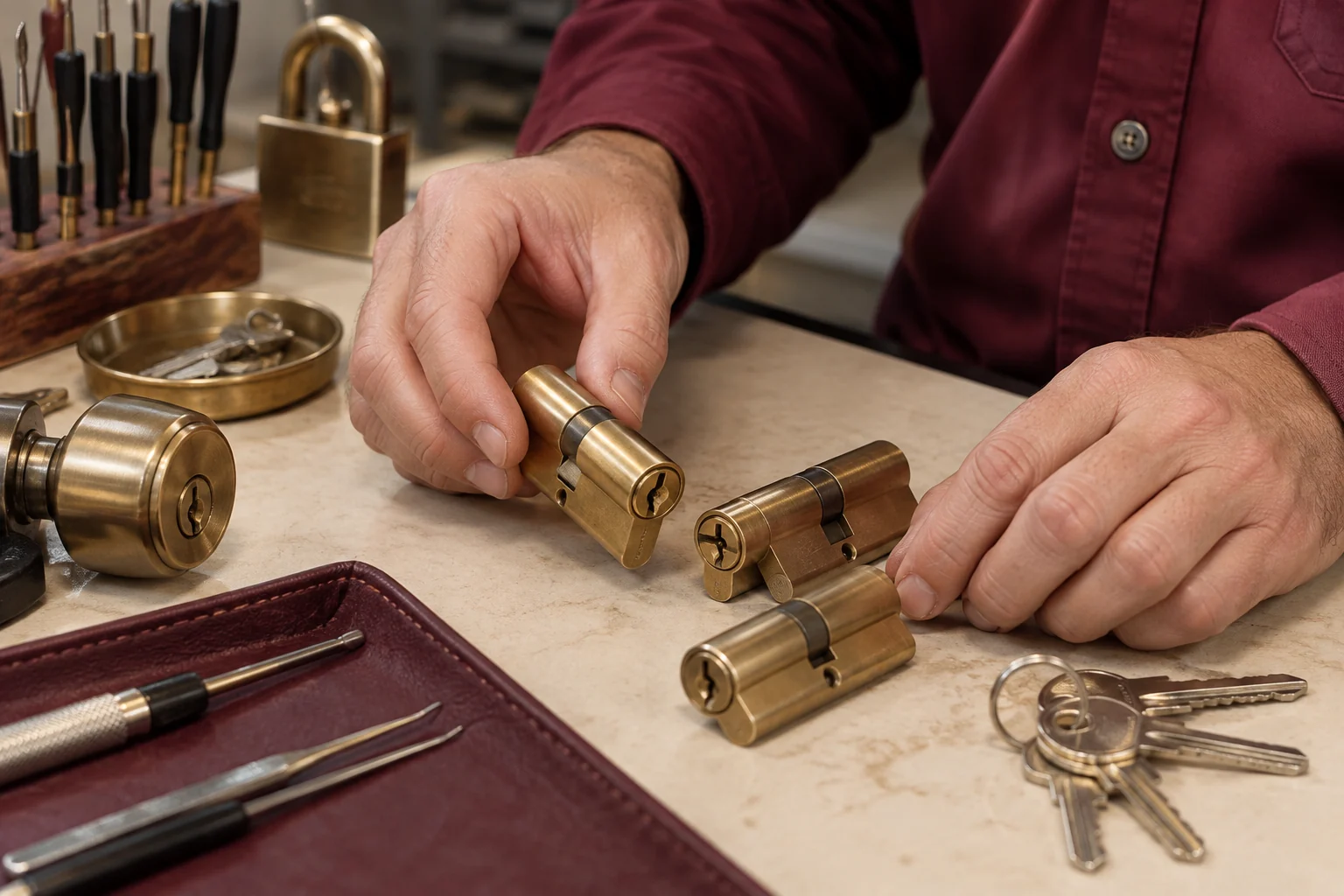
A key that snaps off inside a lock leaves you with half a key in your hand, the other half stuck in the cylinder, and a door, a car or a gate that will not open. It happens more often than most people expect, usually to a key that has been bending a little more every day for years. Half Off Locksmith removes broken keys from house locks, deadbolts, commercial locks, padlocks, gate locks and car door locks across Broward County, and in most cases leaves the lock working as it did before.
If you are stuck right now, call (954) 888-8804. Tell the dispatcher what kind of lock it is and how much of the key is showing, and you will hear the price before we dispatch.
Why keys break in locks
Keys almost never break without warning. The most common causes are:
- Metal fatigue. A key that has been used thousands of times, often bent slightly to get it to turn, eventually cracks at the shoulder where the blade meets the head.
- A lock that is too stiff. Dirt, corrosion and old lubricant make the pins drag, so you push harder, and the key gives way before the lock does. South Florida humidity and salt air make this especially common on exterior doors and gates.
- A worn or badly cut copy. Copies of copies lose accuracy. A key that only works if you jiggle it is putting extra stress on itself every time.
- Using a key as a lever. Pulling a heavy door shut by the key, or forcing a key that turns only partway, can snap it in a moment.
- A misaligned door. If the bolt binds against the strike plate, the key has to do the work of moving it, and the key loses.
Understanding why it broke matters, because pulling out the broken piece is only part of the fix. If the lock is stiff or the door is out of line, the next key will break too.
What not to do
The first instinct is usually to grab tweezers, a paper clip or super glue. Please do not.
- No glue. Gluing the broken half back onto the key and trying to pull it out almost never works and often glues the pins in place. A lock that could have been saved then has to be replaced.
- No pushing. Pressing on the broken piece with a pin or a small screwdriver usually pushes it deeper into the cylinder, past the point where it can be reached easily.
- No lubricant spray straight away. Spraying oil into a lock with a broken key in it makes the piece slippery and harder to grip.
- No forcing the door. Kicking or prying a door with a broken key in the lock damages the frame and the lock, and usually costs far more than the extraction.
If a large piece of the key is sticking out and you can grip it easily with needle nose pliers, a gentle straight pull is reasonable. If it does not come out with gentle pressure, stop and call.
How a locksmith removes a broken key
A trained locksmith uses thin extraction tools designed to slide alongside the broken blade, catch its cuts, and draw it out of the keyway without damaging the pins. The cylinder may need to be turned back to its neutral position first, because a key that broke while partly turned is trapped by the pins. In some cases the cylinder is removed from the door and the key is pushed out from the back on a bench in the van.
Most extractions are done without removing the lock, and the lock works normally afterward. When the lock has been damaged, either by the break itself or by earlier attempts to get the key out, the technician explains what was found and gives you the price for repair, rekey or replacement before going further.
Getting a working key again
Once the broken piece is out, you still need a key that works. There are a few ways to get there:
- Cut a new key from the broken pieces. If both halves are available and in reasonable condition, the technician can often read the cuts and make a new key on the spot.
- Cut from the lock. If the pieces are too damaged, a key can be made by reading the lock itself.
- Rekey the lock. If you suspect the key was copied, lost or worn, or you just want a fresh start, the lock can be rekeyed so a new key works and every old key stops working. Read more on the house lockout and rekey page.
The technician tests the new key several times, including with the door open and closed, so you know it turns smoothly before the van leaves.
Broken keys in house locks and deadbolts
Front doors and deadbolts are the most common places we extract keys. These locks are used every day and exposed to heat, rain and salt air. After extraction, the technician looks at why the key broke. If the deadbolt drags against the strike, the strike can be adjusted. If the cylinder is stiff, it can be cleaned and lubricated with a product suited to locks. If the lock is simply worn out, you will hear that honestly, along with the options.
If you are locked out because of the broken key, the extraction and the entry happen together. You will not pay for a separate lockout on top of the extraction for the same door.
Broken keys in car doors and trunks
Car door locks see less use than they used to, because most people unlock with the remote, but that is exactly why they break: a lock that has not been turned in years is stiff and corroded, and the first time the remote battery dies, the key snaps.
The process is similar. The broken piece is removed, the door is opened if needed, and a working key is cut. If your car key has a transponder chip or remote, the technician may need to program the replacement. The key fob and push to start programming page explains that part. If the key broke in the ignition rather than the door, see ignition repair, which is a related but different job.
Broken keys in commercial locks
A key broken in a storefront lock, an office door or a rear service door can stop a business from opening on time. Commercial cylinders, mortise locks and exit devices are built differently from home locks, but the extraction principle is the same. Tell the dispatcher it is a business and what kind of door it is, and the technician will bring the right tools. If the key that broke is part of a master key system, a replacement can be cut to the same system so the rest of your keys still work. The commercial locksmith page covers master keys in more detail.
Padlocks and gate locks
Keys also break in padlocks on gates and sheds and in pool gate locks. Padlocks and gate locks outdoors corrode quickly in South Florida, and many are inexpensive enough that replacing them makes more sense than extracting a key. The technician will tell you which is the better value before doing either.
A typical visit, step by step
When the technician arrives, the first thing they do is look at the lock and the broken piece, and confirm that you live at or manage the property, or own the vehicle. Then they check whether the cylinder is in its neutral position. If the key broke while turned, the cylinder is gently returned to neutral so the pins line up and release the blade.
Next comes the extraction itself, with thin tools that grip the cuts of the broken blade. Once the piece is out, the technician inspects the keyway for damage and tests the lock with a pick or a test key. If the lock turns smoothly, a new key is cut, either from the broken pieces or from the lock. If it does not, you hear what is wrong and what it would cost to rekey, repair or replace it.
The final step is the one people skip when they do it themselves: finding out why the key broke. A stiff cylinder is cleaned and lubricated. A bolt that drags is adjusted at the strike. A key that was a worn copy of a copy is replaced with an accurate one. The goal is that you never make this call again for the same door.
Need a hand right now? Call Half Off Locksmith and you will hear the price before we dispatch.
Call (954) 888-8804Rental properties and landlords
Broken keys are common in rental homes and apartments, where locks see heavy use and keys have been copied many times by previous tenants. If you are a tenant, check your lease and tell your landlord or property manager, because the lock may belong to them and they may want it rekeyed rather than just cleared. If you are a landlord, a broken key at turnover is a good prompt to rekey the unit, so that no key from a previous tenant still works. Half Off works with both owners and managers, and the technician can leave the unit with new keys and a working lock in the same visit.
Exterior locks in South Florida weather
Locks on the outside of a Broward County home face sun, rain, humidity and, near the coast, salt air. Over time, that combination dries out lubricant and lets corrosion build on the pins and springs. The result is a lock that feels gritty, needs a firm twist, and eventually breaks the key.
A little maintenance goes a long way. Once or twice a year, use a lubricant made for locks on front doors, back doors, garage entry doors and gate locks. Work the key in and out a few times and turn it fully in both directions. If a lock still feels rough after that, have it serviced before the key gives way. Locks on beachside homes and condos may need attention more often.
Getting copies made the right way
Many broken keys are copies of copies. Each copy loses a little accuracy, and after a few generations the key barely fits the lock. When you need more keys, have them cut from the original or from the lock itself, not from the most worn spare in the drawer. Keep one good original aside that you never use day to day, so you always have an accurate pattern. If you no longer have an original, a rekey gives you a fresh, accurate set to start over with.
How to tell a key is about to break
You can often prevent the call entirely by watching for warning signs:
- Visible cracks or a bend near the shoulder of the key
- A key that only turns if you lift, push or wiggle it
- A lock that feels gritty or stiff, especially after rain
- A key that has been copied many times and is noticeably thinner than the original
- A door that has to be pulled or pushed before the bolt will move
If you see any of these, have a new key cut from a good original, or have the lock serviced. It costs far less than an extraction, and it saves you the stress of being locked out.
When the lock should be replaced instead
Extraction saves most locks, but not all. Replacement is usually the better choice when the cylinder is cracked, when the lock was forced or drilled during an earlier attempt, when the hardware is so worn that a new key still feels loose, or when you have been meaning to upgrade to a stronger deadbolt or a smart lock anyway. The technician explains which situation you are in and gives you the price for each option, so you can choose based on facts rather than pressure.
What a broken key extraction costs
The price depends on the type of lock, where it is, whether you are locked out, whether a new key is needed, and whether the lock was damaged. Half Off Locksmith hears those details on the phone and quotes before the van leaves. If the lock needs more than extraction once the technician sees it, you get the price for that before any extra work begins, and the choice is yours.
Broken key service across Broward County
Half Off Locksmith works from Davie and covers Fort Lauderdale, Hollywood, Pembroke Pines, Miramar, Plantation, Sunrise, Weston, Coral Springs, Pompano Beach, Deerfield Beach, Tamarac, Margate, Coconut Creek, Lauderhill, Oakland Park, Wilton Manors, Dania Beach, Hallandale Beach, Cooper City, Parkland, Southwest Ranches and Lauderdale By The Sea. Find your city on the cities page.
What to have ready
- Both pieces of the broken key, if you have them
- Photo ID and proof you live at or manage the property, or own the vehicle
- A note of any other keys that work the same lock, such as a family member's copy
- Access to the door from both sides if possible, which can make removal easier
Half Off Locksmith. Mobile service across Broward County. Price quoted by phone first.
Call (954) 888-8804Common questions
Can a broken key be removed without replacing the lock?
Usually, yes. Most broken keys come out with extraction tools and the lock keeps working. If the lock was already worn out or was damaged by earlier attempts, you will hear that before anything is replaced.
Should I try to remove the broken key myself?
Only if a large piece is sticking out and comes out with a gentle straight pull. Do not use glue, and do not push on the piece, because both usually make the job harder and can ruin the lock.
Can you make a new key from the broken pieces?
Often, yes. If the cuts on the broken blade are readable, a new key can be cut from it. If not, a key can be made from the lock.
My key broke in the ignition. Is that the same job?
It is related, but ignition work is different, because the ignition switch and the steering lock are involved. See the ignition repair page, and tell the dispatcher it is the ignition so the right tools come.
Will lubricating my locks stop keys from breaking?
Proper lubrication with a product suited to locks helps a lot, especially on exterior doors. Avoid heavy household oils that collect dirt. A stiff lock that does not improve should be looked at.
Do you charge separately for the lockout and the extraction?
Not for the same door. If the broken key is why you are locked out, getting the key out and getting you in are handled as one job, with one price quoted up front.
How long does an extraction take?
Most extractions take a short time once the technician is at the lock. Damaged locks, commercial hardware or a new key cut from the lock take longer, and you get an estimate on the phone.
Should I rekey after a key breaks?
If you are not sure who else has copies, or the key was worn from years of copying, rekeying is a good time to start fresh. Every old key stops working and you get new, accurately cut keys.