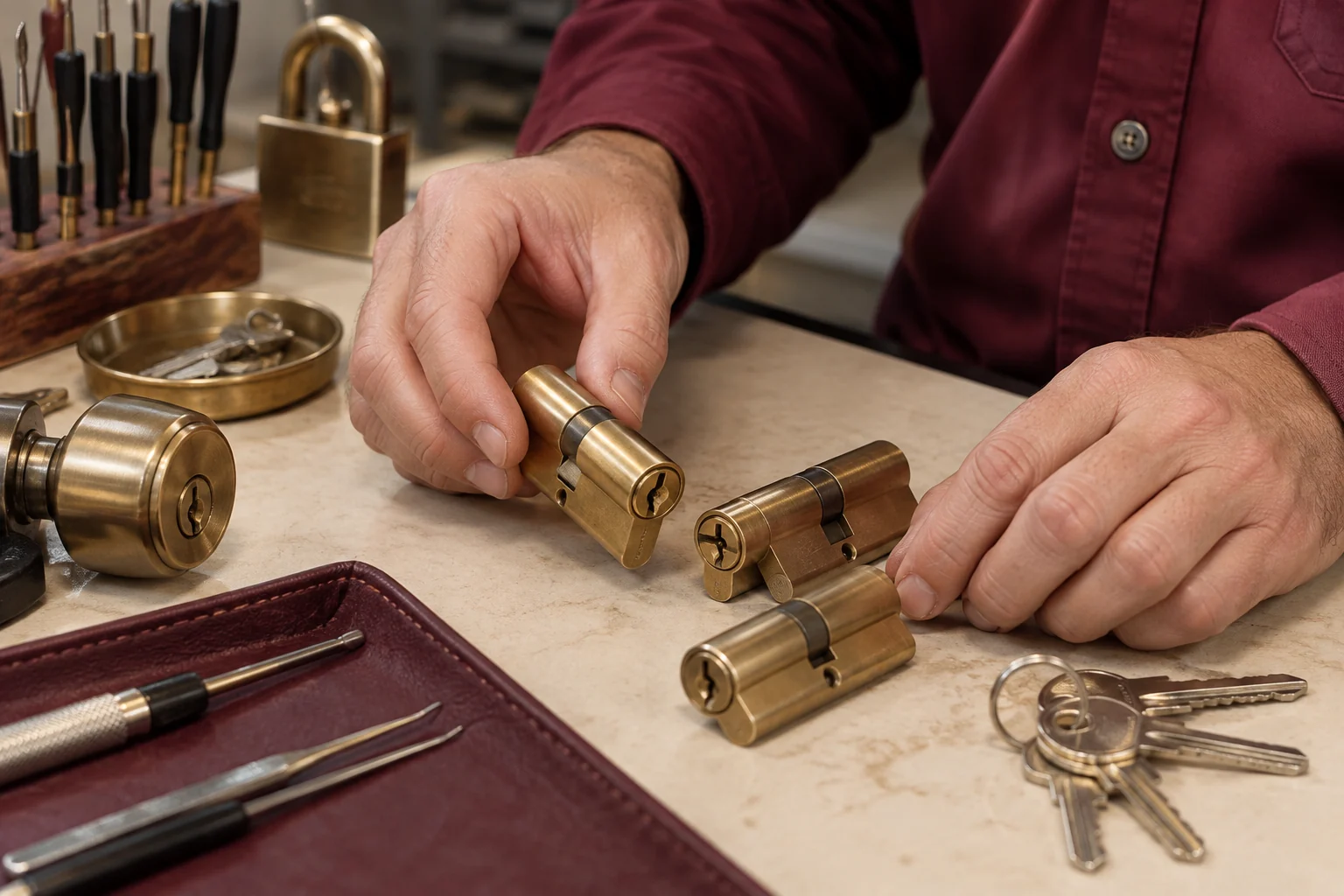
Lock Installation in Sunrise
Thinking about a new deadbolt, handle set or smart lock in Sunrise? This general guide explains how installation really works, what to check on your door first, and how to choose hardware that suits your home.
Call (954) 888-8804Why installation is more than swapping hardware
A lock is only one part of a small system made of the door, the frame, the latch, the strike plate and the screws that hold it all together. When any of these is weak or out of line, even an excellent lock performs badly. That is why a careful installation starts with the door, not with the box the new lock came in.
Many people try the job themselves and run into the same snags. A bore hole that is slightly too large leaves a lock loose. A latch that sits a fraction off line with the strike scrapes the frame. A deadbolt whose bolt barely enters the frame offers little resistance to a hard kick. These are small errors with large consequences.
This page is general guidance for people in Sunrise. It does not describe particular buildings, and it does not state local rules. Condominium associations, landlords and homeowner groups often have their own requirements for exterior door hardware, so ask the people who manage your property what is allowed before you buy anything.
It also helps to decide what you want the new lock to achieve. Some people want stronger resistance against forced entry. Others want convenience, such as entering without a key while carrying groceries. Others simply want the old lock to stop sticking. Each goal points toward a different kind of hardware, and being honest about your goal makes the whole selection easier and keeps you from paying for features that you will never use.
Taking stock of your door
Start by looking at the door itself. Is it solid wood, hollow core, steel, fiberglass or glass? Exterior doors in Florida homes are often steel or fiberglass, partly because they cope better with humidity than plain wood. Measure the thickness, since hardware is made for specific ranges, and note whether the existing holes are the standard size.
Next, look at the frame and the way the door closes. Close it gently and watch the latch. Does it meet the strike plate cleanly? Does the door bind in one corner, or leave a gap along the edge? If the door sags, the hinges may be loose, and fixing them often solves what seemed to be a lock problem.
Finally, consider how the door is used. A front door sees visitors and deliveries. A back door may be used by pets and children. A door to a garage or utility room may carry heavy traffic with groceries and tools. Matching hardware to the habits of your household is more useful than choosing by appearance alone.
Do not forget the finish and the climate. Exterior hardware in coastal air does better when its finish is meant to resist moisture, and thin plating tends to flake. Interior doors have lighter demands, so there is no reason to match the exterior hardware everywhere. A little thought about where each lock lives keeps the project sensible, and it keeps the household from ending up with a mismatched collection of locks that cannot be keyed alike.
- Measure the thickness of the door and the position of the existing holes.
- Check that the door closes without rubbing or sagging.
- Look at the frame for cracks, soft spots or rot.
- Note whether the strike plate is secured with long screws.
Deadbolts, handle sets and what each does
A deadbolt is a separate lock with a solid bolt that extends into the frame. It has no spring, so it cannot be pushed back easily the way a simple latch can. Many homes pair a deadbolt with a handle set, which includes the knob or lever and a latch for everyday opening. The handle keeps the door closed, while the deadbolt provides real resistance.
Deadbolts come in a few styles. A single cylinder version has a key outside and a thumb turn inside. A double cylinder version needs a key on both sides, which can trap people during an emergency and should be chosen with care. Some doors have glass nearby, which is the reason people consider it, yet the safety tradeoff is serious and worth discussing with a professional.
Handle sets and levers also differ in feel and in strength. Levers are easier for children and for people with limited hand strength, and many households prefer them for that reason. Our guide to front door lock types shows the common choices side by side, and the article on deadbolt grades explains how strength is described.
If you choose a double cylinder deadbolt for a door with glass, plan carefully for emergencies. Everyone in the household must know where the key is kept, and the key must be reachable in a hurry. Many families decide that a single cylinder with a thumb turn is the safer arrangement and handle the glass problem in another way, such as security film or a different door. A professional can walk you through the tradeoff.
The strike plate and the frame behind it
The strike plate is the small metal piece on the frame where the bolt lands. It looks unimportant, and yet many forced entries succeed because this piece was held by short screws into thin trim. When a door is kicked, the frame usually splits at that spot long before the lock itself fails.
A stronger setup uses a reinforced strike plate and long screws that pass through the trim and bite into the solid framing behind. That change can be made without replacing the lock, and it is among the most useful upgrades for the effort. It also helps doors that rattle, since a firm strike keeps the latch seated.
Humid air and heavy rain can swell a frame and move the latch out of alignment, which is why a door can seem fine in one season and stiff in another. If your door shifts with the weather, mention it when you plan the work. For a deeper explanation, read our article about upgrading a strike plate to resist kick ins, and the guide on doors that will not latch because of strike alignment.
Hinges deserve the same attention. The screws that hold the top hinge to the frame are often short, and when they loosen the whole door leans a little, which pulls the latch away from the strike. Replacing one or two hinge screws with longer ones that reach the framing is a modest repair with a large effect. Do this before you judge the lock itself, because a leaning door can make good hardware seem faulty.
Smart locks, keypads and what to expect
Smart locks replace or add to the key with a keypad, a phone connection or both. They can be convenient for families, for people who rent a room, and for homeowners who want to let a friend in while away. Some versions keep a normal keyhole as a backup, which many people value.
They also come with responsibilities. The lock needs batteries and a plan for when the batteries fade. It needs a clear way to add and remove users. It needs a door that supports its weight and shape, because the motor and electronics add bulk on the inside. Some models do not suit thin doors or unusual cutouts.
Security questions come up often. A connected lock is only as safe as its settings, so use a strong password for the account, avoid sharing codes widely, and remove old users when a guest or contractor is done. Mechanical weakness matters too, since the bolt and the frame still do the physical work. Treat the electronics as the front desk and the deadbolt as the wall.
Think about how you live. If you have a reliable wireless connection and like managing things from a phone, a connected lock may suit you. If you prefer simple, a keypad or a strong mechanical deadbolt may be the better choice. Our article on keypad locks and smart locks compares the two, and the guide to smart lock door fit explains what to measure before you buy.
Matching the lock to a rental or a condo
Renters and condo owners face extra questions. A lease may forbid changing locks without permission, and an association may specify the style or finish of exterior hardware. Ask in writing, and keep the answer. If a landlord agrees, find out whether they need a copy of the new key and who pays for the work.
For landlords, installation is often paired with rekeying between tenants. Adding a keypad can reduce the number of physical keys in circulation, though it brings a need to change codes at each turnover. Short term rentals especially benefit from codes that can be changed for each guest.
If you want a modern lock without losing your existing key, retrofit options attach to the inside of a standard deadbolt and leave the outside unchanged. That approach can please landlords who do not want visible changes. Read our article on retrofit smart locks that keep your keys for details on how they work.
Windows, sliding doors and the other entry points
A strong front door does not help if another entry point is weak. Sliding glass doors are common in South Florida homes and often have latches that can be lifted out of their tracks. A simple secondary lock, or a bar in the track, can add useful resistance. Windows too may have basic latches that deserve attention.
Think of the whole house as a perimeter. List every door and window that opens to the outside, check how each one locks, and decide which need an upgrade. Ground floor openings and those out of view from the street deserve the most attention. Doors from a garage into the house are often forgotten and should be as strong as the front door.
We cover these in separate articles. Read about sliding glass door locks and the guide on window lock upgrades, and think about how they fit into your plan. A balanced set of modest improvements often protects a home better than one expensive lock on a single door.
What a good installation visit looks like
You call and describe your door, the lock you want and the place. The work and its price are explained before it starts, so you know what you are agreeing to. During installation, a careful technician checks the door and frame, prepares the holes cleanly, fits the hardware and adjusts the latch and strike so everything lines up.
Afterward, the finished work is tested with you. You should lock and unlock with each key, operate the thumb turn, close the door several times, and listen for scraping or hesitation. If the lock is electronic, you should see the settings set up and know how to add or remove a user. Ask for the paperwork and spare keys that came with the lock, and keep them together.
Ask questions as the work goes along. Why was this strike plate chosen? What does this setting do? What should I do when the battery runs low? A technician who answers clearly gives you more than a new lock; they give you the ability to maintain it. For general advice on choosing a provider, see our article on choosing a locksmith you can trust.
Common mistakes to avoid
The most common mistake is buying hardware first and checking the door afterward. A lock that is wrong for the door thickness, the bore size or the backset wastes money and causes frustration. Measure first, then choose. If you are unsure, describe the door to a professional and ask what suits it.
Another mistake is ignoring the screws. Short screws that only reach the trim give a false sense of safety. Long screws that reach framing turn a decent lock into a solid one. A third mistake is forgetting to keep a spare key in a safe place, which makes the next lockout more difficult than it needs to be.
A fourth mistake is installing electronic hardware without a plan for the batteries. Pick a date, such as the start of hurricane season, to replace them on a schedule instead of waiting for the lock to warn you. Keep the physical key where you can reach it, because a dead battery on a Sunday evening is the situation that turns a smart lock into a source of stress.
Finally, avoid mixing too many locks of different brands and key types on one house. It is easy to end up with a ring of unrelated keys. A single keying plan, with several locks that open with one key, is easier to live with. Our page on rekey service in Sunrise explains how existing locks can be matched to a single key.
Caring for new hardware in South Florida
Coastal humidity and salt air are hard on exterior hardware. Finishes can pit, springs can stiffen, and moving parts can pick up grit. Wipe handles with a soft damp cloth now and then, and avoid harsh cleaners that strip protective finishes. Keep the latch area clean and clear of paint.
Painting is a hidden trouble spot. When a door or frame is repainted with the hardware in place, paint builds up on the latch and in the strike opening, and the door begins to catch. If you plan to paint, remove the hardware first or mask it carefully. A thin skin of paint on a bolt can add friction that wears the lock down sooner than ordinary use ever would, and it is a common reason a perfectly new lock starts to feel tired.
Do not spray heavy oil into a lock cylinder, since it attracts dust and can make things worse. If a key begins to stick, a small amount of dry graphite or a lubricant meant for locks is more suitable, and a professional can advise you. Pay attention to small changes such as a stiffer turn or a sloppy latch.
Before storm season, check that every exterior door closes and latches smoothly. After a storm, look for loosened screws or shifted frames. If your household also needs help getting back into a locked home, see the page on lockout service in Sunrise, or return to the overview of locksmith help in Sunrise.
Common questions
Can I install a deadbolt myself?
Some homeowners do, but it requires accurate measuring and drilling. Mistakes in the bore hole or the strike position lead to a loose or sticking lock. If the door is unusual, thin or already damaged, a professional can check the fit and set the hardware correctly.
What is the difference between a deadbolt and a latch?
A latch is spring loaded and holds the door closed, but it can be pushed back. A deadbolt extends a solid bolt into the frame and cannot be pushed back by force on the door. Most exterior doors benefit from having both.
Will a smart lock fit my existing door?
Often, but not always. Door thickness, the size of the existing holes and the space on the inside all matter. Measure first and ask the installer to check the fit, because some models do not suit thin doors or unusual cutouts.
Do I need permission to change locks in a condo or rental?
Possibly. Leases and association rules vary, and some require approval or a copy of the key. Ask your landlord or association before you change anything on an exterior door, and keep the response in writing.
Why does my door stick more in some seasons?
Wood and frames can swell with humidity and shrink when the air dries, which changes how the latch lines up with the strike plate. Loose hinges can also cause a door to drop. A small adjustment often fixes it without replacing the lock.
How should I test a newly installed lock?
Use each key from outside, operate the inside turn, and close the door several times with the latch engaged. Listen for scraping and watch for hesitation. For electronic locks, test every code or credential. Do this before the technician leaves.
Talk through the job before work begins
Say what went wrong and what you need to work when we leave. Scope and price are settled with you ahead of the work.
Call (954) 888-8804