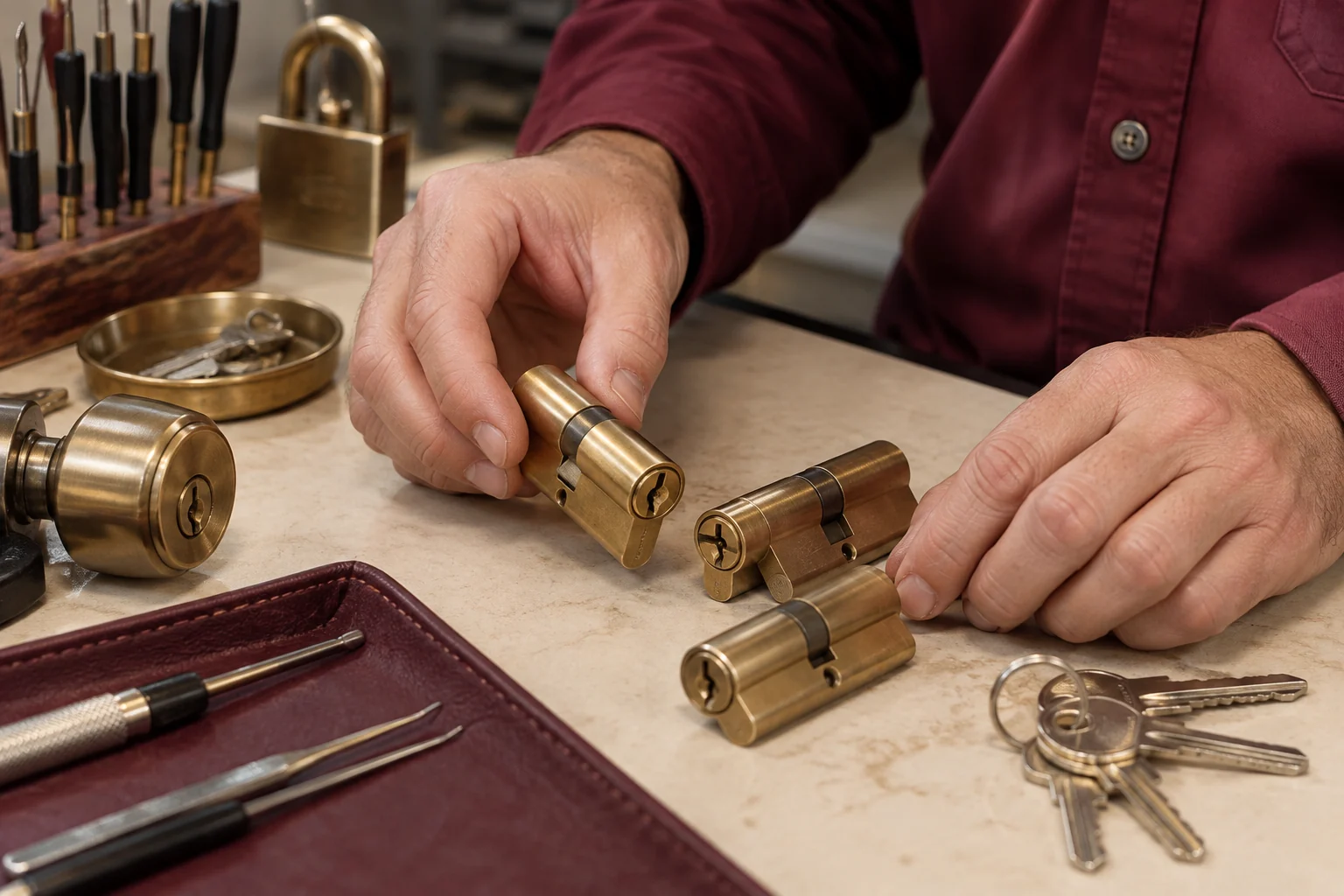
Lock Installation in Miramar
Installing a new lock is more than swapping hardware. This guide helps Miramar homeowners and landlords choose the right lock, check the door behind it and know what a careful installation looks like.
Call (954) 888-8804Start with the door, not the lock
A lock is only as strong as the door and frame holding it. Before choosing hardware, look at the door itself: is it solid wood, a hollow core interior door, steel, fiberglass or a glass panel in a frame? Each material accepts a lock differently, and some thin doors cannot take a heavy deadbolt without reinforcement.
Next, check the frame. Most forced entries do not break the lock. They split the wood around the strike plate, which is the small metal plate the bolt slides into. If the screws are short and the wood is old or softened by humidity, even a very strong deadbolt can fail because its anchor is weak.
Finally, notice how the door closes. A door that rubs, sags or needs a push to latch will wear out any new lock sooner. Fix the alignment first, or ask the installer to do it as part of the job. Adjusting hinges, planing a swollen edge or repositioning the strike are routine jobs, and they make the new lock feel smooth from the first day instead of fighting the door every time it closes. This page is general guidance for homes in Miramar and nearby, with no claims about particular buildings or neighborhoods.
Knobs, levers and deadbolts: what each one does
A knob or lever set holds the door closed with a spring latch. It is convenient, and that is its main job. A spring latch alone is not designed to resist force, so exterior doors should also have a deadbolt, which uses a solid bolt thrown deep into the frame and holds the door against pushing.
Levers are easier to use than round knobs, especially with full hands or limited grip, and many households choose them for that reason. Knobs are fine too. The choice mostly depends on comfort and style, and on whether the door must meet any accessibility needs in your building. If anyone in the home has arthritis or limited hand strength, try a lever in a store or ask the installer to show one before deciding.
A single cylinder deadbolt uses a key outside and a thumb turn inside. A double cylinder uses a key on both sides, which can trap people in an emergency if the key cannot be found, so think carefully before choosing one. The overview of front door lock types and the explainer on deadbolt grades make the differences clear before you buy.
Choosing a grade of hardware
Locks are sold in different grades, which reflect how much testing they passed for strength, durability and resistance. Lower grades suit interior doors and light use. Higher grades are built for exterior doors where the bolt, the cylinder and the strike all take real punishment.
You do not need to memorize grade numbers. What helps is knowing the questions: how heavy is the bolt, how deep does it throw, is the cylinder pinned so that it resists tampering, and does the strike come with long screws? A salesperson or installer who can answer those plainly is more useful than any label on the box.
Price rises with grade, and so does feel. A better lock usually has heavier internal parts, a smoother key action and a finish that stands up to coastal air. In a humid climate near the ocean, finish matters more than people expect, because thin plating can pit within a season.
It is reasonable to spend more on the front door and any door that opens to the garage or yard, and less on a closet or bedroom. Ask the installer to explain which grade they are suggesting for each door and what difference you can expect. A clear answer helps you spend money where it counts.
Finish also deserves a thought. Brass, stainless steel and coated finishes behave differently when exposed to salt air, and matching the finish on a front door set with the handle and the deadbolt keeps the entrance looking tidy. Some people prefer a keyed alike pair so one key operates both the lever and the deadbolt, which keeps the key ring simple. Ask whether that is available for the products you like.
The strike plate and frame: the small upgrade that counts
The strike plate is a small part with a big job. A standard one is held by short screws that bite only into the thin door jamb. When someone kicks the door, force travels through the bolt into that plate, and if the screws are short, the jamb splits.
A stronger setup uses a reinforced strike plate with longer screws that reach through the jamb into the wall stud behind it. This is a modest change that does not alter how the door looks, yet it makes a large difference in how the door resists force. It is often among the most worthwhile changes in home security.
Hinges deserve the same attention. On an outswing door, exposed hinge pins let someone remove the door itself, and on any door, short hinge screws can loosen over time. A careful installer will look at all three points: lock, strike and hinges. See the notes on stopping kick ins with a stronger strike plate for more detail.
Door viewers and secondary locks add a layer of comfort that is easy to overlook. Being able to see who is outside before opening, or to open the door only a few inches on a chain or limiter, changes how safe a late delivery or an unexpected visitor feels. The overview of door viewers and secondary locks explains which options suit different doors.
Smart locks and keypads: choosing and fitting
Smart locks and keypad deadbolts attract homeowners for good reasons. You can give family members their own codes, remove a code when a contractor finishes, and stop worrying about keys under flowerpots. Rental owners often like being able to change access between guests without a trip to hand over keys.
The details matter. Not every smart lock fits every door, so measure the door thickness and check the existing bore holes before buying. Some models replace only the inside half of the lock and keep your existing cylinder and keys, which is helpful if you want to avoid changing the look of the front door.
Think about power, too. A lock that runs on batteries needs a plan for when they die, whether that is a spare key, a code backup or an external contact for emergency power. The guides on fitting a smart lock to your door help you narrow the choices, and so does reading about retrofit smart locks that keep your existing keys, and the smart locks page describes how installation is handled.
Security of the digital kind deserves a moment too. Choose a lock whose manufacturer keeps releasing updates, use codes that are not birthdays or house numbers, and change shared codes after a visitor leaves. A lock is a convenience tool as well as a barrier, and the habits around it matter as much as the hardware itself.
Sliding doors, patio doors and windows
Many Florida homes have large sliding glass doors that serve as the main back entrance. The latch that comes with them is often modest, and the door can sometimes be lifted off its track. Adding a secondary lock, a bar or a pin lock reduces the risk and takes little time.
Windows are the other overlooked opening. Factory window latches are meant to keep the sash closed in wind, not to resist an intruder. Supplemental locks and limiters give you a stronger line of defense and can also prevent young children from opening windows too wide.
Think about the way you actually live. If you keep a back slider open for fresh air, a security bar that lets it stay open a hand's width can be more useful than a lock you will not use. See the guides to sliding glass door locks and window locks and security upgrades for further ideas.
Garage entry doors and side doors
The door between the garage and the house is often the weakest in the home. It tends to be a lighter door with an ordinary knob lock and sometimes no deadbolt at all, because it feels like an interior door. In practice, anyone who gets into the garage has all the time they need to work on it.
Give this door the same treatment as the front door: a solid door if possible, a proper deadbolt, a reinforced strike and secure hinges. Side doors and doors to a covered porch deserve the same thought, particularly if they are hidden from the street.
A word of caution: garage door openers, springs and cables are high tension equipment and are not part of lock installation. They need a trained technician and should not be adjusted by guesswork. For the entry door itself, the guide to garage entry door security shows what to strengthen.
Lighting and visibility complete the picture. A garage entry that is shadowed and hidden behind parked cars gives an intruder privacy. Basic outdoor lighting, tidy landscaping and a clear view of the door from a window do as much as a stronger lock, and they cost little. Think of hardware, frame and surroundings as three parts of one defense.
Mailbox, gate and outbuilding locks
The small locks around a property often get ignored. A mailbox lock protects mail and documents, a gate lock controls the yard, and a shed or storage room lock protects tools and equipment. These can be replaced or upgraded with simple installation, and they often suffer the most from weather.
Outdoor locks live in salt air, rain and sun. Choose hardware made for outdoor use, with sealed or coated parts, and apply a suitable lubricant sparingly when the lock feels stiff. Heavy oil collects dirt, and a gritty lock fails sooner than a clean one. A dry graphite or silicone based lubricant, used lightly, is usually the safer choice for keyways.
If a lock has been exposed for a long time, replacement is often better than repair. The guide to mailbox lock replacement shows what to measure, and the same logic works for small padlock hasps and gate latches.
When picking a padlock for outdoor use, look for a shrouded or weather sealed body and a hardened shackle, and check that the hasp it closes through is as strong as the lock itself. A strong padlock on a flimsy hasp, fastened with short screws into soft wood, gives a false sense of safety that disappears when the screws pull out.
Rental properties and shared buildings
If you rent your home, check your lease and ask the landlord or association before changing a lock. Many agreements require that the landlord retains a key, or that any change has written approval. Requirements vary, so ask rather than assume.
If you own a rental, new locks between tenants are a smart habit. Whether you replace them or have them rekeyed, the aim is that the previous occupant's key no longer works. Keep a record of what was installed and where, so the next change is easy. A simple sheet listing each door, the lock type and the number of keys cut turns future turnover into a short routine instead of a scramble.
Condominium and townhome communities may have rules about exterior door hardware, including style and color. Ask your association before purchasing anything that shows from outside. A short email can save a returned lock and a delayed installation. If you own a unit in a managed community, ask also about who may carry out the work, since some associations want notice or a record of who touched the door.
What a careful installation looks like
A good installer measures before drilling, checks the door for existing holes, confirms the backset and bore size and then fits the lock without forcing parts. The bolt should extend fully into the frame without binding, and the door should close without being pushed. In humid months, a door can swell slightly, so a careful installer leaves a little tolerance rather than fitting everything dead tight. If anything feels tight, it is adjusted, not forced. Screws are set snug into solid wood, the latch plate sits flush with the edge and the finish is left clean and unmarked.
Afterward you should see the lock tested with you: the key turned from outside, the thumb turn from inside, the latch and deadbolt operated with the door open and closed. For keypads and smart locks, you should be shown how to set codes, change batteries and use the manual backup.
Ask for all keys, codes, tools and manuals to be handed over, and keep the paperwork for later. If the installer removed old hardware, ask to see it, and decide whether you want it back or discarded. Half Off Locksmith handles this kind of work in Broward County, and the process is simple: you describe the door and the goal, the work and the price are explained before it begins, and the finished installation is tested with you.
Preparing before you call
Before you phone, take a few minutes to look at the doors. Note whether each is wood, metal or fiberglass, whether it has a deadbolt, and whether it sticks or rattles. A photo of the existing lock helps if you can describe what it looks like. Also count the doors and windows you are thinking about, since a single visit can cover several items more smoothly than separate ones.
Decide what matters most: more security, convenience, a matching look or simple replacement of worn parts. Then ask for the options to be explained in plain words. Mention budget limits honestly; a good installer will work with them and tell you which parts of the job should not be skimped on. If you are comparing lock types, the house lockout and rekey page helps you decide whether a rekey alone could be enough.
Neighbors can also look at what other places offer. The page for Pembroke Pines covers the same topic for that area, and the main services page gives a broader view of what is available.
Common questions
Do I need a deadbolt if my door already has a lock?
A knob or lever lock holds the door with a spring latch, which does not resist force well. A deadbolt adds a solid bolt that sits deep in the frame. For exterior doors, having both is a sensible standard, ideally with a reinforced strike plate and long screws.
Will a smart lock fit my door?
Usually, but not always. Check the door thickness, the size of the bore hole and the distance from the door edge. Some models replace only the inside part and keep your cylinder. A locksmith can confirm the fit before you buy or during the visit.
Should I replace the lock or just rekey it?
Rekey if the lock is in good shape and you only want old keys to stop working. Replace it if it is worn, corroded or does not match what you need. A careful look at the lock will show which makes sense, and a technician can explain the reasons.
Why do locks fail sooner near the coast?
Humid, salty air attacks plating, springs and internal parts, and wood frames swell and shrink with the seasons. Lower quality finishes pit and stiffen. Choosing hardware suited to outdoor conditions and checking alignment each season helps locks last longer.
Can I change locks in a rental or condo?
Check your lease or association rules first. Many require approval, a spare key for the landlord or a certain style. Requirements vary, so ask the landlord, property manager or association in writing before buying or installing new hardware.
What should I check after installation?
Test the key from both sides, operate the deadbolt with the door open and closed, and make sure the door closes without a push. For electronic locks, set a code, remove a code and practice the manual backup while the installer is still there.
Talk through the job before work begins
Tell us what happened, which doors or keys are involved and who needs to get in. The price and the plan are agreed with you before any work starts.
Call (954) 888-8804