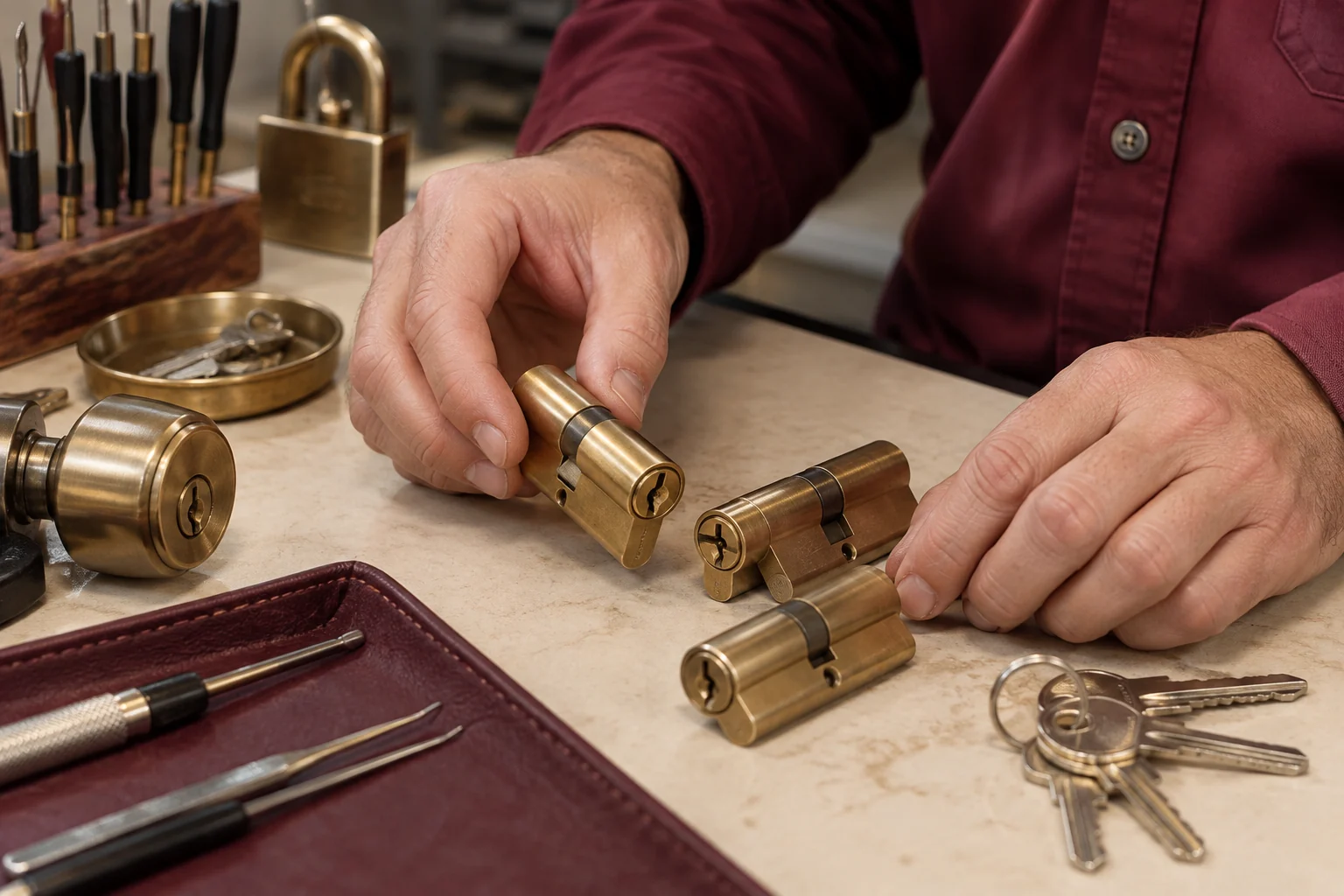
Lock Installation in Hollywood
A new lock is only as good as the door and frame behind it. This general guide for Hollywood homeowners and landlords walks through surveying your doors, choosing hardware, and checking the finished work.
Call (954) 888-8804Begin with a walk around your own doors
Before you think about brands, take ten minutes and walk around the property as if you were seeing it for the first time. Count every door that locks: front, back, side, patio slider, garage entry, a utility room and any gate with a latch. Most households discover they have more entry points than they remembered, and each one deserves a decision.
At each door, notice three things. How does the door close, and does the latch meet the frame cleanly? What kind of lock is there now, and how old does it look? And what is the door made of? A short written list with those notes becomes the foundation of a sensible plan, and it lets you talk to a locksmith in specifics instead of generalities.
A list also reveals priorities. The front door and any door hidden from the street usually deserve attention first, because they are the ones people care about most. A door that opens to a quiet side yard may matter more than the one facing a busy road. Photographing each lock, front and back, makes it easy to describe what you already have, and the photos can be shown to a locksmith if that helps.
Take a moment to check the frame too. Press along the jamb near the strike and see whether the wood feels firm. Look for hairline cracks, old repairs and paint that has bubbled from moisture. Close the door slowly and watch the gap around it; an uneven gap often means the door has dropped on its hinges. Mentioning these observations means that the cost of any frame repair is part of the plan from the beginning.
Older homes and newer homes need different thinking
South Florida has a mix of housing, from older houses with solid wood doors and aging frames to newer construction with fiberglass or steel doors and more standardized prep. General guidance cannot tell you which you have, but your own eyes can. Older doors may have unusual bore sizes, mortise style locks or decades of past repairs. Newer ones tend to follow common patterns that fit modern hardware easily.
With an older door, expect the locksmith to spend time assessing what is there before recommending anything. Previous owners may have drilled extra holes, patched frames or installed hardware that no longer matches the door. Sometimes the wisest answer is to repair and preserve the door, and sometimes it is to choose hardware that fits what exists.
With a newer door, the work is often more straightforward, but quality still varies. A hollow, thin skinned door can feel solid until it meets a hard kick. We discuss common trouble spots in are your locks good enough, which is a useful read before you spend money on any upgrade.
One more point on age: weather hardens old paint and swells old wood. A door that has been painted many times may have layers that stick in the frame and bind the latch. Sometimes careful planing or sanding of the edge solves what looks like a lock problem. A locksmith who suggests that, rather than selling you a new lock, is thinking about your actual goal, which is a door that opens and locks smoothly.
Choosing between knob, lever and deadbolt combinations
Hardware comes in several families, and knowing the names helps. A knob or lever set operates the latch and is what you grab to open the door. A deadbolt is the separate heavy bolt above it. Some entry sets combine the two in matching finishes, and some doors use a single mortise lock that blends both functions in one body.
Levers are easier on the hands than knobs, which matters for children, older adults and anyone carrying groceries. Knobs are traditional and simple. Neither is automatically more secure, since the strength lies in the latch, the strike and the frame, not the shape of the handle.
If you add a deadbolt, think about whether you want a key on both sides or a thumb turn inside. A thumb turn is convenient and safer in an emergency, because anyone inside can open the door. A key on both sides slows an escape. Our explanation of deadbolt grades shows how strength is classified.
Think about households with particular needs. If someone in your family has limited grip strength, a lever and a thumb turn are friendlier than a small knob and a key. If young children live in the home, consider where a lock sits relative to their reach and whether it could trap them inside a room. If a relative needs help entering, a keypad can be easier than fishing for a key in the dark.
Sliders, patio doors and the entrances people forget
Sliding glass doors are among the most common entry points in South Florida homes, and among the most overlooked. Many rely on a small latch built into the frame that offers modest resistance. Others add a secondary bar or pin lock. If your patio door can be lifted or jiggled open, it deserves a closer look.
Secondary devices are often simple and effective. A bar that sits in the track, a pin through the frame, or an auxiliary lock that clamps the door can make a slider much harder to defeat. They are not complicated, but they need to fit the particular door. Our article on sliding glass door locks explains the options.
Other forgotten entrances include the door between the garage and the house and windows near the ground. A door from the garage is often treated as an interior door, yet it can be a weak link if the garage itself is reachable. See garage entry door security for how to think about it. Never adjust garage door springs or openers yourself, because those parts are dangerous.
Windows deserve a brief mention. Ground floor windows often have simple sash latches that were never meant to resist a determined push. Supplementary window locks, fitted correctly, add resistance without making the window hard for you to open in an emergency. Make sure everyone at home knows how to release them, because a lock that traps people during a fire has defeated its purpose. Balance is the goal.
Salt, humidity and hurricane season shape the choice
Exterior hardware here faces constant moisture and salt. Finishes that look similar in a store can age very differently outdoors. Ask about the base metal and the protective coating, and prefer parts designed for exterior exposure. Interior hardware can be chosen mostly for looks, but the front door deserves durability.
Hurricane season adds mechanical stress. Doors flex under pressure, and loose hardware shakes. A strike plate anchored with long screws into solid framing holds firm where short screws would let go. Before the season starts, check that every deadbolt throws fully, every latch catches, and no screw is loose or rusted.
If you have storm shutters or impact doors, mention them when planning. Some hardware interacts with frames and glass in ways that affect what can be installed. The idea is not to guess, but to describe your doors honestly and let the work and the price be explained before it begins.
Think too about maintenance access. If your hardware will live in the weather, choose something that can be cleaned and lubricated easily, and avoid decorative parts that trap water. A simple, well made exterior lock that is easy to care for usually outlasts a complicated one. Treat the finish as a working surface that protects the metal beneath, not merely a matter of appearance.
Smart locks in a Hollywood household
Many people think of electronic locks when they hear the words new lock. They suit households with frequent guests, shared access among family members, or a rental unit where codes can be changed between visitors. They are less suited to doors that are warped, poorly aligned, or likely to be abused.
Fit is everything. The thickness of the door, the backset and the space for batteries and wiring vary. Some units replace the whole deadbolt, while others sit over an existing one and leave the key in place. A retrofit option is attractive if you want electronics but also want a physical backup. Read about retrofit smart locks that keep your keys before deciding.
Ask what happens when the battery is low and what happens when the network is down. A good device warns you ahead of time and still works with a key. The page on smart locks describes the service, and the door fit guide explains the checks that come first.
If you manage a rental, electronics add a record keeping task. Codes need to be changed between guests, and the person who sets them needs to be known. Treat each code like a key: assign it, log it and remove it when the person no longer needs access. That discipline keeps a convenient system from becoming a loose one.
Rentals, condos and who decides
If you own a house, the decisions are yours. If you own a condominium, your association may have a say about exterior door hardware, particularly on doors facing shared corridors. If you rent, your lease and landlord decide. In every case, ask first and keep a written record of the answer.
Fire classified doors in shared buildings deserve special care. Modifying such a door can affect its status, so the hardware and the method both matter. Requirements vary from building to building, and this page cannot state them. Ask your building office and tell the locksmith what you learn.
Landlords installing new hardware across several units often want consistency: the same lock model and a plan for keying. A coordinated approach makes later turnover simpler. See rekeying rental property for landlords for ideas on organizing keys across units.
What a careful installation includes
Good work begins with measuring. The locksmith checks the door's thickness, the position of existing holes and the condition of the edge and frame. If anything is damaged, it is discussed before new hardware goes on. Cutting into a weak door without repairing it simply hides a problem under shiny metal.
During the installation, the bolt and latch are aligned with the strike so they move freely without scraping. Screws are driven carefully into solid wood, not just thin trim. The strike plate is set flush, and the faceplate on the edge of the door sits square. These are the details you cannot see once the job is done, but they decide how the lock behaves for years.
Cleanup matters too. Wood shavings, packaging and old hardware should not be left lying around. You should be handed the keys, shown how the lock operates, and asked to try it yourself. If there are keys you do not recognize, ask what they open. Ask also how the manufacturer recommends caring for the finish, so that routine cleaning does not void the very protection you paid for. Our page on strike plate upgrades shows how the small parts add real strength.
Testing the work before you sign off
The finished installation is tested with you present. Stand inside and outside the door and operate the lock several times. Lock it with the key, unlock it with the key, and use the thumb turn if there is one. The bolt should extend fully, retract completely and never catch or grind.
Close the door gently and then normally. The latch should click into place without needing a shove. Press the door in its frame and notice whether it rattles. Look for gaps between the door and weatherstripping, which can let in humid air or rain and are a sign that something is not aligned.
If you ordered several keys, try each one. If the locks were keyed alike, confirm that one key opens every door involved. If anything feels wrong, say so right then. Adjustments are simple while the locksmith is still there, and a calm conversation at that moment is far better than a frustrated one next week.
Keeping new hardware healthy, and where to go next
A new lock lasts longer with small habits. Wipe exterior hardware occasionally to remove salt, avoid heavy oils, use a lubricant made for locks if the key starts to feel stiff, and do not hang heavy keychains from a key sitting in the lock. If a key begins to stick, our note on keys that will not turn explains why it is worth acting early.
For related help, the overview of locksmith services in Hollywood shows the full range, and the page on rekey service in Hollywood covers changing keys without changing hardware. Nearby, lock installation in Hallandale Beach gives a parallel view.
This page is general guidance for homeowners and landlords in Hollywood and does not describe specific streets, buildings or regulations. When you are ready, call and describe your doors, the problem you want to solve and any restrictions you know of. The work and the price will be explained before it begins.
Common questions
How do I know if my door can take a new deadbolt?
Check that the door is solid, reasonably thick and in good condition, with enough wood at the edge for the bolt. Hollow or damaged doors may need reinforcement or replacement. Describe the door on the phone, and the locksmith can tell you what to expect before work begins.
Should I choose knobs or levers?
Levers are easier to operate for many people, especially children and older adults, while knobs are traditional. Security depends mostly on the latch, strike and frame, not the handle shape. Choose based on comfort, appearance and what fits the door.
What can I do to make a sliding door safer?
Add a secondary device suited to the door, such as a bar in the track or a pin through the frame, and keep the track clean so the door seats properly. The right choice depends on the particular slider, so describe it when you call.
Does hurricane season affect lock choice?
It affects how securely hardware is anchored and how well finishes resist moisture. Strong strike plates with long screws and corrosion resistant parts are sensible. If you have shutters or impact doors, mention them so the hardware suits your doors.
Do I need permission to change locks in a condo?
Often yes, at least for doors that face shared areas or have a fire classification. Associations and landlords vary in their rules. Ask your building office or landlord first, and keep their answer in writing before work starts.
What should I check after the lock is installed?
Operate the lock from both sides, try every key, close the door normally and see that the latch catches without effort. Look for gaps and listen for scraping. Raise any concern before the locksmith leaves, while adjustments are easy to make.
Talk through the job before work begins
Tell us what happened, which doors or keys are involved and who needs to get in. The price and the plan are agreed with you before any work starts.
Call (954) 888-8804