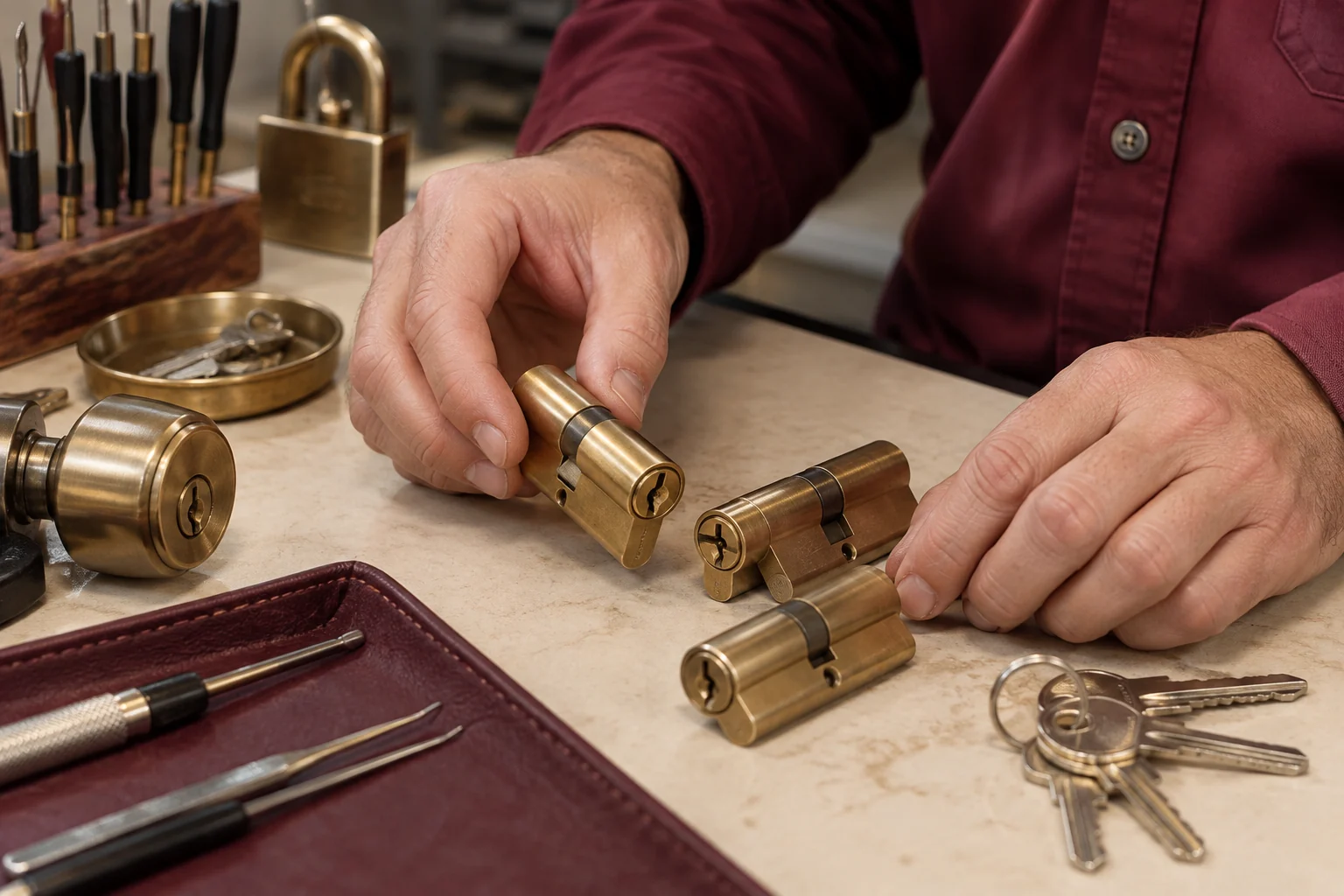
Lock Installation in Tamarac
Fitting a new lock goes well when the hardware matches the door, the frame and the way your household actually lives. This page is general guidance for people in Tamarac who are planning an installation.
Call (954) 888-8804Begin with the door you already have
Most people shop for a lock first and look at the door second, and that order causes trouble. A lock is only as useful as the door and frame around it, so the first job is to look at what is there. Is the door solid wood, hollow core, steel or fiberglass? Is it thick enough for the hardware you have in mind? Is the frame sound, or does the wood around the latch feel soft when you press on it?
A short walk around your home with a notebook helps more than you might expect. Write down which doors you use daily, which ones guests use, and which ones stay shut for weeks. Each of those doors has a different job, and the lock for a rarely used side door does not need to match the lock on the main entrance. Notice too whether any door sticks in the humid months, because a door that rubs on the frame will wear out a new lock early.
When you call a locksmith, describe the door in your own words and say what you want to change. Something like a steel door with a worn knob and a deadbolt that is stiff to turn is a good start. The person on the phone can then explain what the visit will involve and what has to be decided before any work begins. Nothing needs to be settled in advance, because the choices become clearer once the hardware is in front of you.
Deadbolts, knob sets and lever handles
A deadbolt is the part of the door that does the real work of keeping it shut. It uses a solid metal bolt that slides into the frame and stays there until the key or thumb turn pulls it back. A knob or lever set, by contrast, mostly holds the door closed against drafts and casual pushing. Many break ins succeed against doors that had a handle lock but no deadbolt, or a deadbolt that was never actually thrown.
Lever handles are easier on arthritic hands and on children and are a common choice for anyone who carries groceries through the door a lot. Round knobs are familiar and often cost less, but they can be harder to grip when wet. Neither style is automatically more secure, because the strength comes from the internal parts and how well the latch engages the frame. Our guide to front door lock types walks through the main styles side by side.
Single cylinder deadbolts have a key on the outside and a thumb turn inside. Double cylinder versions need a key on both sides, which can be a hazard in an emergency if the key is not close to hand. Think honestly about who lives in the house and how soon they would need to get out. The right choice for a household with young children is not always the right choice for two adults living alone.
The strike plate and frame do more than people think
The metal plate on the frame that receives the bolt is called the strike plate, and it is the quiet hero of door security. A strong deadbolt held in place by a thin plate and short screws is much less impressive than it looks. When force is applied to a door, the weak point is usually the wood of the frame, not the lock itself. Longer screws that reach into the structural stud behind the jamb make a real difference.
If a new lock does not line up with the old hole in the frame, the bolt may rub or stop short. That is a very common reason a freshly fitted lock feels sticky. The fix is usually adjusting or replacing the strike and sometimes refining the hole it sits over, so that the bolt travels cleanly into the frame. Our article on doors that will not latch because of strike alignment explains what is happening in those cases.
If your priority is resisting a forced entry, read about strike plate upgrades that help stop door kick ins. The idea is simple: spread the force over more wood and more metal. Ask about the frame at the same visit as the lock, because it is simpler and neater to deal with both at once than to come back for the second half later.
Understanding deadbolt quality
Not every deadbolt is built to the same standard, and the packaging does not always make that clear. Residential hardware is graded, and the grade reflects how much abuse the parts are designed to take. Heavier internal parts, a thicker bolt and a stronger cylinder all push a lock up the scale. The differences are hard to see from the outside, which is why it helps to ask a locksmith to explain what they are fitting.
A useful way to think about grades is to ask what the lock will face. A bedroom closet latch will never see a pry bar. A front door facing a street, a stairwell or a shared hallway might. Spending a little more on the doors that matter most is usually wiser than spreading a modest budget evenly across every opening in the home.
Read our explanation of deadbolt grades before you decide, and bring your questions to the visit. Ask what the bolt is made of, how deep it throws into the frame, and what the cylinder is designed to resist. A good answer is specific and plain, without a lot of jargon. If an explanation leaves you more confused, ask again until it makes sense.
Smart locks, keypads and keeping a key as backup
Smart locks appeal to people who are tired of hunting for keys, handing keys to guests, or wondering whether the door was locked. They come in several forms: keypad models, models that connect to a phone, and retrofit units that attach to the inside of an existing deadbolt. Each has trade offs in battery life, appearance and how it behaves if the power or the network drops.
Before choosing, decide what problem you are actually solving. If the aim is giving a dog walker or a relative access without cutting copies, a keypad with individual codes may be all you need. If the aim is checking from work that the door is locked, you will want a model that talks to a phone. Our smart locks page covers the services around these devices, and the guide to keypad versus smart lock helps with the first decision.
Door fit matters here as much as it does for traditional hardware. A smart lock is heavier and often needs a precise bore and a door of the right thickness. Read the door fit guide for smart lock installation so you know what to measure and what to mention on the phone. Always keep a physical key option or a plan for dead batteries, because electronics fail at inconvenient moments.
Humidity, salt air and the finish on your hardware
South Florida is hard on metal. Coastal humidity, salt in the air and long stretches of heat all attack finishes, and thin plating can pit and flake within a surprisingly short time. A lock exposed to weather on a front porch ages sooner than one tucked inside a covered entry. If your door takes direct sun and rain, say so when you describe the job.
Moisture also affects the way a lock feels over time. A cylinder that has begun to corrode may turn stiffly, and a stiff lock tempts people to force the key, which is how keys break. If a lock in your home already feels rough, replacing it is often sensible instead of repeatedly spraying it with something. Ask what finishes the locksmith can supply and which hold up better outdoors.
Even a good finish benefits from basic care. Wipe exterior hardware occasionally, keep paint from building up around the latch, and avoid oily sprays that attract grit. Treat the door itself as part of the system too: a swollen door that rubs the frame puts constant side pressure on the bolt. Small habits like these stretch the useful life of any new installation.
Condos, townhomes, older houses and rentals
Different kinds of homes bring different questions. In a condo or townhome, an association may have opinions about the exterior look of a door or the type of lock used on common entrances. Requirements vary from one community to the next, so check your governing documents or ask your association before you buy anything that changes the outside of the door.
Older houses often have older doors, with deep, unusual bores or frames that have shifted over decades. Newer houses can have thin, lightweight doors that were never meant to carry heavy hardware. Both situations are workable, but each needs a little judgment about what will fit and hold. A locksmith who sees the actual door can explain the options far better than a catalog can.
Rental properties have their own rhythm. Landlords often want matching keys across several doors, a record of who has what, and an easy way to change access when a tenant leaves. Our pages on house lockout and rekey services and the guide to rekeying rental properties cover the practical side of keeping control of access between residents.
What an installation visit usually looks like
The process is simple to describe. You call and explain what is going on and where the property is. The work and the price are explained to you before anything begins, so you can say yes or no with full information. Once you agree, the old hardware comes off, the door and frame are checked, the new lock goes in, and the finished work is tested with you standing there.
Testing is more than turning the key once. You should lock and unlock from both sides, throw the bolt with the door fully closed, and open and close the door a few times to see that nothing rubs. If it is a smart lock, set a code, remove one, and try the manual key. Do not be shy about asking for another demonstration, because the moment you sign off is the moment to be sure.
Keep every key you receive, and decide where the spares will live. Hand one to a trusted person and keep one somewhere that is not the obvious plant pot by the door. Our article on smart ways to hide a spare key has some sensible ideas. If you want more matching keys later, ask at the visit what is involved in making duplicates.
Mixing new locks with ones you already own
It is common to replace only the front door and leave the rest. That works well, but it leaves you carrying two different keys unless the locks are matched. Many hardware families can be keyed alike, so a single key operates the front door, back door and side gate. Ask about this at the start, because ordering matching hardware later may not be possible if the model changes.
Another option is keeping your existing locks and having them rekeyed so they work with a new key. This changes the internal pins without replacing the lock body, and it is a good answer when the hardware is still sound but you want new keys in circulation. The question to ask is whether the lock is worth keeping. A tired, corroded lock is not, but a solid one often is. Our rekey versus replace guide sets out how to decide.
If you are somewhere in between, consider the rekey service for Tamarac alongside a new installation. A common pattern is replacing the front door lock for security and appearance and rekeying the rest so they match. That keeps the overall effort reasonable while still giving you a clean start on who has access to your home.
Secondary doors and the weak points people forget
The front door gets the attention, but side doors, garage entry doors and sliding patio doors often matter more in practice. Many people leave these with an old, stiff lock or a latch that has not been checked in years. They are also the doors most hidden from the street, which makes their quality especially important.
A door between the garage and the house deserves a proper deadbolt, since it connects a space that may be open at times to the living area of the house. Sliding doors need a different kind of attention, because their latches are usually light and the track can be lifted or forced. Our guide on garage entry door security and the one on sliding glass door locks are worth a look before you set a budget.
Windows round out the picture. A strong front door is less meaningful if a ground floor window latch is flimsy. You do not need to turn the house into a fortress, but a modest upgrade to a few weak spots often does more than a single expensive lock on one door. Think in terms of the whole perimeter, then choose where to spend first.
Planning ahead for storm season and busy times
Hurricane season changes how Floridians think about doors. Shutters, impact glass and heavy frames are all part of the picture, and they affect which lock hardware fits. If you plan major work on doors before the season, arrange the lock work around it so that nothing gets installed twice. Talk about sequence with whoever is doing the carpentry or installing the shutters.
It also pays to avoid doing lock work in a panic. After a storm, or after a break in, people want everything fixed at once, and hurried choices tend to be regretted. Having a rough plan in advance, such as which doors come first and what style you prefer, lets you move calmly when the time comes. If you are thinking about recovery after something has already happened, our after a break in recovery checklist is a helpful read.
Neighboring communities have similar needs and similar pages. If you are comparing options, you may also want to look at guidance for Lauderhill lock installation or Margate lock installation. The principles do not change from city to city, and the advice here is general, so please treat it as a starting point rather than a ruling on your particular door.
Common questions
Should I replace the whole lock or just the deadbolt?
It depends on the condition of both pieces. If the handle set works smoothly but the deadbolt is worn or weak, replacing only the bolt can be sensible. If the finish has corroded or the parts feel loose, replacing both gives a matched, fresh set. Describe what you see when you call, and the work and price will be explained before anything starts.
Will a new lock fit my existing door?
Usually, yes, because most residential doors follow common hole sizes. Problems come from unusual older doors, very thin doors, or frames that have shifted. A visit lets the locksmith measure the bore, the thickness and the frame before you commit, and explain any adjustment needed. Mention the door material and age when you describe the job.
Do I need to rekey after installing a new lock?
A brand new lock arrives with its own keys, so rekeying that lock is not needed. What you may want is to rekey your other locks so one key works everywhere. Rekeying the rest is a sensible companion job, and it also removes any older keys that other people might still hold.
Are smart locks a good choice for a rental or vacation unit?
They can be, because codes can be added and removed without handing out keys. The trade offs are battery care, network reliability and the need to explain the device to guests. A model with a physical key backup is wise. Check any rules in your lease or association before changing the entry hardware.
Can I install a deadbolt myself?
Some people do, and simple swaps are within reach for the handy. The risk is a poorly aligned bolt, a weak strike plate or a door that was drilled badly, which leaves the lock stiff or easy to defeat. If anything about the door looks unusual, a professional installation saves repeat work and gets the finished lock tested properly.
What should I ask the locksmith before work begins?
Ask what is being installed and why it suits your door, what the finish is made for, how many keys you will receive, and what the full cost will be before work starts. Ask also how the lock will be tested with you after fitting. Clear answers to these questions are a good sign of a careful job.
Talk through the job before work begins
Tell us what happened, which doors or keys are involved and who needs to get in. The price and the plan are agreed with you before any work starts.
Call (954) 888-8804