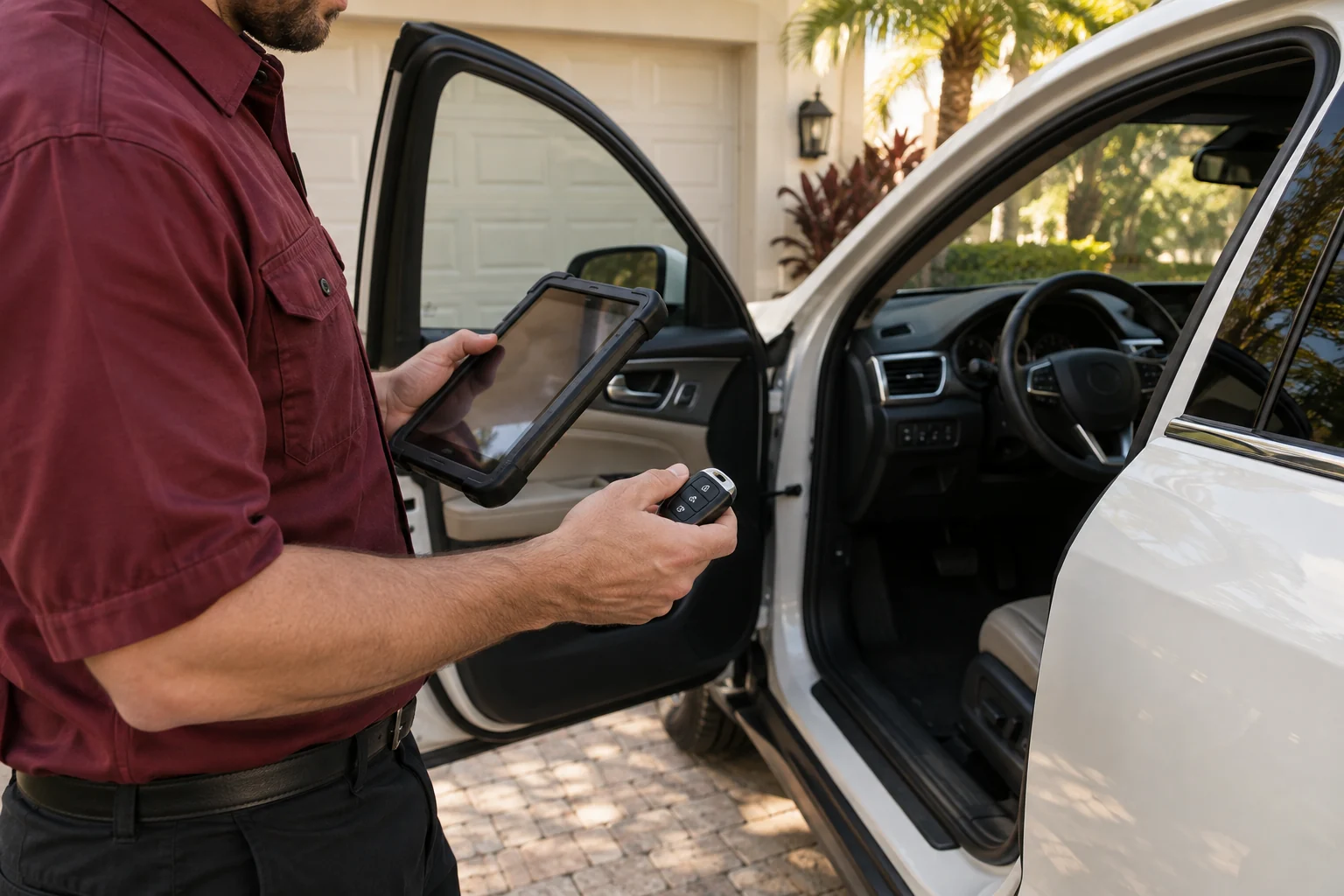
Rekey Service in Lauderhill
Rekeying changes which key operates a lock without replacing the lock itself. This page is general guidance for Lauderhill households and landlords on when it makes sense, what it involves, and how to plan the keys afterward.
Call (954) 888-8804What rekeying actually changes
A lock is a small mechanical puzzle. Inside the cylinder sits a set of tiny pins of different lengths, and each key is cut so that, when inserted, it lines those pins up at exactly the right height to let the cylinder turn. Rekeying means swapping those pins for a new set that matches a different key. The lock body, the handle and the bolt all stay where they are.
The result is simple to describe. Your old keys stop working, and a new key, or a set of them, becomes the only way to operate that lock. From the outside, the door looks the same. From a security point of view, anyone who held an old key has lost their access.
Because the hardware stays in place, rekeying is usually less disruptive than installing a new lock. There is no drilling, no new holes and no change to the look of your door. It is a sensible fix when the lock is in good condition but the keys are a concern, which happens more often than most people realize.
It helps to picture what stays the same. The deadbolt, the strike plate, the finish and the way the door feels in your hand are untouched. Only the internal code of the cylinder moves from one pattern to another. That is why the job can be done on a door you use every day without leaving a gap in the frame or changing the way the door closes, and why it suits owners who simply want certainty about who holds a key.
Good reasons to rekey your locks
The most common reason is a move. When you buy or rent a home, you have no way of knowing how many copies of the old keys exist. Previous owners, tenants, relatives, contractors, cleaners and neighbors may all have held one. Changing the key removes the question altogether and gives you control from the first day.
Lost or stolen keys are another obvious reason. If a wallet or a key ring goes missing, particularly with an address on it or an identifiable car nearby, rekeying is a calm and sensible response. The same applies after a break in, a falling out with a roommate, or the end of a relationship where keys were shared.
Other reasons are quieter. You may want all the doors on the property to open with one key, or you may want to end the situation where a relative, an old babysitter or a former employee still carries a key. Read our notes on rekeying after you move for a checklist.
Business owners with a home office, or families who share a house with an extended relative, face the same question. Anyone who has ever held a key without needing one now is a person worth thinking about. This is not about suspicion. It is about keeping your access list small, current and known to you, which is a sound habit in any household.
- You have just bought or rented a home and do not know who holds keys.
- A key has been lost, stolen or copied without your knowledge.
- A tenant, roommate or employee has left.
- You want several doors to share one key.
- A relationship or friendship has ended and keys are still out there.
Rekey or replace the lock
Rekeying is not always the right answer. If the lock is worn, corroded, loose or visibly damaged, putting new pins in a failing cylinder only delays a larger problem. Salt air and humidity wear on exterior locks in South Florida, so an old lock may be a poor candidate even if the key still turns.
Replacement also makes sense when you want to upgrade, for example moving from a basic knob to a sturdier deadbolt, adding a keypad, or changing the style of your door hardware. It is a different job with a different purpose. Our lock installation guidance for Lauderhill covers that side.
The question to ask is simple: is the hardware itself still doing its job? If yes, rekeying is usually the more economical and less invasive path. If no, replacement is more honest. We compare the two in rekey versus replace, and explain the mechanics in how rekeying works.
A rule of thumb helps. If the lock operates smoothly, looks intact, and the only worry is who holds a key, think rekey. If it sticks, wobbles, shows rust or has been forced before, think replace. Mixed situations are normal, and many homes end up with some doors rekeyed and one or two replaced. Ask for each door to be judged on its own condition rather than treated as a single package.
Not every lock can be rekeyed the same way
Most common residential cylinders can be rekeyed, but brands and models differ. Some are designed with a reset feature that lets a trained person change the key with simple steps. Others need to be taken apart more fully. A few budget grade or damaged locks cannot be rekeyed cleanly at all.
Locks from different makers use different key shapes, called keyways. A new key must fit the keyway of your lock, so the work depends on what is already installed. Mixed brands on one property are common, and a good locksmith will tell you honestly which locks can be matched together and which cannot.
High security systems and restricted keys are a separate category. Copies cannot be made at just any shop, and changes follow the maker's own rules. If you think your property uses restricted keys, say so when you call. You can learn more in high security and restricted keys.
Do not worry if you do not know the brand or the model. A photo of the lock face and the edge of the door often tells the locksmith what they need, and the key itself carries clues in its shape and markings. What matters is that you describe what you can see honestly, so the plan for your property fits the hardware that is really on the door.
How the visit usually goes
Start with a phone call. Describe the property, how many locks you want changed, and what kind they are, such as knobs, deadbolts, handlesets or a garage entry. If you know the brand, mention it. Describe whether you want all locks to match one key or each to have its own.
Mention any quirks you have noticed. A deadbolt that sometimes needs a second try, a handle that feels loose, or a key that has to be wiggled are all useful clues. They help the person on the phone decide what to bring and what to look for, and they let you hear an honest opinion about whether those locks are worth keeping before any work is agreed.
The work and the price are explained before it begins. That includes how many keys you will receive, whether extras can be cut, and whether any lock turns out to need repair or replacement rather than a simple change. You decide with the facts in front of you.
When the work is finished, it is tested with you. Try every new key in every lock, from both sides if the lock has a thumb turn, and make sure the old keys no longer work if you still have them. Hold on to the new keys and decide right away where the spares will be stored.
Ask how extra copies are handled afterwards. Some keys can be copied at a hardware counter, while others need to be cut by a locksmith. Knowing this before you hand a key to a family member, a cleaner or a dog walker saves trouble later. If you want a record of who has which key, write it down at the table while everything is still on the counter.
Planning keys for a whole home
Rekeying a single door is straightforward, but most homes have several entries: front, back, garage entry, side gate, maybe a storage room or a patio door. Decide in advance whether you want one key for everything or separate keys for certain doors.
One key for everything, called keyed alike, is convenient. It reduces clutter and the chance of grabbing the wrong key in the dark. The downside is that losing that one key affects every door, so it suits households that are careful with their keys.
Think too about the people who come and go. A neighbor who waters plants during a trip, a cleaner who visits weekly, or an adult child who stays occasionally may each need a key to one door but not all. Separating those needs from your own daily access is easier when the plan is made before the locks are changed rather than after, and a clear plan means fewer keys on your ring.
Separate keys can make sense for shared spaces or doors given to others, such as a guest suite, a rented room or a work area. If you want a clear system, keyed alike and master key systems explains the options in plain language.
Rentals, condos and shared housing
Landlords and property managers have a particular reason to care about rekeying. Between tenants, keys are the weak point. A former tenant may have kept a copy, handed one to a friend, or lost one in a place you cannot trace. Changing the key between occupants is a standard way to start each tenancy cleanly.
Records matter in this setting. Keep a log of which doors were changed, when, and how many keys were issued. If you manage several units, a consistent system makes turnover easier. Our articles on rekeying rental property and tenant turnover go into detail.
Tenants who want a lock changed should talk to the landlord first. Leases and local rules vary, and some require that the owner keep access. Ask in writing, agree who pays, and keep a copy of what was said. Condominium owners should also check with the association, since some control entry hardware.
Smaller landlords sometimes assume that a tenant's departure is the only moment worth considering. Mid lease events matter too, such as a roommate being removed from the lease, a dispute that ends badly, or a key reported missing. In each case, the lock should be treated as a shared resource whose access list needs to match the real list of residents, and a prompt change protects everyone who still lives in the unit.
How often should you rekey
There is no fixed schedule that suits everyone. A household that has used the same locks for years, never lost a key, and knows exactly who holds copies may be perfectly fine. Others have more reasons to change keys sooner, such as a busy rental or a property with many people coming and going.
A useful way to think about it is by events rather than dates. Moves, losses, breakups, employee changes and security incidents all justify a fresh look. A quiet household with stable occupants may only need attention if something changes.
If you are unsure whether your keys are still under your control, rekeying is a relatively contained step to take. Our guide to how often to rekey a home goes through the logic in more detail.
South Florida properties often change hands or occupants more frequently than in other places, with seasonal residents, short stays and active rental markets all part of the picture. If your home sits empty part of the year, consider who has access while you are away. Vacancy is a good time to confirm that the people holding keys are exactly the ones you intend, and to make changes before you return.
Lost keys, spare keys and what to do next
If you have lost a key, think first about the risk. A key lost at home, in a coat you will find tomorrow, is a different matter from one lost with a purse or a bag at a busy place. Judge the odds honestly and decide whether the possibility that someone else holds your key is acceptable.
Meanwhile, tighten up your spare key habits. Avoid hiding keys outside, since those spots are widely known. Give a spare to someone you trust, and keep a record of who has one. Making copies is easy, but each copy is another key to keep track of.
Our pages on lost house keys and duplicate keys cover this. If you also got locked out while sorting things out, see lockout guidance for Lauderhill.
One more point on copies. A key that looks identical to your original but was cut roughly can wear the pins inside the lock and cause sticking. If you make copies, have them cut carefully from the original rather than from another copy, and test each new one before you rely on it. A worn copy that works today may fail at the worst time.
Coastal conditions and why locks wear
Salt air, humidity and heavy rain are tough on exterior hardware. Moisture gets into keyways, corrodes springs, and leaves a thin film that makes keys feel gritty. Locks on doors that face open weather wear sooner than those in covered entries.
If your key has started to stick or turn with effort, rekeying alone will not cure it. The cylinder may need cleaning, or the lock may be due for replacement. A locksmith can often tell by looking and feeling the key, and will explain the options before starting.
Simple habits stretch the life of any lock. Insert and remove the key straight, without twisting it hard against a stiff cylinder, and never use the key as a lever or a screwdriver. Keep your key ring light, because a heavy bundle hanging from a key in a lock puts constant sideways load on the pins. These small things matter more in humid conditions, where wear and corrosion already work against you.
This page is general guidance for Lauderhill and does not describe specific past work. For nearby communities, see Margate rekey guidance.
Keep a note of the date you last changed your keys and the number of copies in circulation. Next time something happens, you will know in seconds whether a fresh change is worth considering, and you will not have to rely on memory during an already stressful day.
Common questions
Do I need new locks if I just want new keys?
Often not. If the hardware is in good condition, the cylinder can be rekeyed so the old keys stop working and new ones take over. If the lock is worn, damaged or failing, replacement may be the more honest answer. The choice is explained before any work begins.
Will my old keys still work afterwards?
No. The point of rekeying is that the old key no longer turns the lock. At the end of the visit, test the new keys, and if you still have the old ones, try them to confirm they do nothing. Then dispose of the old keys responsibly.
Can all my doors use the same key?
In many cases yes, if the locks are compatible or can be matched. Locks from different brands may use different key shapes, and some may need to be replaced to join the system. Tell the locksmith what you want when you call so the plan fits your hardware.
Is rekeying worth it after buying a home?
Many owners choose it, because you cannot know how many copies of the old keys exist. Changing them gives you a clean starting point. It is usually less disruptive than replacing all the hardware and leaves the look of the doors unchanged.
Can a renter ask for locks to be rekeyed?
You can ask, but start with your landlord or property manager. Leases and rules vary, and some owners require access or want to arrange the work themselves. Get the answer in writing, agree who pays, and keep a record of any changes made to the locks.
What if a lock cannot be rekeyed?
Some locks are too worn, damaged or unusual to rekey properly. If that happens, the person doing the work should say so plainly and explain the options, such as replacing that cylinder or the whole lock. You decide before anything further is done.
Talk through the job before work begins
Start by describing the situation, the lock or key involved and who must have access. You hear the price and the plan before anything is done.
Call (954) 888-8804